
Grassroots organizers threaten legal action if council members trigger a 2023 state law to kill the petition.
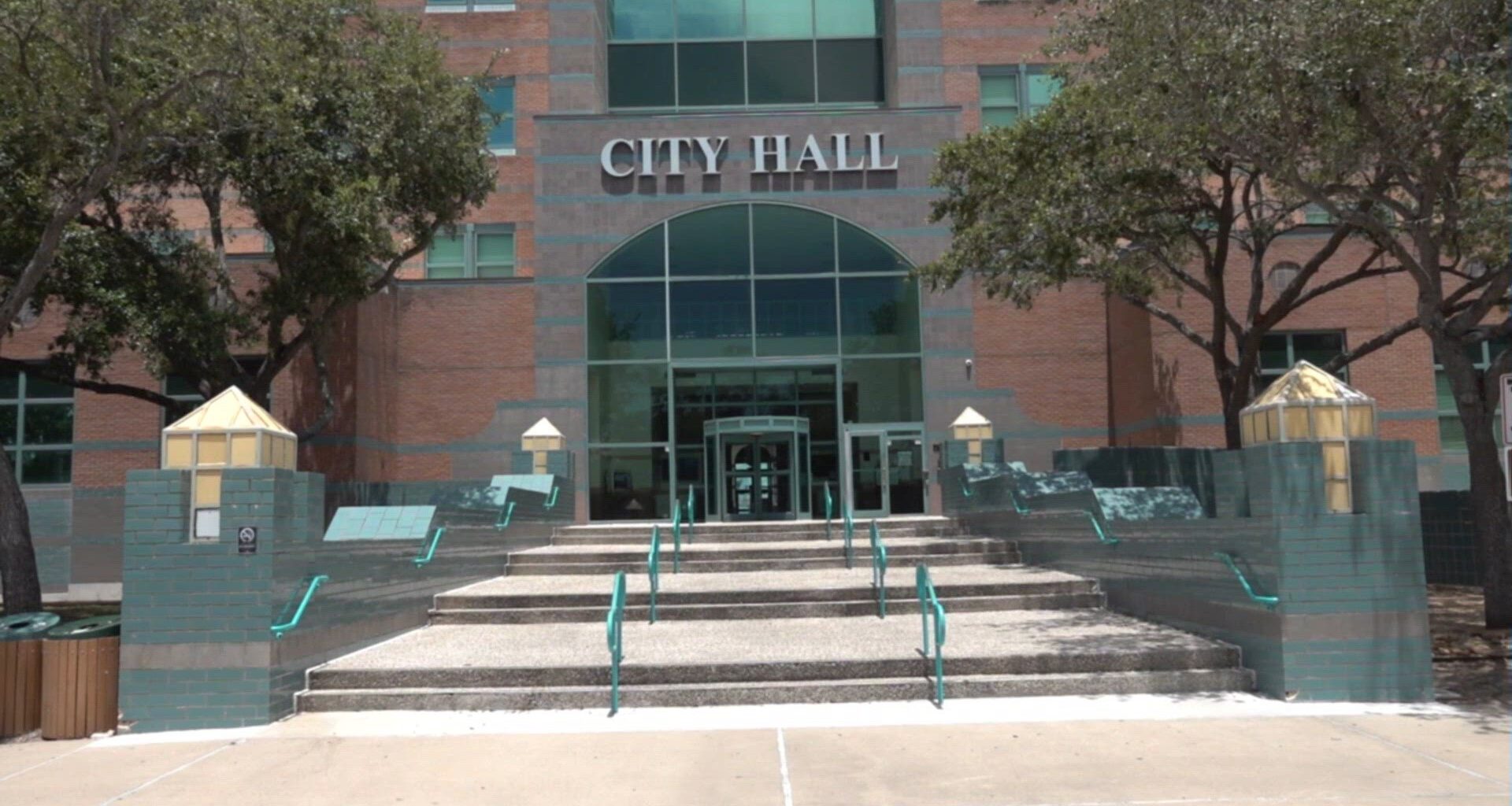
CORPUS CHRISTI, Texas — A legal and economic fight over Corpus Christi’s drought surcharge rules comes to a head Tuesday as City Council considers whether the citizen-led “Fair Water Amendment” can go before voters in November.
The decision comes despite grassroots organizers successfully gathering and validating more than 12,000 voter signatures in June, enough to force a charter election under normal city rules.
At the center of the dispute is Texas Senate Bill 1860, a 2023 law that passed largely along party lines, with Republicans overwhelmingly supporting it and Democrats overwhelmingly opposing it. It restricts municipalities from holding elections on certain “climate charters” without prior approval from the state legislature. The law defines a climate charter as a charter provision or amendment establishing a comprehensive rule or policy addressing climate change or a municipality’s environmental impact, including water and energy use and air pollution.
City attorneys are weighing whether to classify the Fair Water Amendment under that definition, an action that would prevent the initiative from going before voters unless the Texas Legislature first approves it.
The Fight Over Industrial “Loopholes” and Procedural Rules
The amendment aims to eliminate Corpus Christi’s Drought Surcharge Exemption Fee, or DSEF. Large-volume industrial customers can voluntarily pay a flat, year-round fee of 31 cents per 1,000 gallons. In exchange, they are exempt from applicable drought surcharges that could be imposed during a Level 1 Water Emergency.
“This is about righting a wrong of the past and making sure that industry is paying their fair share when we’re in a drought,” said Dr. Isabel Araiza, founder of For The Greater Good, a local advocacy group.
Advocates point to how close Corpus Christi recently came to a Level 1 Water Emergency, which would require a 25% curtailment across customer classes. Proponents argue the system places tighter financial and conservation requirements on residents while allowing participating large-volume industrial customers to avoid applicable drought surcharges by paying the exemption fee.
Araiza rejects the city’s attempts to tie the local petition to the state’s climate charter restrictions, emphasizing that Tuesday’s vote is supposed to be a procedural decision rather than a debate over the amendment’s environmental policy.
“I just want to reiterate that this vote on Tuesday is supposed to be a procedural vote,” Araiza told 3NEWS. “They need to look at: did we meet the conditions of the rules around citizen-led initiatives to get measures on the ballot? It’s very clear that we did. And so, I would hope that City Council honors the will of the people, the efforts that were made, and follows the rules.”
“City Council does have the power and the authority to put it on the ballot or to protect industry,” Araiza added. “It is my hope that City Council follows the procedure, recognizes that we met the conditions necessary for the Fair Water Amendment to be on the November ballot, and vote in that way. I’m hoping they do the right thing, they listen to the will of the people, and they follow the rules.”
The $30 Million Infrastructure Debate and Corporate Conservation
Opponents of the amendment warn that eliminating the industrial exemption could carry a major economic risk for the city’s future water infrastructure.
According to city data, the voluntary 31-cent fee generates roughly $6 million annually. Since the program’s inception, industry partners have contributed approximately $30 million. By city mandate, that money is dedicated to future drought-proof water supply projects.
State Representative Denise Villalobos (R-District 34), a chemical engineer who previously spent nearly seven years as a refinery project manager, argues the current setup protects everyday taxpayers from absorbing massive capital infrastructure costs.
“In Stage 2 and Stage 3 of the water crisis, I think everybody knows the city did not charge any additional surcharges to anybody,” Villalobos said. “We remained on our current bill payment for our water supply, and industry still continued to pay the additional 31 cents. This Fair Water Amendment would get rid of a voluntary 31 cents that is being paid by industry currently to help diversify our water supply.”
Villalobos also countered arguments that heavy industry is ignoring the local water strain, highlighting millions of dollars currently being spent by energy companies to transition away from city infrastructure.
“I was an engineer prior at Flint Hills Resources, and I know there’s plenty of operators, engineers, managers, and technicians out there that know exactly what their companies are doing on making their water supply more efficient,” Villalobos told 3NEWS. “They’ve implemented dozens of projects to utilize less water at their facilities, to getting recycle-reuse back in industry. Valero just spent millions of dollars—they’re trying to build a pipeline so they can use recycled water, something they asked for a decade ago, and the city denied them of that.”
According to Villalobos, heavy industries are actively seeking alternative water supplies on their own dime.
“Industry is working extremely hard to get off the city water supply because they’ve seen how much of a strain it’s been during the drought, and we need to commend them for that, not poke holes,” she said.
What Happens Next?
If the City Council votes Tuesday to designate the petition a climate policy, the measure could not go before voters unless the Texas Legislature first approves it. As the Legislature does not reconvene until next year, that would prevent the measure from appearing on the November 2026 ballot.
Araiza told 3NEWS that if city leaders use SB 1860 to prevent thousands of local voters from deciding the issue, her organization is prepared to pursue legal action.
But with pressure mounting from both grassroots activists and industry advocates, the ultimate outcome remains uncertain.
“Oooooh I don’t know,” Villalobos admitted when asked how council members will vote on the looming Tuesday decision. “I am just as interested as everybody else on Tuesdays watching our City Council meet.”