
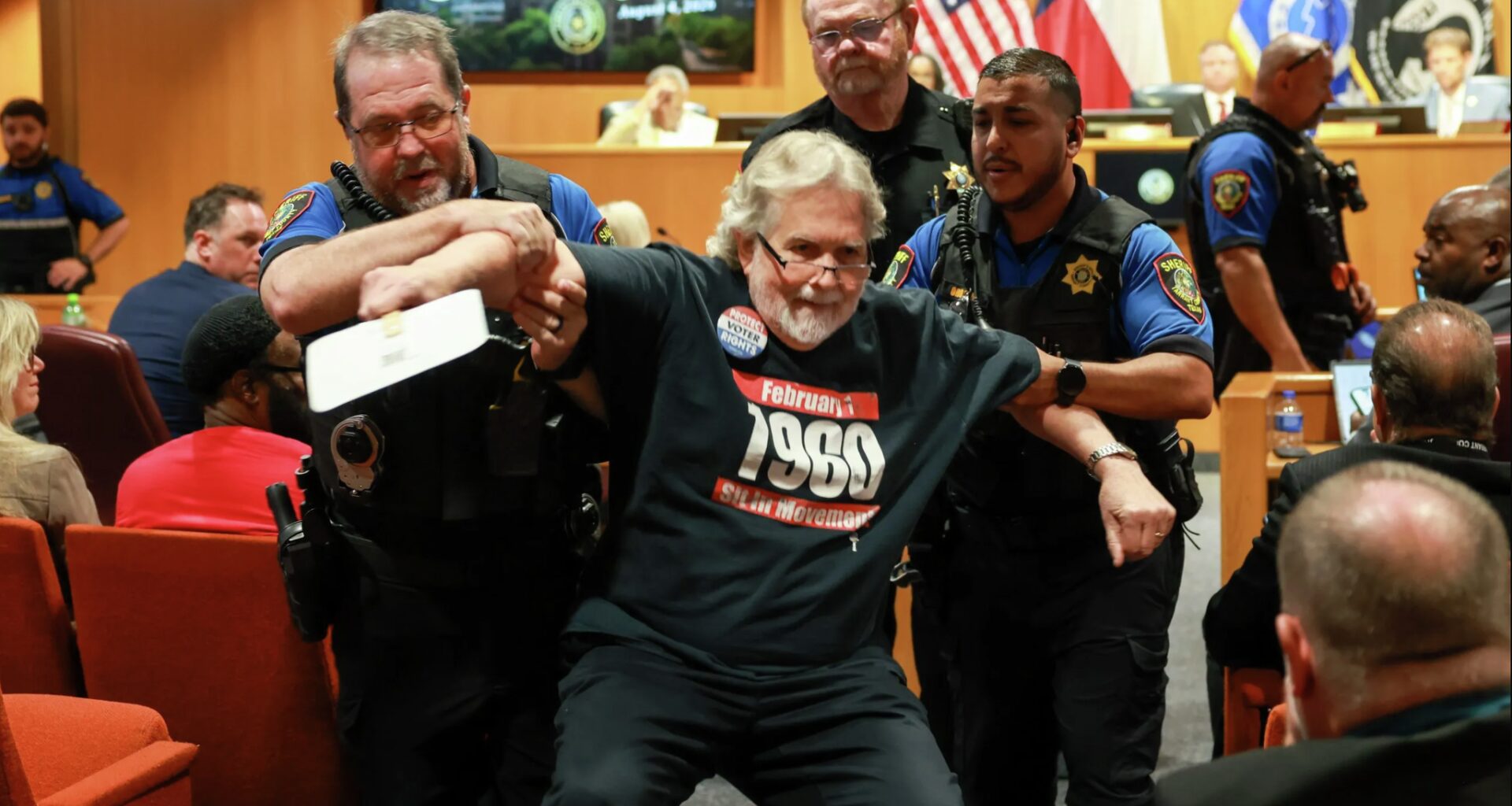
Last week, speakers were booted from the Tarrant County Commissioners Court during tense talks over a proposed reduction in polling places. While some of the disruptions went too far, residents are right to be concerned about a plan that could make voting less accessible come November.
Clint Ludwig, the county’s nonpartisan elections administrator, proposed reducing the number of Election Day polling sites by about 45% compared to the number during the 2022 midterms. The plan would reduce the number of early voting sites from 50 to 42. At the meeting, commissioners from both parties said they didn’t suggest such a drastic reduction.
This is a misguided proposal given the high-profile races in Texas and Tarrant County this year, and the high voter turnout during primary elections. The strong backlash to the plan tells us just how little faith people have in their local elections system.
Cutting more than 100 polling sites is too steep, especially in a county with more than 1.3 million registered voters. Marquee U.S. Senate and gubernatorial contests will be on the ballot this November, along with local races like the Texas Senate District 9 contest between Democrat Taylor Rehmet and Republican Leigh Wambsganss. Key county offices, including county judge, are also at stake.
County Judge Time O’Hare said he did not request such a short list of polling places and learned of the proposal only days before the meeting. Commissioners agreed to table the discussion until September.
But the public’s suspicion did not arise out of nowhere. Last year, commissioners cut more than 100 polling places than those that were available during the 2023 election. In 2024, O’Hare and fellow Republicans cut funding for bus rides to the polls for low-income residents and that same year, O’Hare tried unsuccessfully to remove early voting locations at colleges and universities.
It’s difficult to take the proposal to cut polling places at face value and believe the decision is simply to reduce costs by eliminating locations that don’t see high voter turnout during non-presidential election years. That’s because there’s been so much effort to sow doubt in the election system and diminish the public’s trust.
According to a list obtained by the Fort Worth Report, three locations used as early voting sites in 2022 that wouldn’t be available this year under the new proposal were on college campuses.
Young Texans already vote at lower rates than older residents. Government should make voting easier to encourage people to vote in local elections, not make it more difficult.
Commissioners should return in September with a more thought-out plan. If some polling locations warrant closure, officials should be prepared to present the reasoning for these changes and the analysis used to determine which sites were selected. The public deserves a clear explanation about what polling places will be available as they head to the ballot box.
Have an opinion about this? Send a letter to the editor using our letters form or email letters@dallasnews.com. Letters should be no more than 200 words and include the first and last name of the writer and city of residence.