
A faded color photograph from 1989 captures a little boy on Christmas morning, clutching a brand new guitar. Big eyes wide, mouth slightly open in determined excitement, The Mighty Orq—then only 10 years old—had just unwrapped his calling.
“I’d been listening to a lot of Jimi Hendrix, and the music that was popular then—Pearl Jam, Nirvana, Pantera, Metallica,” Orq remembers. “I’d been playing guitar and getting serious about music. Then, I had a moment when I was 12 years old.”
The moment? A B.B. King interview and performance on a kids’ TV show. Orq sat, transfixed, as King’s rich voice rumbled: “Nobody loves me, but my mother, /and she might be jivin, too.’”
It felt like an epiphany. “The way he was playing, what he was playing,” Orq says. “I thought, ‘Holy macaroni, man. I want to play that. I want to do that.’”
So, on a September night in 1997, a skinny, 18-year-old kid with a dark beard and long hair pulled low in a ponytail slipped into the back door of Houston’s Big Easy Social and Pleasure Club on Kirby Drive. The music joint was just three years old but had already built a reputation for showcasing local and touring blues and zydeco musicians in Rice Village.
“I didn’t want to get in trouble,” The Mighty Orq says. Hoping he looked old enough to go unnoticed, he went to the bar and ordered a Diet Coke. “I’d heard about the jam and just wanted to see what was going on in there.” He wanted to hear the blues. Years later, he’d have his own residency at the same bar.
For more than three decades, Orq has played and sung the blues with deep conviction, which, alongside 12-bar improvisation, is one of the genre’s defining tenets. He was raised in part by Houston bluesmen. When he was 15, Orq’s mom let him skip school to catch Texas Johnny Brown at Houston Community College (now Houston City College). “That was the first serious, up-close blues show I’d seen, and Johnny and the band absolutely floored me,” he says. The two got to know each other over the years, and Orq welcomed Brown’s advice.
Young Orq was also nurtured by weekly jam sessions at Dan Electro’s and the Big Easy, a place he haunted, especially on Thursday nights, when the resident band Luther and the Healers would perform. Its frontman, the late guitar maestro Luther Rada, became a teacher and friend. “A mentor—just so kind and generous,” Orq says of Rada. “We’d go see him, and he would give us pointers on how to do it.” He lists Joe “Guitar” Hughes, Earl Gilliam, Trudy Lynn, and Milton Hopkins as other powerful artists who had a big impact on him and his music.
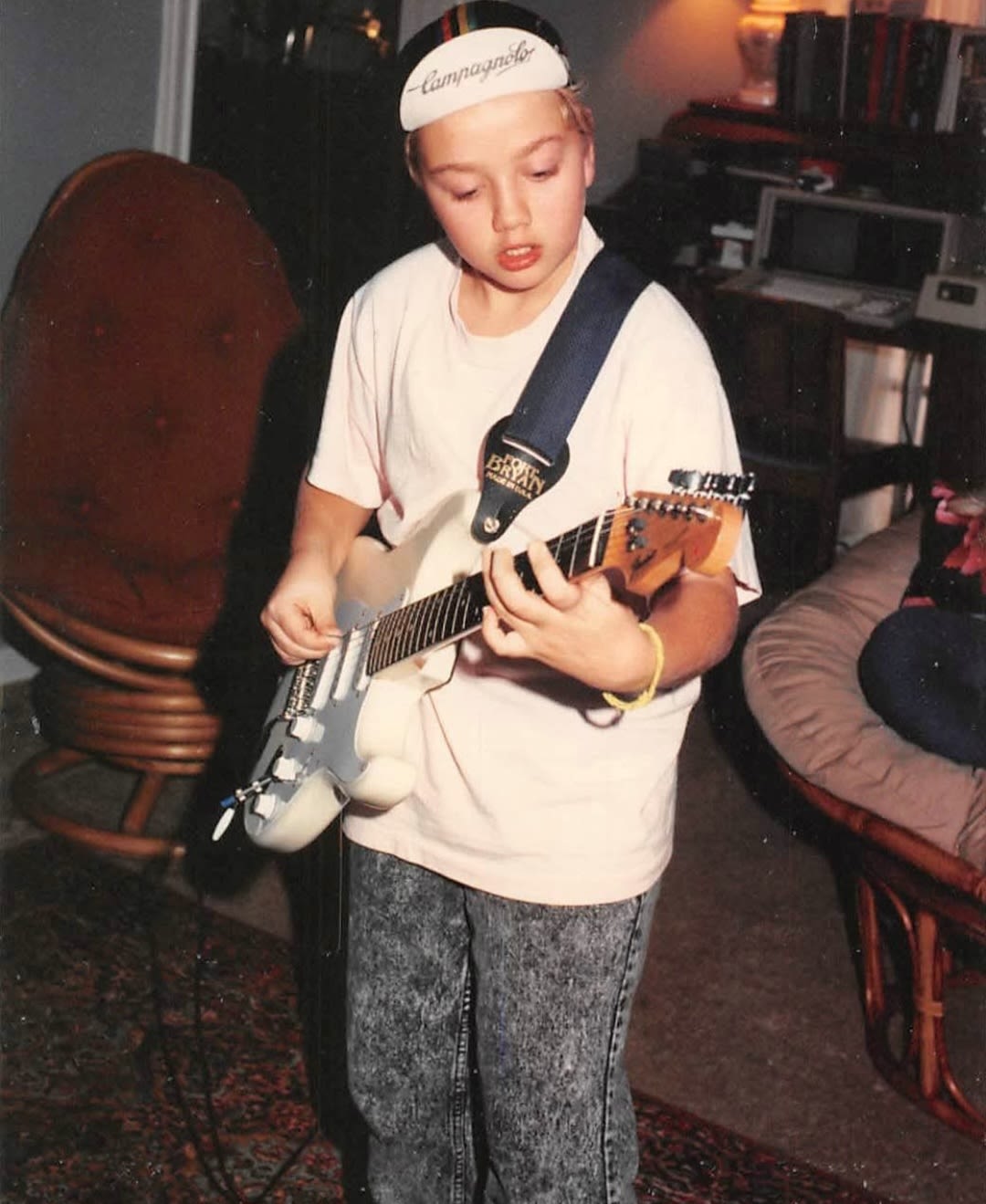
The legend begins.
While he reveres blues legends, he doesn’t parrot them. Over his 10 albums and thousands of shows, Orq has developed a distinct sound of his own. He began as blues-soaked rock-and-roll, delivered loud with a full band. Houston Press named him best guitarist in 2007 and 2010, and then, Orq pivoted: Instead of performing with a drummer, bassist, and sometimes more, in the early 2010s, he began appearing mostly alone. “There was a steep learning curve going from playing a raucous rock-and-roll set to a more subdued solo show,” Orq says. “It took me some time to learn how to capture and maintain the audience’s attention as a solo performer.”
Weekly gigs turned into years. Orq found that he could claim a crowd’s eyes and ears by becoming a one-man string band. A Weissenborn—an acoustic lap steel slide guitar—plus a traditional lap steel earned places in his sets. Orq also incorporated cigar box guitar, a charming busker-ready instrument with roots in the late 1800s. His resonators—acoustic guitars favored by blues musicians in the ‘30s and ‘40s for their self-contained amplification, achieved through metal cones in their bodies—remained each show’s anchors.
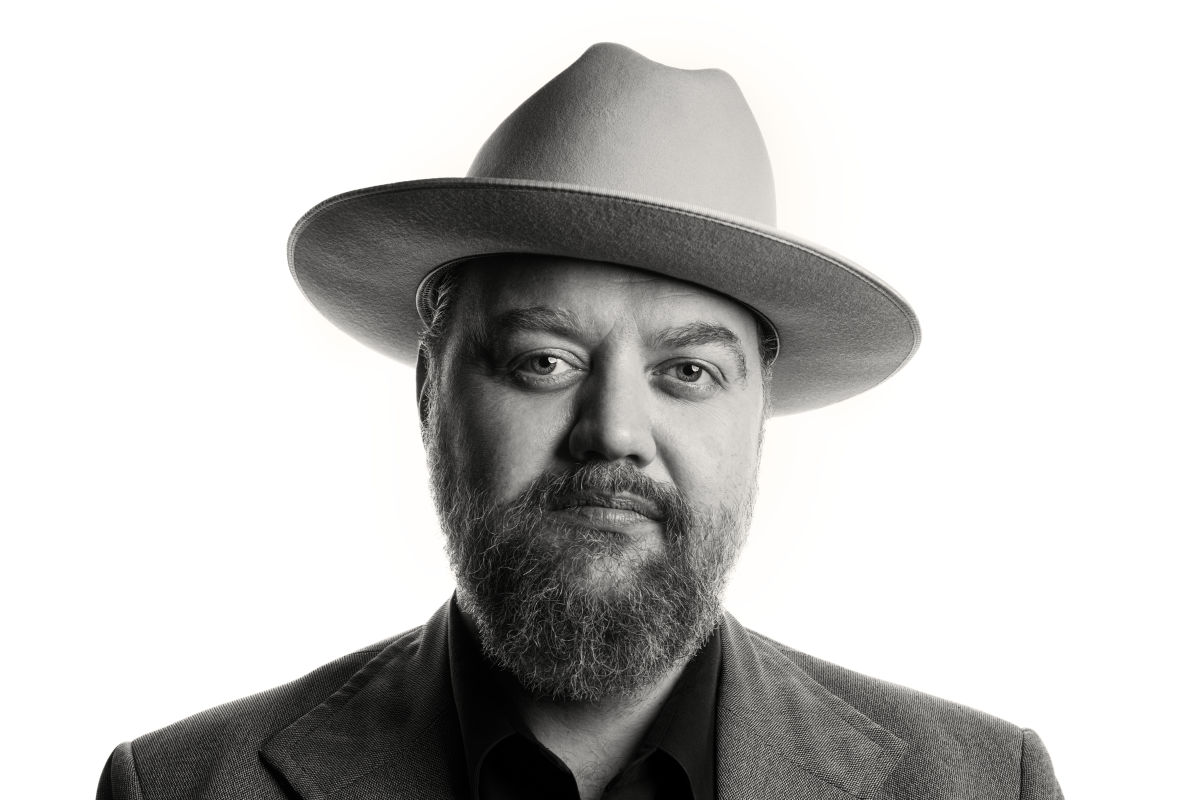
Then, there is Orq’s voice. He often soul-shouts or growls, pulling from gospel and blues traditions to create his own spine-tingling roar. But he can also glide from an otherworldly wail into a smooth croon, creating vocals so dynamic, his virtuosic guitar playing can almost be overlooked. Easy to spot in his earth-tone suits and polished shoes, usually topped off with a vanilla-colored open-road Stetson, Orq stands out in most rooms even before he climbs on stage. In conversation, he is warm and quick to smile, calmly wielding a playful command of language and a penchant for wholesome idioms (see “holy macaroni”) and bad jokes—“The dumber, the better,” he says.
Over the years, watching Orq’s live show has become as Houston as stopped trains and rivers in the streets. Locals have seen him play week in, week out for decades, as he outlived some of the city’s favorite rooms (we’ll never get over Fitzgerald’s). If we’re honest with ourselves, Houston has probably taken Orq for granted. That can happen once you get used to seeing the extraordinary on a Tuesday.
And make no mistake: Orq is extraordinary. That much was clear once again during an evening poolside performance at Hotel Lucine in Galveston last fall. Glasses and forks clinked as guests chatted at outdoor tables and on couches in the hotel’s masterfully executed homage to midcentury roadside motels. Quietly, Orq sat down behind the mic on the patio. The party tittered around him until he launched into his version of the blues standard “John the Revelator,” full of foot stomps and howls:
Tell me who’s that writin’, John the Revelator,
Tell me who’s that writin’, John the Revelator,
Tell me who’s that writin’, John the Revelator,
Wrote the book of the seven seals.
A woman raised her phone to record a video of the performance. A couple at another table nearby elbowed each other and stared. Everyone had turned their chairs to face the mic. The crowd fell silent.
While the stunning performances haven’t stopped, the last year has brought big changes. After years of his partner, Jamie, wanting to relocate to Galveston, the couple finally moved from the Montrose to the island in 2025. The move checked several boxes for Orq. “There’s real community here. Different artists really try to help one another,” he says. “You don’t always see that in an arts community of any size or nature. There’s typically a lot of competition, and to a certain degree, even animosity, but here, there’s this sense of a shared goal of improvement and awareness.”
He already feels at home on the island, where he’s taken over the Old Quarter one Sunday a month for The Mighty Orq’s Blues Extravaganza (the shows typically sell out). He’s surrounded by good folks, too. Orq points to Robert Kuhn and his La Izquierda crew, as well as Joel and Angela Mora, owners of the Old Quarter, as key architects of Galveston’s current music bonanza. These days, he occasionally plays lap steel with other artists like country boogie up-and-comer Tyson Webb and blues-tinged singer-songwriter Raa Tansiel. “It’s a little more Western swingy, with jazz,” Orq says of his current approach to the instrument. “Now, when I’m playing, I’m trying to have more fun. I’m trying to grow musically.”
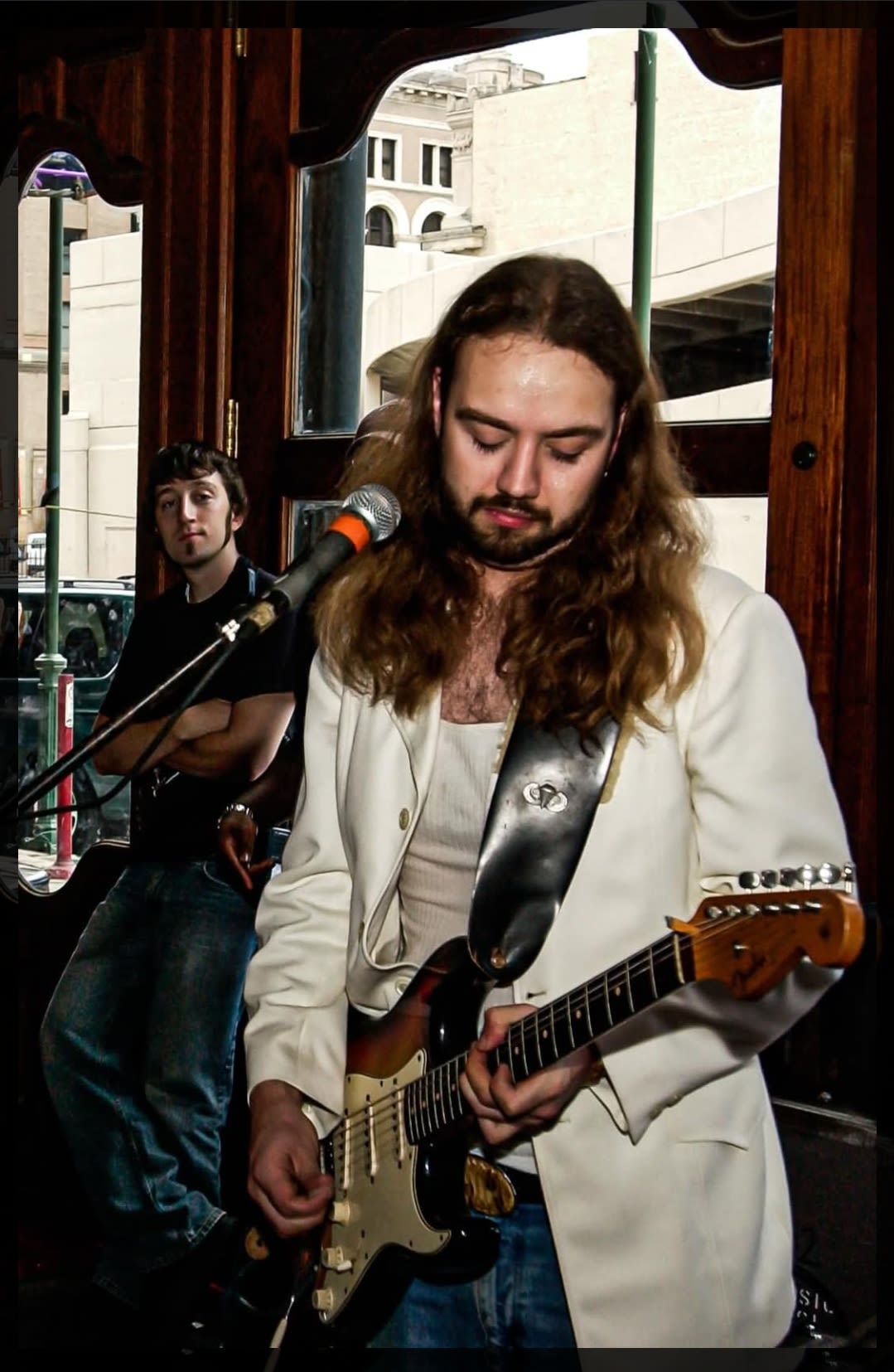
The early days of Orq. Or Mighty, if you’re Lyle Lovett.
The fresh starts coincided with a few endings. In mid-July, Orq closed out his longtime Tequila Thursday night residency at the Big Easy (weekly warriors and bygone regulars returned to dance and listen). He’ll still perform at the venue from time to time, but his role as the Thursday-night master of ceremonies, inherited from his hero Rada, will pass to someone else.
When asked about moving on and what, if anything, he still has left to prove to himself or anybody else, Orq is characteristically thoughtful. “My perspective on what success means to me has changed,” Orq says. “In my teens, twenties, and thirties, I was driven by the classic rock star myth. Be rich and famous. Make hit records. Tour the world.” He pauses, as if considering the idea. “That’s not to say music was only a platform for me to achieve fame. Rather, as I began to play professionally, these elements seemed to be the natural progression: From bedroom, to club, to regional, national, and international touring, to theaters and stadiums.”
Over the last several years, Orq began to question the roadmap he inherited. He has made a living on his guitar—and paying bills with money earned by singing songs he’s written is no mean feat. But some goals won’t stop moving, while others seem to disappear entirely. “Streaming supplanting record sales. Paying to tour rather than generating any revenue. Sure, it’s cheaper now to make an album, but no one’s gonna buy it. They’re gonna stream it and a thousand other records for that one low monthly fee,” he says. “For a dude in his mid-to-late forties, who’d been making music as his career the whole time, all of this was a bit of a shock. Thus, for a bit I was all out at sea, professionally and artistically speaking.”
The concept of a formidable talent and indisputable workhorse like Orq feeling lost is sobering. Industry machinations have never been artist-forward, but these days, it’s even harder for musicians—and almost everyone else—to make ends meet.
For Orq, it all led to an internal shift. “I came to realize my focus was misplaced,” he says. “It’s great to make a living pursuing your art form. But I made the mistake of confusing making enough money from music with the real power of music, which is not its ability to generate revenue, but rather, to cultivate community, and ultimately, an experience of the transcendent.”
Orq may not play stadiums, but anyone who hears him won’t ever forget him. If music really can create transcendent moments, his songs are going to carry The Mighty Orq into the air of this place. His resonator will forever be buzzing in the Gulf Coast breeze.
Music Notes
Houston music happenings you should know:
The Solar Flare Music Festival returns to Axelrad on August 28 and 29. The stout lineup features more than 40 local musicians, including Reef the Rabbit, Blossom Aloe, Kimya, Swimwear Department, Sara Van Buskirk, and more.
More news on the festival front: The final River Revival 2026 is set for September 24-27 in New Braunfels. We hear it’s already sold out (congrats!). The Houston-heavy lineup includes Micah Edwards, Dem Roots Music, Griffin Swank’s Hubble Space Parade, and more.
More vinyl nights are popping up throughout the city. Check out the especially strong schedules at the Big Top, Echoes, Hotel Saint Augustine, and other choice local spots.
New venue alert: Bar by the Wayside opened in April and books top-shelf local music. A recent Thursday evening featured Stefanie Pepping’s delightful jazz troupe Sassafras Swing Set. The bar also pours gorgeous, tasty cocktails.
Astralace, the dreamy indie pop trio, has released the single “Better Days,” another welcome helping of the band’s sweet, sad mix.