
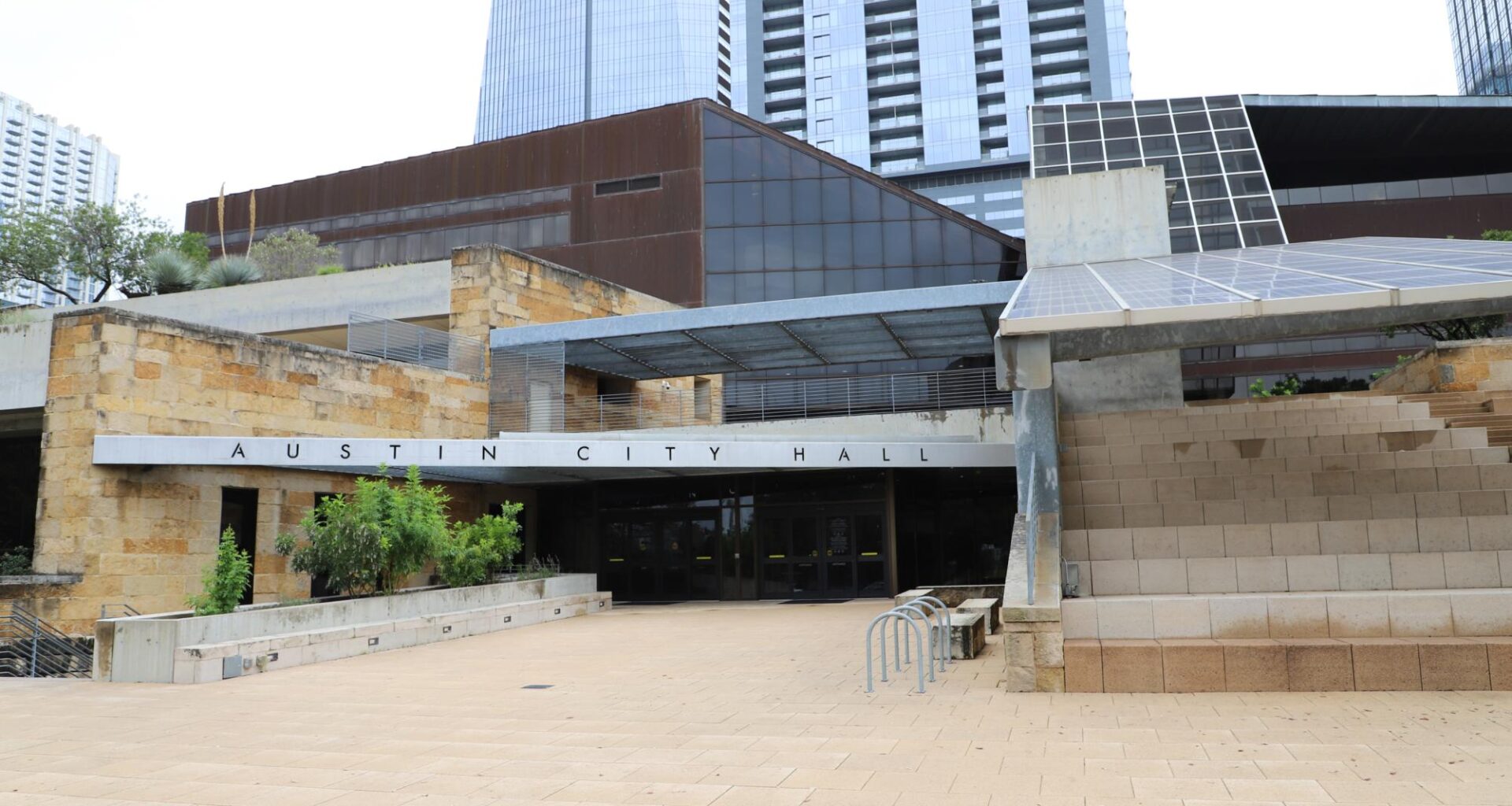
The city of Austin is currently developing their annual city budget and considering a bond issue, while several charter amendments are up for a vote in November. With all this activity in City Hall, the Texan is providing a guide to new UT students on how Austin politics works and what opportunities exist to get involved.
City Structure
Austin has a council-manager form of government. Together, the mayor and city council determine the city’s tax rate, approve the budget and establish city policy. The city manager proposes and implements budgets and coordinates the day-to-day operations of the city.
The City Council is made up of the mayor and 10 council members, each representing a geographic district of Austin. The University and West Campus sit within District 9, represented by Council Member Zohaib “Zo” Qadri since 2023. The current mayor is Kirk Watson, who has a single vote during proposals equal to other council members’. Mayors and council members are elected for four-year terms and cannot serve more than two consecutive terms. Elections for the District 9 council seat, in which Qadri is running for reelection, will be held in November. Mayoral elections will not be held until 2028.
How can students get involved with …
City Council
The City Council meets on Thursdays, usually twice a month. Draft agendas are published at least 13 days before the meeting. If a citizen wishes to speak on an agenda item, they can register on the city’s website prior to the meeting and speak remotely or in-person at city hall.
Luke Weber, a recent UT alumnus and now the ATX Kids Club marketing, communications and community engagement coordinator, said he became familiar with city politics by regularly attending council meetings.
“I would just show up and sit there and listen, and that just helped me get a little more comfortable with the process, the vocabulary, the faces, the people,” Weber said.
Meetings are also live-streamed on the city’s website. If students want to directly contact Qadri, they can reach out to the District 9 office via email or phone at 512-978-2109.
Boards and Commissions
Greg Anderson, the director of community affairs at Austin Habitat for Humanity and a former Austin planning commissioner, said he encourages students to look at Austin Boards and Commissions, which advise City Council on specific issues. Board and commission members are appointed by council members, with each district getting one nominee.
Anderson, an assistant urban studies professor at UT, said if students want to serve on a commission, he recommends looking for vacancies, then applying and reaching out to the council member who does not have an appointee to express interest in serving on a commission.
“(City Council) can’t know everything they need to know, as much as they want to, and so they try to look for ways to help be more prepared on each issue, help have more ears on the ground, help better understand the issues that are affecting Austinites, both good and bad,” Anderson said. “They have dozens of commissions that focus on the airport, and things about gender or sexuality, or music or transportation. You name it, there’s a commission for it.”
Commissions and boards also have regular meetings that students can speak at. Planning Commission Chair Alice Woods said she actively wants more student input at meetings.
“It’s really valuable for us as a commission to hear from students because we tend to hear from a very small subsection of the city of Austin population, and it tends to be people who have the time, resources, mobility to make it to City Hall on a Tuesday evening,” Woods said. “As a result, we often don’t hear from very many students or young people, but often students are very directly impacted by the decisions that we’re making, particularly around housing.”
Community Engagement
The city regularly hosts community engagement events on specific issues to collect feedback and input from Austinites. Speak Up Austin compiles information on ongoing surveys and upcoming community engagement events. The city is currently conducting community engagement related to the city budget, renaming César Chávez Street and East Austin historical preservation.
Weber said going to city events helped him build his confidence and recognize the value of student input in city issues.
“I wanted to be involved, but I remember feeling so nervous before I would show up to anything because it seemed like everyone there knew each other and I had somehow broken in,” Weber said. “I started just showing up and chatting with people, and that really helped me get over that fear.”
Importance of city involvement
Weber said his involvement with the city while in college helped him find his job after graduation.
“Being engaged in the city, in whatever your interest is, that is a very low-barrier entry point that can lead to a lot of unexpected opportunities,” Weber said. “No matter where you’re going to work, everybody has to interact with the local city government in some capacity.”
Woods emphasized the value the Planning Commission places on student input.
“We really take student opinions seriously,” Woods said. “If you don’t show up to speak as a student, someone else will show up to speak and they will claim to speak for you.”