
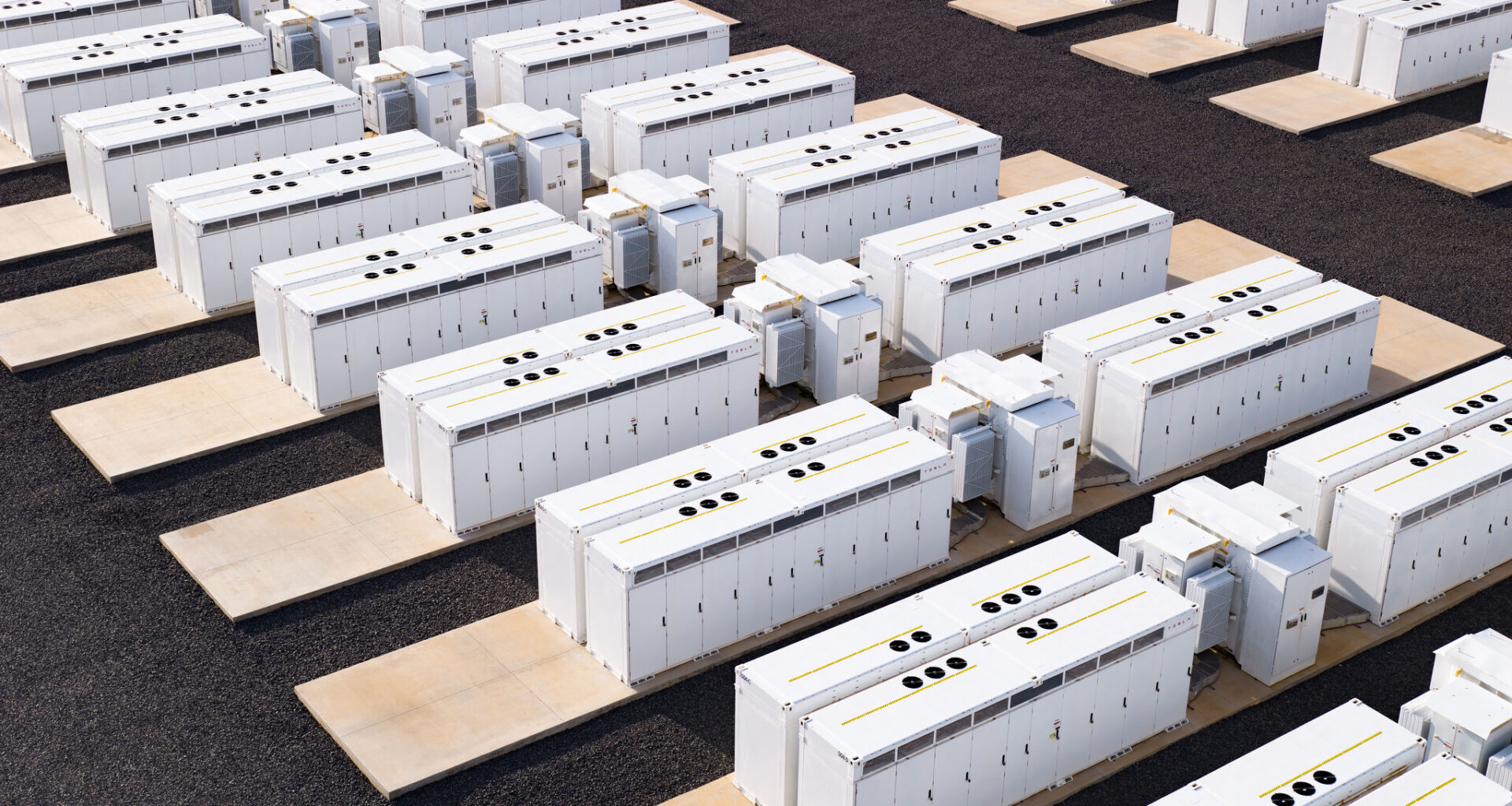
Tesla’s Megapack is an example of the utility-scale batteries that are becoming a larger part of Texas’ power grid. Austin Energy is investing in large battery projects as part of its strategy to manage power costs and growing electricity demand.
Tesla/Courtesy of Tesla, Inc.
Austin Energy is investing big in big batteries — and small ones — in an effort to keep electric rates from swinging out of control during periods of high demand.

In the past year, the Austin City Council has approved several major battery projects for the utility; collectively they can provide hundreds of megawatts of power to the Texas grid when needed.
Article continues below this ad
A heat dome parked over the Southwestern U.S. has brought intense heat to Texas in recent weeks, at times driving record-breaking electricity demand, according to the state’s grid operator, the Electric Reliability Council of Texas.
When demand is high and supply is lower — like on hot days with calm winds or summer evenings just after the sun sets — power prices can soar. And that demand is expected to keep growing: And Texas’ power needs are expected to grow sharply: ERCOT officials said in July that statewide demand could reach about 175,000 megawatts by 2032, nearly double the record set this summer.
The potential for price spikes is a major reason the utility has set its sights on batteries, according to Pat Sweeney, vice president of energy market operations for Austin Energy.
“They function effectively like a power plant, except their fuel is energy off the grid,” Sweeney said. “We buy the energy to store in the battery at a price that’s hopefully lower than what we get when we sell it out of the battery.”
Article continues below this ad
Austin Energy’s battery strategy, according to Richard Génecé, the utility’s vice president of customer energy solutions, is two-pronged: big, utility-scale batteries that provide power directly to the grid, and a network of smaller batteries installed at customers’ homes that the utility can tap into as needed.
Austin’s big batteries will be able to contribute a combined 300 megawatts to the ERCOT market once they are fully built out. The utility has signed two large battery agreements: a 20-year, $165 million contract with OCI Energy for a 100-megawatt facility in May, and a $320 million, 20-year contract with Jupiter Power for a 200-megawatt battery in July.
The utility-scale batteries are large, as far as batteries go, but “they’re not especially exciting to look at,” Sweeney said.
“You have maybe an acre, or a couple acres of land,” Sweeney said, “and then what you would see would be something like a bunch of, basically, shipping containers.”
Article continues below this ad
“Think of each one of those as a smaller battery,” he added. “You put a bunch of those together, and you end up with a big battery, essentially.”
Those batteries can be discharged based on grid conditions to help smooth supply and demand extremes. The balancing act serves as a hedge against price spikes, Sweeney said.
“It’s smoothing out the energy supply-demand balance, but also taking advantage of what that means on pricing as well,” Sweeney said.
Austin-based Base Power plans to use the former Austin American-Statesman building for shipping and manufacturing, seen Oct. 7, 2025. Austin Energy recently signed a 10-year, $40.8 million contract with Base Power for 40 megawatts of distributed battery storage.
Sara Diggins/Austin American-Statesman
Smaller batteries distributed across the city can serve much the same function, Génecé said. Earlier this year, Austin Energy launched a pilot program called Power Partner Battery that allows customers with backup battery systems in their homes to send power back to the grid in exchange for a stipend from the power company.
Article continues below this ad
Austin Energy will pay $500 up front to help pay for a new battery system, and then up to $75 for each kilowatt the battery provides. The utility will always leave customers’ batteries at least 20% charged, Génecé said.
“Let’s face it: 99% of the time, it’s not doing anything. We can offer you a benefit for that if you’ll allow us to access the power of that battery,” Génecé said.
Currently, he said, the program has enrolled 150 participants, representing about 2 megawatts of energy. The goal of the pilot is to hit 1,500 participants before deciding whether to make the program permanent.
Batteries from FranklinWH, Generac, SolarEdge and Austin-based Tesla are currently eligible for the program. Tesla has deployed about 1,000 of its Powerwall systems in the Austin area since 2017, and they make up the largest chunk of home batteries enrolled in Austin Energy’s program.
Article continues below this ad
The utility also signed a 10-year, $40.8 million contract with Austin-based Base Power in April for 40 megawatts of distributed battery storage.
Batteries big and small are central to Austin Energy’s ambitious goal to use 100% carbon-free energy by 2035, Génecé said. But why is the utility scaling up battery usage now?
“Frankly, the battery technology has just gotten much better, particularly over the last decade, in terms of how much it can store, the density of the energy … the functionality and the cost,” Sweeney said. “If you look at the ERCOT wholesale power market over that same period, you’ve seen a very significant addition of utility-scale batteries.
Article continues below this ad
“We’re pretty well in step with what the trend has been.”