
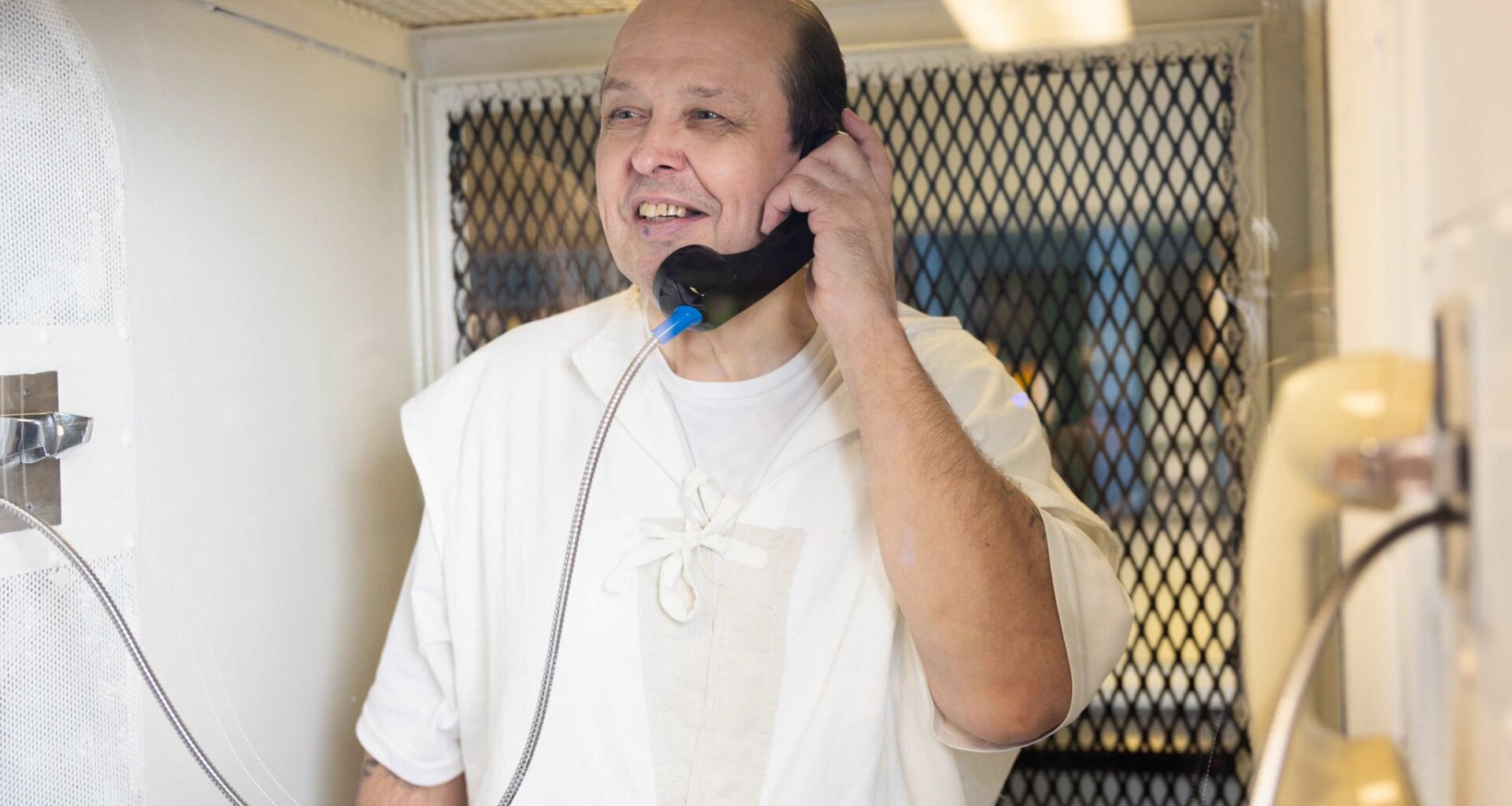
Robert Roberson, an East Texas man facing execution for the death of his 2-year-old daughter, smiles durning an interview with the Dallas Morning News at the TDCJ Polunsky Unit in Livingston, TX on Wednesday, Sept. 3, 2025.
Juan Figueroa/Staff Photographer
A Georgia man has been granted a new trial in a shaken baby syndrome case, a ruling Robert Roberson’s attorneys are urging a Texas judge to consider as he weighs whether Roberson should receive a hearing that could lead to a new trial of his own.

In court documents obtained Tuesday by The Dallas Morning News, Roberson’s legal team outlined recent developments in the case of Danyel Smith. Smith’s conviction was vacated last month in Gwinnett County, Georgia, after a judge concluded changes in science undercut the integrity of his conviction.
Roberson’s attorneys argued Smith and Roberson’s cases share striking similarities: Both were convicted in 2003 in cases rooted in shaken baby syndrome. Both involved male caregivers who brought injured children to hospitals seeking medical care. And both men refused to accept plea deals in exchange for lesser sentences, stating they would not admit to crimes they didn’t commit.
Article continues below this ad
Smith, who was convicted of killing his 2-month-old son Chandler, was sentenced to life in prison. Roberson, convicted for the murder of his 2-year-old daughter, Nikki, was sentenced to death.
Related: They were exonerated in shaken baby cases. Can their podcast help save Robert Roberson?
Beginning in the late 1960s, scientists posited that shaking infants could cause a potentially lethal combination of blood pooling between the brain and the skull, brain swelling and bleeding in or behind the eyes. That hypothesis soon became a legitimate diagnosis, and the triad of symptoms was believed to be enough to say a child had been intentionally injured.
The medical determination — now more commonly referred to as “abusive head trauma” — has since come under wide scrutiny by experts, and the Georgia court noted modern medical standards now require physicians to consider alternative explanations for a child’s injuries.
In Smith’s case, attorneys have said evidence shows his son’s death was due to medical complications stemming from his premature birth. Roberson’s attorneys, meanwhile, have argued Nikki, who was chronically ill, died of natural and accidental causes, including severe, undiagnosed pneumonia and a fall from bed.
Article continues below this ad
“Mr. Smith’s evidence presents an alternative medical explanation for Chandler’s death that is so material it would probably produce a different outcome,” reads the order granting Smith a new trial.
Roberson’s legal team said that conclusion mirrors the standard Texas courts must apply when considering claims under the state’s “junk science” law, which allows people to contest their convictions based on new scientific evidence.
Related: Robert Roberson asks court to consider New Jersey’s landmark shaken baby ruling
Roberson, who has been on death row for more than two decades, has repeatedly sought relief under the law. An Anderson County judge ruled against him as recently as 2022, stating after a lengthy evidentiary hearing that he failed to show shaken baby syndrome was “discredited and no longer an accepted medical diagnosis.”
Article continues below this ad
The 59-year-old is currently awaiting a decision on whether he will receive another evidentiary hearing, a process that started after Roberson’s third stay of execution in October 2025. The stay was granted in light of an overturned conviction in a similar shaken baby case out of Dallas County.
Considered a “notice of persuasive authority,” Tuesday’s filing is not binding, but a court can choose to rely on and follow the decisions made by other jurisdictions. Roberson’s attorneys filed a similar notice late last year following a landmark ruling out of New Jersey that deemed shaken baby syndrome testimony inadmissible.