
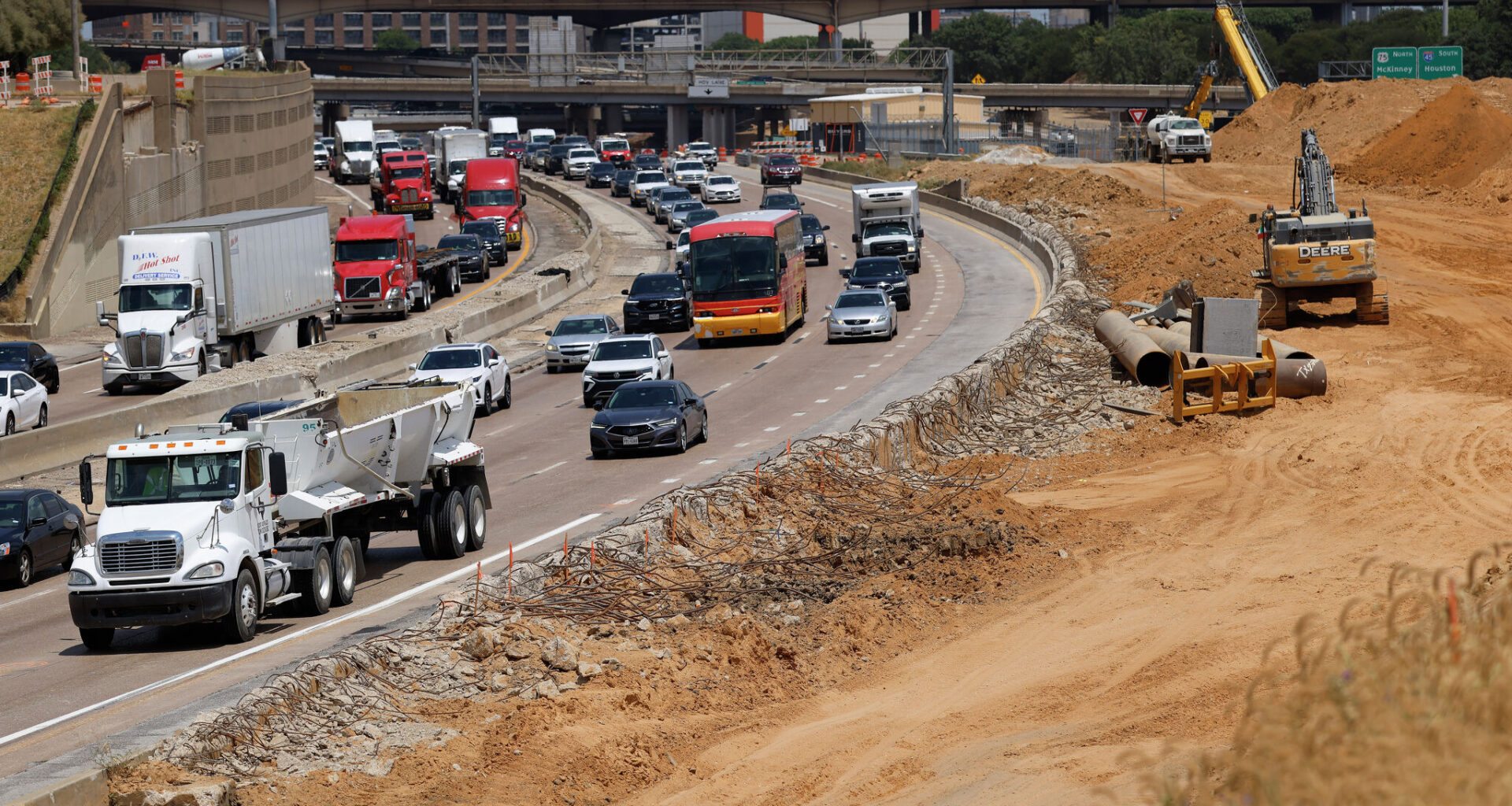
Work continues on the I-30 Canyon Improvement Project in downtown Dallas, July 30, 2026. Here, westbound traffic passes by excavators removing dirt from the tall median that stood between S. Harwood St. and I-45. The project will help relieve heavy congestion, build new bridges and connect downtown to the Cedars neighborhood.
Tom Fox/The Dallas Morning News
For drivers navigating downtown Dallas, the torn-down bridges, closed streets and constant detours along Interstate 30 continue to be ongoing. Construction on one of downtown Dallas’ busiest corridors, the I-30 Canyon, began in January and drivers still have years of disruptions ahead.

Since the project’s inception, workers have torn down several bridges and began reconstructing the highway. However, it will take about five years and almost $1 billion to repair and widen the two-mile stretch.
Here’s what downtown Dallas drivers need to know.
Article continues below this ad
What is the I-30 Canyon Project?
The Texas Department of Transportation considers the I-30 Canyon to be one of the state’s most congested corridors, as identified by the authority’s Texas Clear Lanes Initiative. The project will reconstruct and widen the 2.3 miles of the highway between Interstate 35E and Interstate 45.
The transportation authority states the reconstruction is necessary to improve both mobility and safety throughout downtown Dallas and local neighborhoods. The interstate will be widened from six main lanes to 12. Weaving spaces between interchanges will be lengthened, giving motorists more room to get from one side of the interstate to the other safely.
The multi-modal project will benefit other commuters as well. The project plans to widen bridges over the interstate to make room for bike lanes, as well as replace a four-track rail bridge serving both passenger and freight trains. The redesigned cross-streets are intended to improve pedestrian and cyclist safety.
The contract was awarded to Balfour Beatty Construction and is estimated to cost $888 million.
Article continues below this ad
Funding for the projects comes from federal and state sources including fuel tax, general sales and use tax, and certain taxes under both Proposition 1 and 7.
What work has been done so far?
According to TxDOT’s 2026 update, the canyon project is 8% complete. Several bridges were torn down at the beginning of the year to make room for construction. Since then, a lot of work has been taking place underground, said Kenna Mitchell, TxDOT’s public information officer and lead officer for the I-30 Canyon Project.
“Crews are working on new utility connections and also on the foundations for new retaining walls in areas along the east end of the project,” Mitchell said. “The new bridge at Cadiz [Street] is in the early stages of construction.”
Motorists in the area can expect future traffic shifts in the corridor as work continues. TxDOT wants to remind motorists that the I-30 Canyon is a long-term construction project, with an estimated overall completion date in 2031.
Article continues below this ad
So far, no delays or construction mishaps have occurred.
Work continues on the I-30 Canyon Improvement Project in downtown Dallas, July 30, 2026. Here, excavators remove dirt from the tall median that stood between S. Harwood St. and I-45. The project will help relieve heavy congestion, build new bridges and connect downtown to the Cedars neighborhood.
Tom Fox/The Dallas Morning News
Who does this project impact?
TxDOT predicts the 12-lane corridor will move about 234,500 vehicles daily once the project is complete. Until then, motorists can expect congestion and shifting traffic patterns to continue. Any motorists traveling on I-30 through downtown Dallas will notice an increase in traffic, especially commuters moving between the two main work zones, I-35E and I-45.
Article continues below this ad
“Drivers need to stay alert to slower traffic in this work zone,” Mitchell said. “Be sure to set aside distractions and give your full attention to the drive.”
Rebuilding bridges and cross-streets will change how residents, pedestrians and cyclists move between downtown Dallas and neighborhoods south of the highway such as the Cedars. Pedestrians and cyclists traveling near or around the cross-streets by the Canyon will also notice increased construction.