
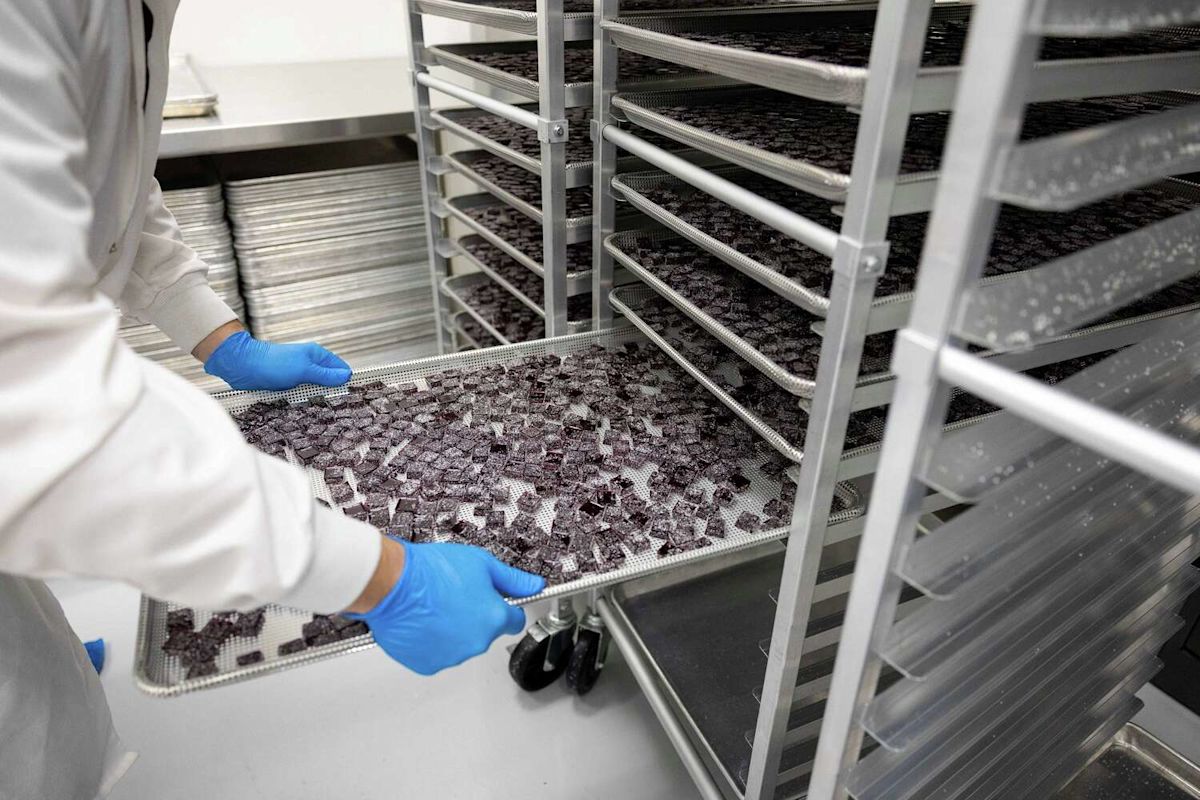
An Austin woman says her life was derailed by a single THC gummy – a chewy, flavored candy infused with the mind-altering compound found in cannabis.
In a lawsuit in state District Court in Travis County, the woman identified as Jane Doe said she was incapacitated after consuming the candy, spending three days sleeping before being admitted to a psychiatric hospital.
The lawsuit says later testing showed the packet of gummies she purchased locally contained synthetic THC that was much stronger than advertised. Doe is suing the chain of vendors that put the packet of edibles in her pocket, from the manufacturer to the sales outlet.
READ NEXT: What’s legal in Texas? A guide to hemp, THC, CBD and marijuana laws
She said she filed under a pseudonym because she feared physical and psychological harm and harassment.
The lawsuit, which was filed in 2025, continues as Texas struggles to present a consistent legal strategy for consumable highs. A ban recently went into effect for delta-8 products, a lower potency THC cannabinoid. A lawsuit in Texas Business Court has challenged companies over the makeup of products claiming to be consumable hemp. Other lawsuits over product liability also raise questions about regulation of the consumables market.
The lawsuit echoes some public criticisms already made of Texas’ enforcement of the hemp-legalizing 2018 Farm Bill, alleging that unscrupulous actors are taking advantage of gaps in regulation.
“These so-called ‘hemp’ products initially trickled and have now flooded into the State marketplace since 2020,” Doe said in her suit.

Medical marijuana gummies at the Good Blend facility in Austin. (Sara Diggins/Austin American-Statesman)
The attorney who represents her is also representing an Austin company that is licensed to sell medical THC in Texas. That company – Texas Original Compassionate Cultivation – is suing multiple purveyors of hemp products it alleges are violating state law by peddling products with illegally high THC levels.
In Doe’s case, she said consuming a gummy candy from Half Bak’d Primo Twist THCP incapacitated her for days.
“Her erratic behavior intensified such that a therapist was consulted, who suggested admission to an inpatient mental health facility,” the lawsuit said.
Before she could get there, she suffered what the lawsuit described as a psychotic episode in which she believed she was receiving communications from the license plates of passing cars and had to be subdued by police, who took her to an emergency room. She later was transported to a psychiatric facility, where she spent eight days.
Doe then moved to New Hampshire, where her parents lived. Days later, the lawsuit says she experienced another psychotic episode and was hospitalized again. After months, she was able to return to Austin in early 2025.
According to her lawsuit, Doe had no previous mental health issues.
When the gummies she bought in Austin were tested, the lawsuit said, they were found to contain no plant-based cannabinoids.
Doe sued Gary McCreight and the Smoking Caterpillar at 512 Neches St. for selling the packet. Other defendants include the alleged manufacturer Biominerales Pharma LLC and distributors Fresh Farms E-Liquid LLC, Amia Trade Inc. and Austin Wholesale Supply LLC. The lawsuit also named Anthony Devincentis, CEO of Fresh Farms, and John Petti and Gavin Mahoney, members of the company. Also named individually are Adriana Shaw and Martin Grenier of Biominerales.
Doe is also suing Perimeter International for warehousing the Fresh Farms products and testing labs Accurate Test Lab LLC and ACS Laboratory LLV. She is seeking at least $1 million in damages, including compensation for lost wages, impairment, pain, mental anguish and disfigurement. She also wants exemplary, or punitive, damages, as well as court costs and litigation expenses.
Defendants’ attorneys did not respond to requests for comment.
McCreight and the Smoking Caterpillar have denied the allegations in court filings.

Martin “Ty” Cobb, an Army veteran who was deployed seven times between 1998 and 2017, shops for gummies. He said he takes them to reduce his anxiety. (Raquel Natalicchio/Houston Chronicle)
Fresh Farms and Amia denied the claims, arguing the plaintiff may be leaving out parts of her story. They suggested in court filings that a third party committing a criminal act may be to blame.
Individually named defendants from Fresh Farms said they were not personally liable under the law and the Texas court had no jurisdiction over them as California citizens.
Perimeter said in court filings that it was unclear what was being alleged against the company and requested the court require clarification.
ACS Laboratory LLC said Doe sued the wrong company and that ACS Laboratory LLV does not exist. It also argued that the court lacked jurisdiction over the company. Doe lists ACS Laboratory LLV as a Boca Raton, Fla., company.
Austin Wholesale Supply separately filed answers in court saying the company had been improperly named as a defendant, that it had never done business at the locations listed and that Amia was the actual company doing business under the name.
On Monday, Doe dropped her case against Accurate Test Lab.
The original case was filed in June 2025 but was removed to federal court at the request of Fresh Farms. Doe asked that it be sent back to state court, and a federal magistrate judge agreed. It was sent back to state court in December. A motions hearing is set for Wednesday afternoon.

Employee Aleida Hernandez discusses Delta-9 gummies for sale at Austinite Cannabis Co. on Wednesday, April 17, 2024. (Mikala Compton/American-Statesman)
This article originally published at Austin THC gummy lawsuit raises questions as Texas tightens hemp rules.