
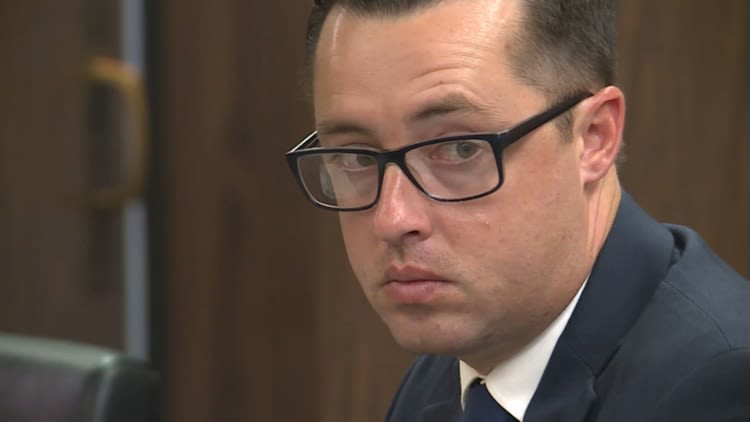
A Nueces County jury heard closing arguments Thursday in the trial of Garner Burford, who is accused of leaving the scene of a Corpus Christi crash that killed one person and seriously injured another.
Burford faces two counts of failure to stop and render assistance. One charge is connected to the death of 27-year-old Marissa Mendoza, while the other involves serious injuries suffered by Jacob Salas.
The case centers on what Burford did after the crash and whether he knew someone had been hurt or killed.
What prosecutors told the jury
Prosecutor Jonathan Crocker argued Burford knew the crash was serious but continued driving instead of stopping or returning to the scene.
Jurors were shown a video of the crash’s impact and aftermath, along with photos taken by investigators.
Prosecutors also pointed to data recovered from Burford’s vehicle that they said showed it was traveling about 90 mph at the time of impact.
Salas testified about the injuries he suffered, including injuries to his collarbone, hip, back, and eye. He required a wheelchair and physical therapy and continues to deal with the effects of the crash.
Testimony about Mendoza’s injuries showed she suffered a torn aorta and severe liver injuries. Jurors were told she had no chance of surviving.
Prosecutors also focused on what happened after the crash. A friend of Burford testified that Burford called him for a ride and expressed concern about going to jail if police found him first.
Crocker argued that Burford showed he understood the seriousness of what had happened.
“He knows exactly what he did,” Crocker told jurors.
Defense says Burford did not intentionally flee
Defense attorney Eric Perkins did not dispute that Burford caused the crash. Instead, he told jurors the case comes down to whether Burford intentionally or knowingly left the scene without helping.
Perkins repeatedly reminded jurors that Burford is presumed innocent and that prosecutors have the burden of proving the charges beyond a reasonable doubt.
The defense argued Burford did not initially understand how severe the crash was and continued driving until his damaged vehicle could no longer move.
Perkins said the Weber Road exit was the first legal exit Burford could take and argued there were questions about exactly where Burford could have safely stopped or returned to the crash scene.
The defense also argued Burford suffered a concussion that affected his ability to interact with police following the crash.
Perkins cautioned jurors against treating evidence that Burford consumed alcohol before the crash as proof that he was intoxicated.
“This was an accident. It was a severe accident,” Perkins told the jury, arguing that the tragic outcome alone was not enough to convict Burford of leaving the scene.
Prosecutors challenge Burford’s explanation
During rebuttal, Crocker argued Burford’s actions showed he knew someone could have been hurt.
Prosecutors pointed to Burford’s police interview, including statements about drinking before the crash and his concerns about receiving a ticket or possibly facing a DWI investigation.
Crocker also challenged the defense’s claim that a concussion could explain Burford’s actions.
Prosecutors argued Burford had several opportunities to stop, call 911 or return to the crash scene but did not.
The jury received instructions from the judge before closing arguments began.
3NEWS will continue following the trial and provide updates when the jury reaches a verdict.