

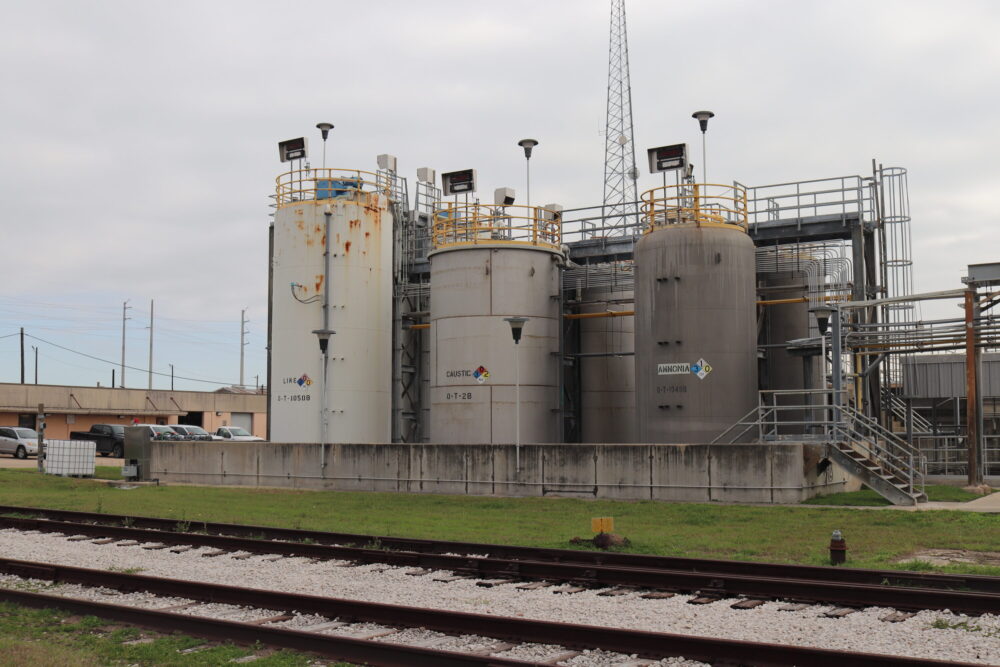
Dominic Anthony Walsh/Houston Public Media
The East Water Purification Plant serves more than 2 million residents in the Houston area.
S&P Global — one of the “big three” credit ratings agencies — lowered its outlook on the financial health of Houston’s combined water and wastewater utility system (CUS) this week, two months after Mayor John Whitmire’s administration implemented major reforms to the city’s finances.
As Houston faced another crushing deficit in its $3 billion general fund — which supports core services like public safety, parks and libraries — city officials moved the more than $100 million solid waste department into the utility system. The mayoral administration also implemented an annual charge on the utility for using municipal infrastructure, moving another approximately $100 million into the general fund.
All told, the changes essentially erased the more than $200 million general fund deficit for the 2027 fiscal year, but they also ate into the utility’s more than $1 billion fund balance — essentially its cash-on-hand savings account.
Sign up for the Hello, Houston! daily newsletter to get local reports like this delivered directly to your inbox.
Jaime Blansit, associate director at S&P Global, said the negative outlook for the city’s utility system “is really focused on the uncertainty of where they plan to go with their future financial position.”
“We don’t have a clear plan of attack from the utility on how they’re going to absorb those additional costs,” Blansit said. “Are they going to increase rates on the customers to kind of align revenues and expenditures that way? Or are they going to draw down on their liquidity reserves — their cash on hand, if you will — in order to basically just absorb this through their very flexible cash position.”
RELATED: What does Whitmire’s budget mean for Houstonians’ bottom line, city’s financial future?
The negative outlook signaled a possible downgrade in the utility’s credit rating, which would increase the cost of bonds and potentially lead to additional water rate hikes for customers.
The administration does have a path toward bringing more revenue into the utility system.
For the first time this month, households receiving garbage and recycling services from the city of Houston will begin paying a $5 monthly fee on their water bills, which could ramp up to as much as $25 in the coming years. City officials have expressed reluctance to escalate the fee to that level, but it would likely cover the cost of solid waste services, according to a rate study released by Whitmire’s administration.
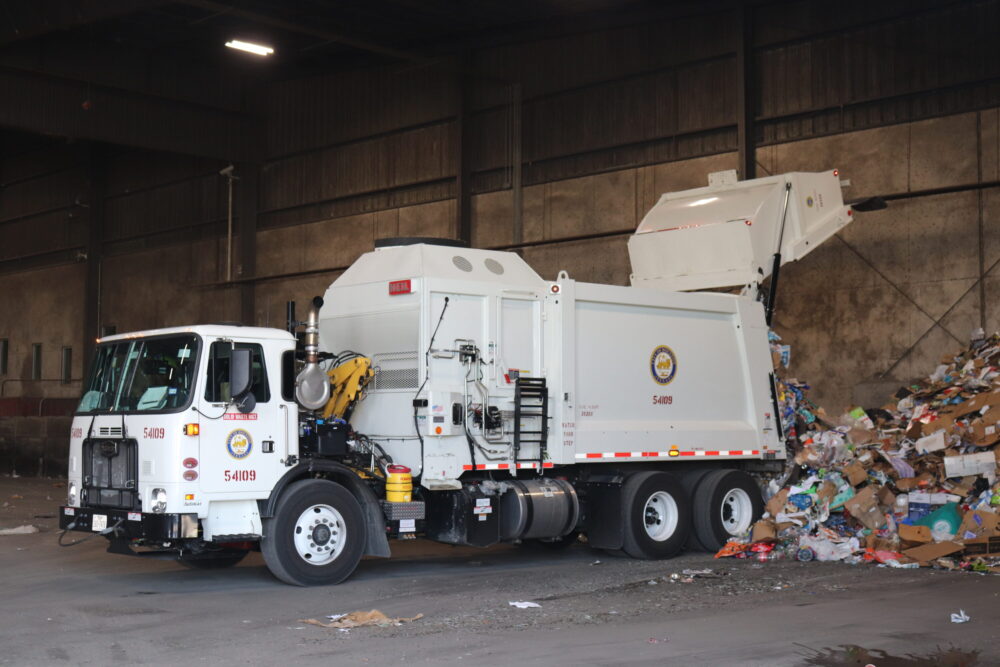
Dominic Anthony Walsh / Houston Public Media
A newly purchased recycling truck unloads at the city’s recycling plant in late September.
The administration has also pledged to implement “efficiencies” in solid waste operations in an effort to reduce costs.
“It’s going to be proof in the pudding,” Blansit said. “We’re going to want to see in the next couple years where you take that system.”
RELATED: S&P Global improves outlook on city of Houston’s finances
S&P Global’s move on Tuesday came a few weeks after the ratings agency improved its outlook for the city’s general fund, citing “substantial progress in materially reducing its budget gap … through various structural changes.”
And in a significant boost last week, Moody’s — another of the “big three” ratings agencies — improved the city’s credit rating, pointing to “swift and recent implementation of recurring and meaningful revenue enhancements and expenditure realignments, which materially reduced budgetary gaps and improved financial flexibility.”
Related: What the city’s first credit rating upgrade in years could mean for Houstonians
“That’s good news because a stronger credit rating should lower our cost of borrowing and preserve taxpayer dollars for other priorities,” City Controller Chris Hollins said on Wednesday, “but every dollar has to come from somewhere.”
He argued the shifting of expenses and revenue between the general fund and utility system represented “no new money being created, just moving money from one pocket to the other.”
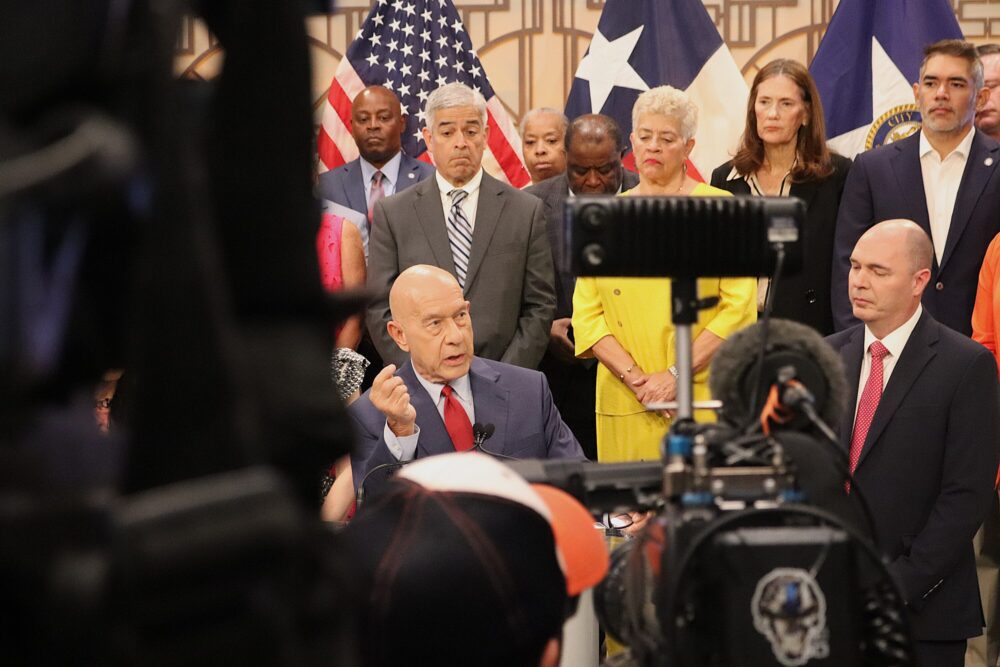
Dominic Anthony Walsh / Houston Public Media
Houston Mayor John Whitmire speaks about his proposed budget on May 5, 2026.
Throughout the budgeting process in May and June, Hollins sparred with Whitmire over his administration’s plan. The city council ultimately approved the budget in a 15-1 vote.
Whitmire’s administration will “continue our dialogue with S&P,” finance director Melissa Dubowski told city council members on Wednesday.
“We, of course, remain committed to sound financial management, responsible planning and maintaining the strong credit,” she said.
The utility system faces massive, debt-financed capital improvement projects in the coming years to the tune of more than $8.6 billion, including a more than $3 billion overhaul of a water purification facility and $3.5 billion for wastewater treatment facilities. S&P Global analysts “are going to want to see them execute on their plans,” Blansit said.
“We will be continuously watching the (combined utility system) in a way we haven’t watched it before — because we are loading more expenses to the CUS,” Sallie Alcorn, chair of the city council’s budget and fiscal affairs committee, said on Wednesday. “We want to see the projects out the door. We want to see the money being spent. We want to continuously look at the health of our CUS so that negative outlook does not translate to a downgrade.”