
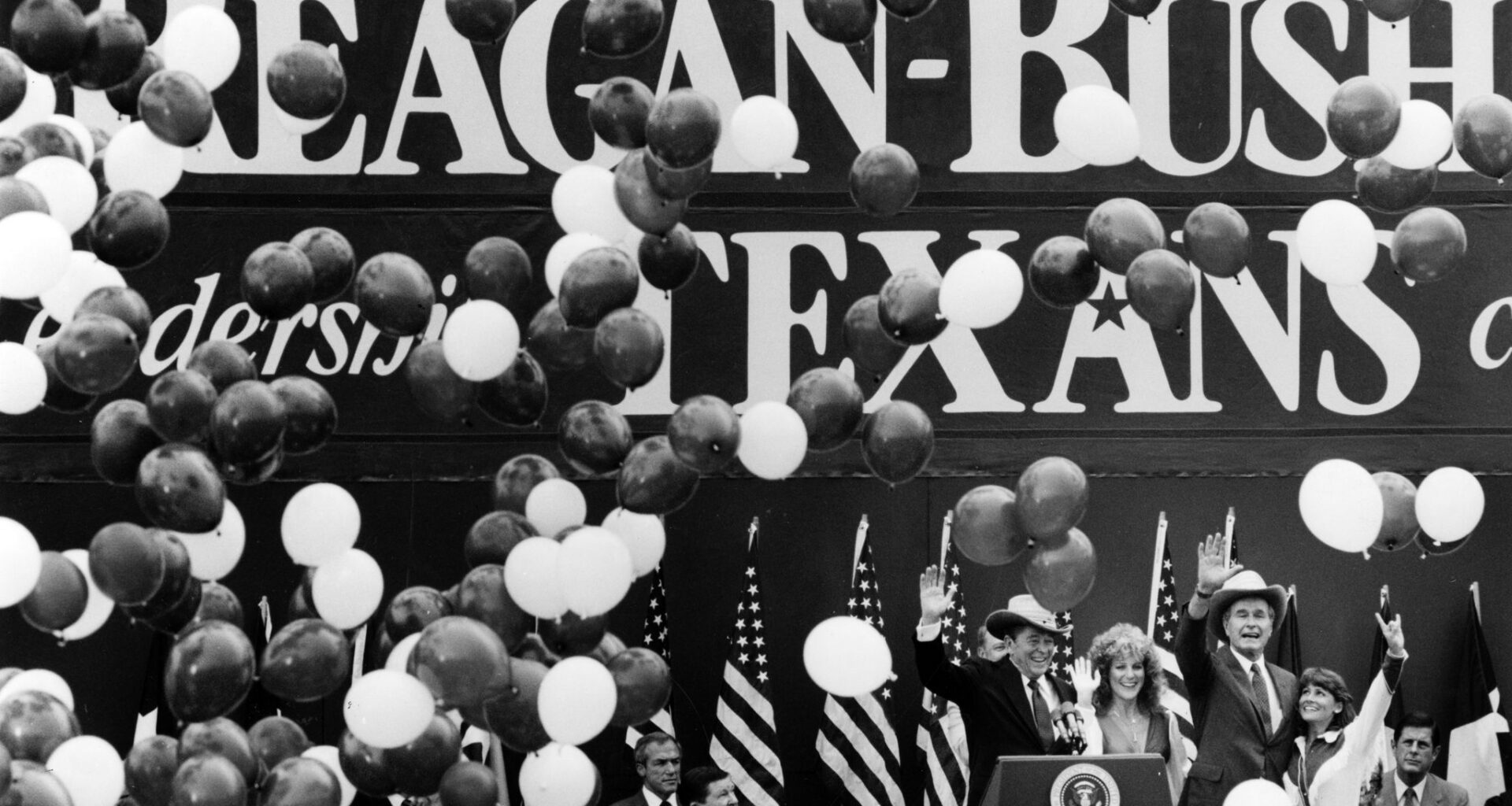
The last time Republicans came to Dallas, the television show Dallas projected an image of oil, wealth and Texas swagger to viewers around the world.
David Brown, then a young police officer who would later become chief, remembers how much that glitzy version loomed over the GOP’s 1984 national convention
“It was that and rock ’n’ roll,” he said.
The city in 1984 leaned heavily Republican and was riding a building boom remaking its skyline. Inside the convention hall, party delegates sent Ronald Reagan and George H.W. Bush off toward a 49-state landslide.
Forty-two years later, that Dallas is gone.
Business power spread beyond downtown into the suburbs. The economy evolved from one dominated by oil and banking into one driven by finance, technology, logistics, healthcare and global corporations. Dallas County politics flipped from Republican to Democratic. And the region more than doubled in size and became far more diverse.
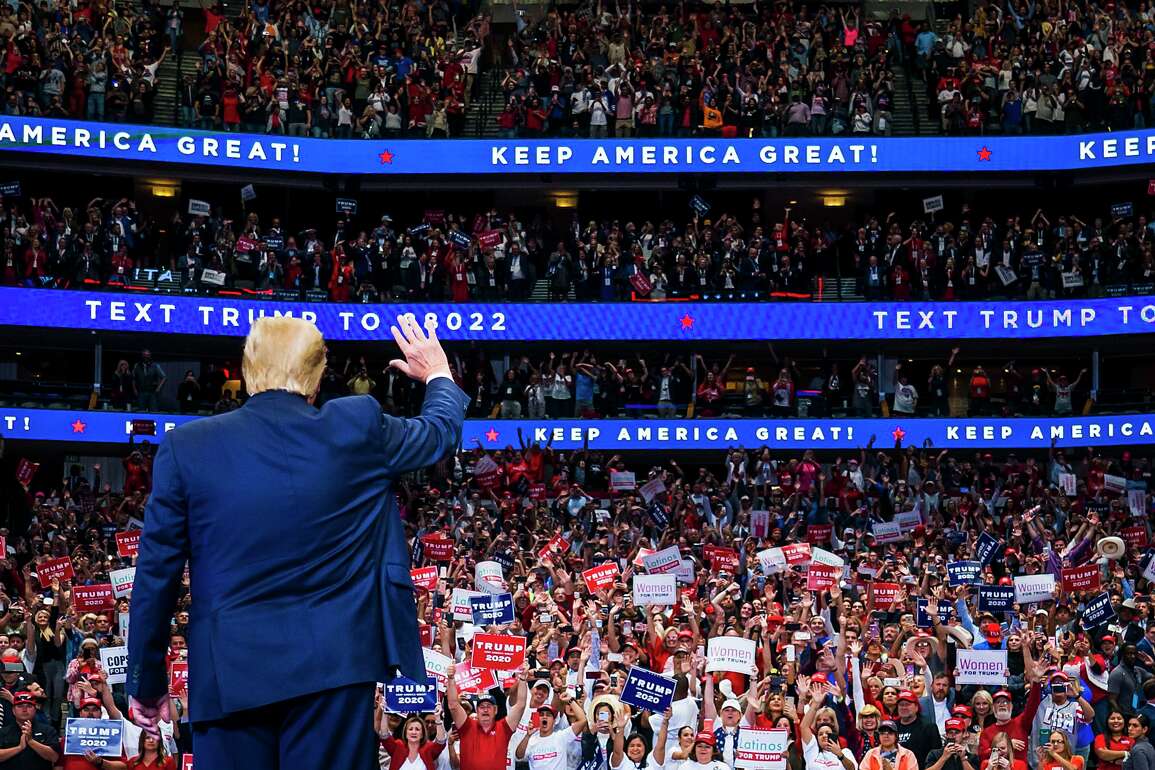
President Donald Trump at a reelection rally Oct. 17, 2019, in American Airlines Center in Dallas.Smiley N. Pool/The Dallas Morning News
Today, even the convention itself will be different.
President Donald Trump will headline not a traditional presidential nominating event, but the party’s first national midterm convention Sept. 9-10 — a combination fundraiser and GOP showcase.
The Dallas Morning News spoke with Brown and two others who worked in key roles at the 1984 Republican convention from different corners of Dallas.
Linda Perryman Evans helped lead the host committee that welcomed thousands of Republicans to Dallas. Today, she is retired after more than two decades as CEO of the Meadows Foundation, a private philanthropic institution.
David Brown, Linda Perryman Evans, Levi Davis
“People were unified,” she said, contrasting 1984 with today’s partisan fights. “The Republicans were unified under President Reagan.”
Levi Davis, as an assistant city manager, coordinated municipal services as delegates, protesters and the national press arrived that August. He remains active in civic organizations, from the African American Museum of Dallas to the University of North Texas Library Advocacy Board.
“The community isn’t just Dallas anymore,” he said of the region’s growth. “The community is North Texas.”
Brown, who guarded convention entrances, is now semi-retired and works in consulting and real estate.
They all still call Dallas home, having watched it grow and shift politically since that convention.
The News asked them to look back at the city that greeted Reagan and ahead to what Trump will find here next month.