
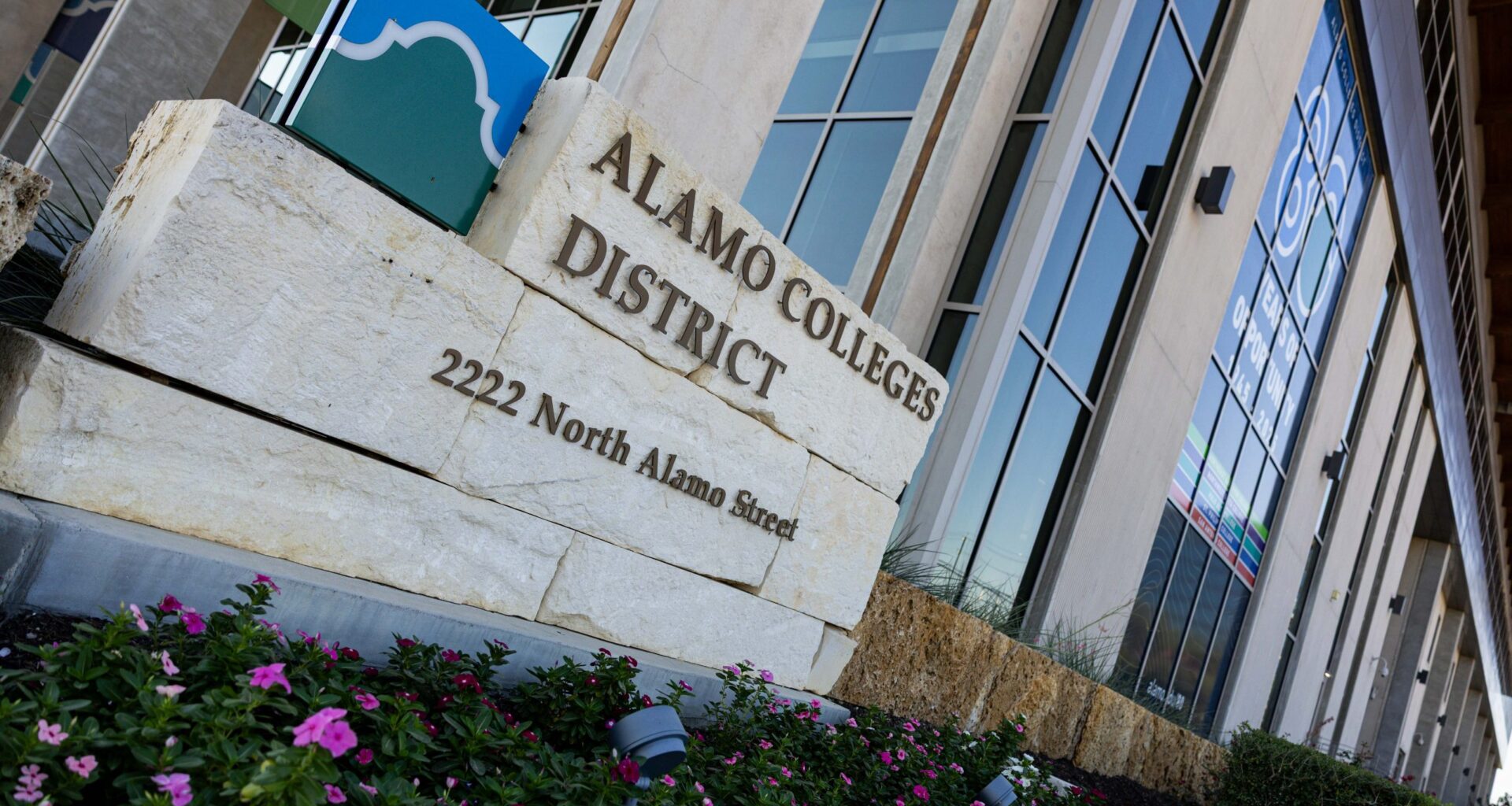
Alamo Colleges District officials announced the creation of a stand-alone School of Online Learning, which is projected to surpass 25,000 students enrolled by 2029.
The online school was approved by the Alamo Colleges Board of Trustees during a board meeting in October, and officials expect to fully launch it by fall of 2026.
“With the School for Online Learning, we’re creating a more cohesive experience for our students, one that reflects the same quality and support they would expect from any classroom across our colleges,” said Mike Flores, Alamo Colleges District chancellor, in a written statement.
Enrollment of students who solely take online courses throughout the five Alamo Colleges — Palo Alto College, Northwest Vista College, Northeast Lakeview College, San Antonio College and St. Philip’s College — has steadily increased over the years, going from an enrollment of 16,473 students last academic year, to just over 18,300 this fall.
This particular effort to improve online access began in 2018, when the colleges had about 7,000 enrolled online. The first steps involved hiring an online learning officer, designing what the online services would look like, and creating micro-credentials that could be earned fully online.
“It is a significant commitment by the board, our chancellor, by our college presidents to say, ‘We understand that access looks different to different parts of our community. We understand that what we offer in our face-to-face classrooms… is top of the line and we can do the same thing and are doing the same thing online,’” said Luke Dowden, Alamo Colleges vice chancellor for digital learning and transformation.
The colleges now offer 164 programs developed for fully-online students — including programs for bachelor’s and associate degrees, certificates and occupational skills awards. These have attracted a student population that is on average 27 years old, with a majority being continuing education students attending on a full-time basis at a higher rate than in-person students. This group is largely female, with a higher number of student parents than the overall Alamo Colleges population.
“I never expected the number of full-time students that we have,” Dowden said in an interview. “Because if you look at Alamo, the majority [81%] of our profile is part-time… of our fully online students, 30% are full-time.”
Online students are part of the overall growth that all five colleges have experienced over the years. This year Alamo Colleges reached nearly 88,000 students enrolled, and its projections indicate the colleges are on the way to reach 100,000 by 2030.
Course credits and degrees will still be issued by the individual colleges, Downen said, with the college’s faculty continuing to teach these courses, Dowden said. But the services themselves will be coordinated by the School of Online Learning, to assess the programs’ quality, consistency and performance.
“We had been really focused on course design, really good course design,” said Dowden. “We’ve been shifting to focus on programs … looking at which programs have the most students enrolled.”
Competition for online students is also top of mind, Dowden said. Four new competitors — Southern New Hampshire University, Arizona State University, Grand Canyon University and Abilene Christian University — are among the top 10 colleges and universities offering online degrees in the region.
Three out of these four newcomers happen to be large national universities, Dowden told the board of trustees during a meeting last week. But Alamo Colleges and the University of Texas at San Antonio, were still attracting the majority of local online students.
“We’re really centered on the online learner,” Dowden said. “We talk about our competitors because we know we want to be an option. We think we’re the most affordable option.”
The San Antonio Report partners with Open Campus on higher education coverage.