
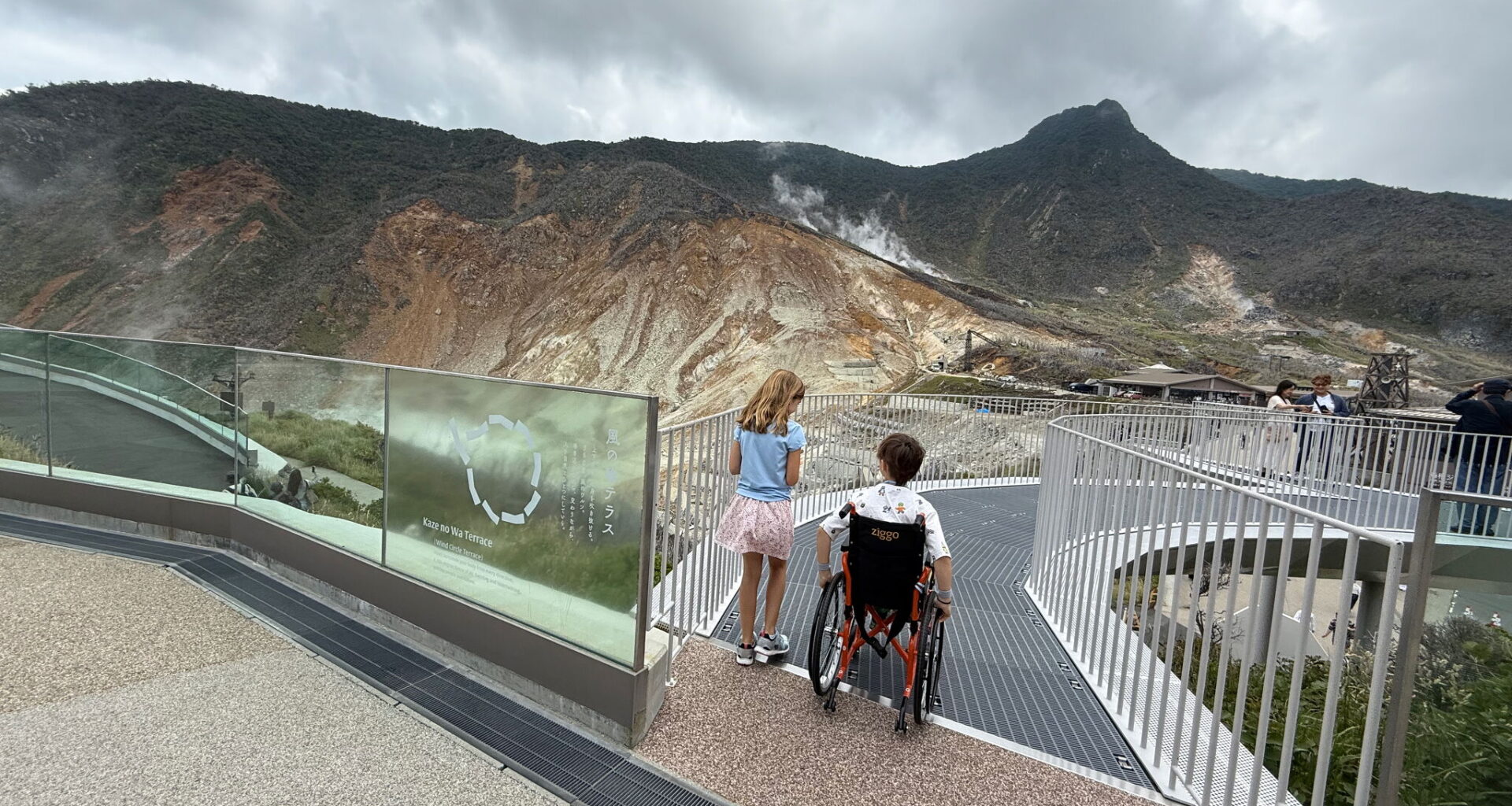
Students visit Japan in June as part of an educational trip through Paragon Prep. Without cell phone use during the day, students begin paying attention to each other and to the world around them, Lindsay Hay writes.
Courtesy of Lindsay Hay

My phone couldn’t tell me.
Article continues below this ad
Standing deep beneath Osaka, Japan, in one of the world’s busiest subway systems, my group of students wandered through a maze of tunnels, staircases and signs we couldn’t read. Without the sun, a skyline or familiar landmarks, even digital maps became almost useless.
In that moment, I had an unexpected thought: This is exactly where we need to be.
After 15 years of leading student travel programs, I’ve come to believe that getting genuinely, uncomfortably lost is one of the most valuable learning experiences we can give young people. Not because we want them to struggle, but because navigating uncertainty teaches lessons that no worksheet or lecture can replicate.
Travel has always been educational, but not simply because students visit museums or historic sites. Its greatest value lies in the unexpected moments that require observation, problem-solving, communication and resilience.
Article continues below this ad
Those opportunities are becoming increasingly rare.
ALSO READ: We delayed getting our kid a phone, social media until high school. We were right
Today’s children are growing up in a world designed to eliminate boredom and uncertainty. Waiting rooms, restaurants, airports and even grocery stores are filled with children absorbed in screens. I recently visited Disney World and saw toddlers watching iPads from their strollers while surrounded by one of the most immersive environments ever created. They were physically present but mentally somewhere else.
As parents and educators, our instinct is often to make every idle moment easier. But when we constantly entertain children, we rob them of opportunities to become curious, observant and independent. Boredom often sparks creativity, and uncertainty builds confidence.
Article continues below this ad
That’s why our trips have a simple rule: no cell phone use by students, except to call their parents at night.
Without devices, students begin paying attention to each other and to the world around them. They notice architecture, landmarks, neighborhoods and conversations. They learn to remember turns, ask thoughtful questions and solve problems together instead of searching for instant answers online.
Those aren’t just travel skills. They’re life skills.
SIGN UP FOR THE AUSTIN ANGLE and get Statesman commentaries in your inbox
Article continues below this ad
Back in Osaka, I wondered how many students would know how to retrace their steps if they became separated from the group. Would they remember the landmarks? Would they know what information they needed? Would they feel confident enough to ask a stranger for help, even in another language?
As those questions ran through my mind, a local woman approached us with a smile.
“Hello. Where are you from?”
Article continues below this ad
Then I asked, laughing, “Is it obvious we’re lost?”
She laughed too and pointed us toward our hotel. During that same week, three different Japanese residents noticed we needed help before we even asked.
That experience left me with another lesson: because they weren’t distracted by their own devices, they noticed the people around them.
Education doesn’t end when students leave the classroom. Some of the most meaningful learning happens when they are navigating unfamiliar places, adapting to new cultures, solving unexpected problems and relying on one another instead of a screen.
Article continues below this ad
In a world where technology can answer almost any question, perhaps the most valuable skill we can teach isn’t how to find the fastest route. It’s how to think when the map doesn’t work.
The goal isn’t to keep our children from ever getting lost.
It’s to give them enough real-world experiences that they’ll know how to find their way.
Article continues below this ad
Lindsay Hay has spent more than 15 years in education and serves as head of school of Paragon Prep in Austin.