
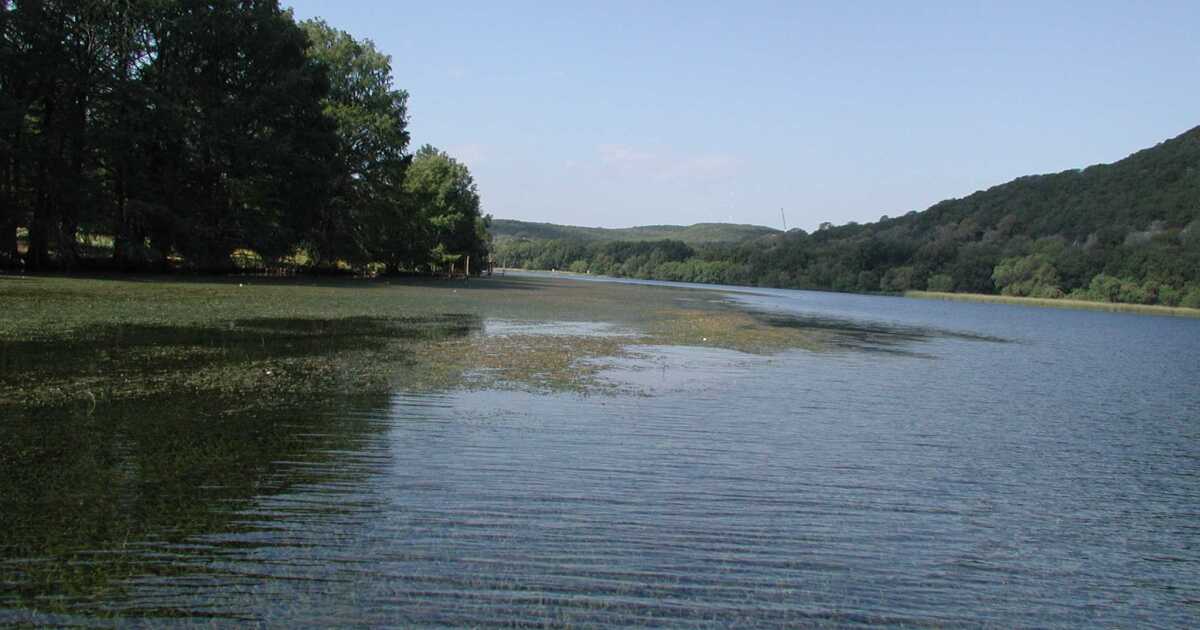
The city of Austin is considering lowering Lake Austin by 12 feet to combat hydrilla, an invasive aquatic plant that has reemerged after being virtually eradicated for years.
Acreage of hydrilla is near an all-time high, according to a memo from Austin Watershed Protection to the City Council. Overgrowth can lead to water quality issues, crowd out native species, and get tangled in boat motors.
The plant isn’t a new problem in Austin. Patrick Ireland, district fisheries biologist for the Texas Parks and Wildlife Department, says it has been present in Texas bodies of water for decades.
“I think I’ve read that half of Texas public reservoirs have had hydrilla at some point or another,” said Ireland, whose department monitors invasive aquatic species around the state. “Oftentimes it’ll show up in a reservoir, proliferate due to ideal conditions such as drought, nutrients, warmth, but then it’ll disappear just on its own,” he said.
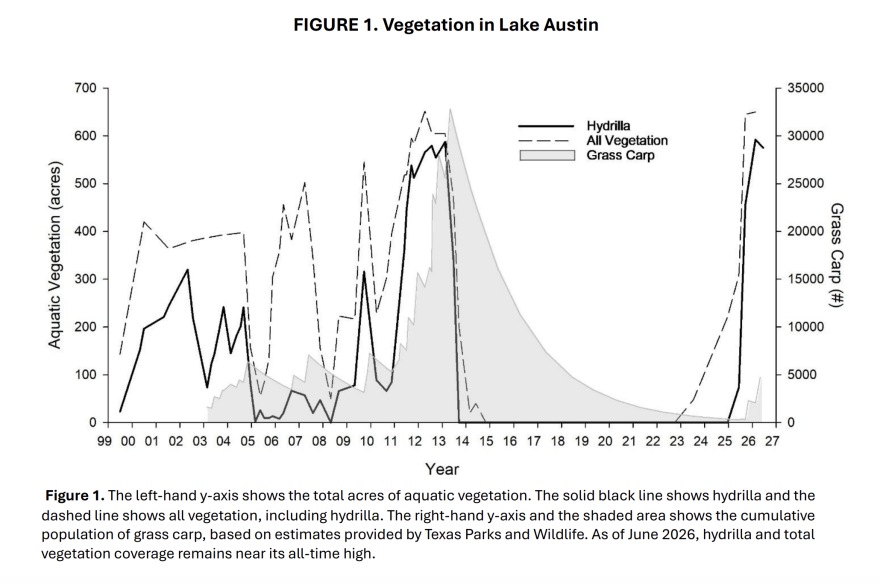
However, it hasn’t disappeared on its own in Lake Austin. Its growth exploded in the early 2010s when Austin had a prolonged dry spell. The aquatic plant thrives in drought because water is more stagnant.
The city stepped in, and by 2014 hydrilla was gone — until last year, when the plant began to make a comeback in the lake.
Watershed Protection Department, City of Austin
Brent Bellinger, conservation program supervisor with Austin Watershed Protection, said lowering water levels in reservoirs helps manage hydrilla. But during drought that’s not possible.
“Unfortunately, during the drought period, they weren’t able to do any lowering,” Bellinger said. “The plant really took off, because it wasn’t being checked by any large flooding events.”
Another strategy to manage hydrilla is releasing a fish called grass carp into the water. The city of Austin originally started doing that in 2003, but the extended drought period was causing the hydrilla growth to outpace what the carp could eat.
In 2011, the city ramped up carp stocking to try to compensate. It ended up working a little too well.
By 2014, the large population of carp had eaten all the hydrilla — and, having run out of that food source, moved on to eating other plants, until they eventually ate all of the those, too. The lack of all vegetation in Lake Austin persisted for nearly a decade.
According to the recent Watershed Protection department memo to City Council, that event caused “a cascade of negative effects, including increased planktonic algae blooms and a lack of habitat, leading to a collapse of the fishery and poorer overall water quality.”
Around 2022, native aquatic vegetation began bouncing back, and eventually the hydrilla came back, too. It’s now rebounded to nearly peak levels.
Now the city is considering lowering the lake for the first time since 2017 at the request of Lake Austin residents. A decision is expected in late August or early September.
Ireland said all the rain this year may also help disperse nutrients that feed hydrilla, and physically wash away some of the plant from reservoirs.
“I think if nature cooperates and we get flows from Lake Travis through, that can actually act as a natural mitigation. So that’s one of the things we watch. Maybe this El Niño year will provide that,” Ireland said.
Meanwhile, the city of Austin resumed carp stocking last year, and Bellinger said they’re taking it more slowly this time around.
“We don’t want to repeat what happened in 2012, 2013,” Bellinger said. “Overreact, overstock. And so we’re trying to balance, meeting the needs of the reservoir, the uses, these types of things, and balance those out.”
Austin Watershed Protection said it will likely request another grass carp stocking in the fall.