
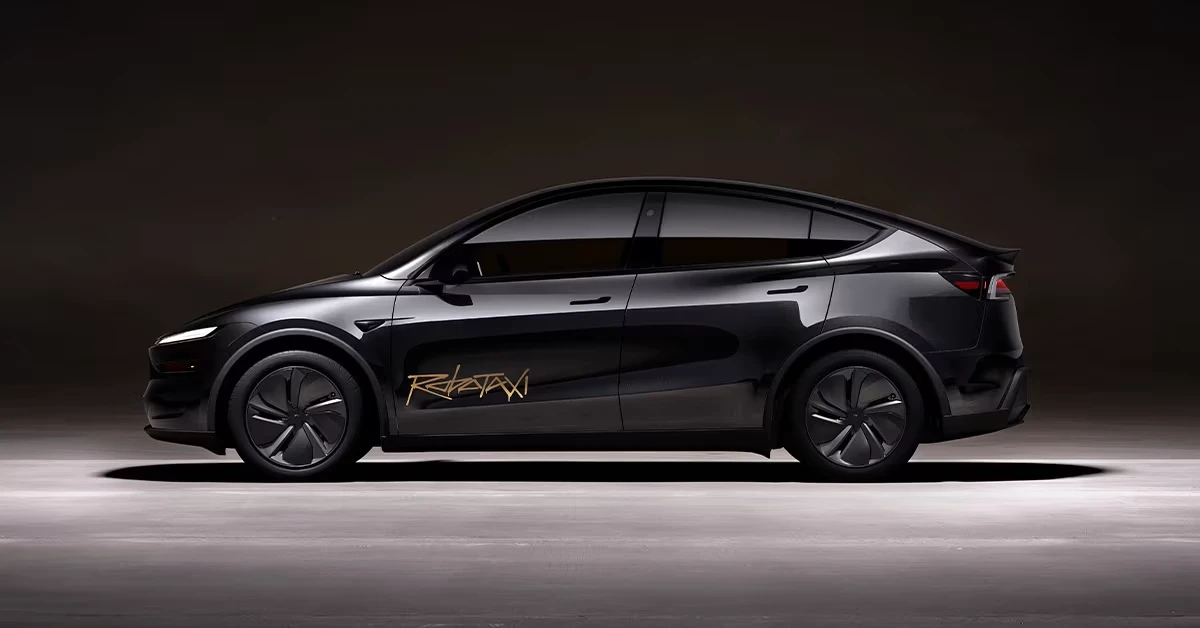
Tesla is preparing to put its Cybercab on public roads in Austin, Texas, as soon as this month, beginning with rides for employees before folding the purpose-built autonomous vehicle into its commercial robotaxi service days later. The timeline, reported Monday by The Information and citing people familiar with the plans, marks the most concrete step yet in Elon Musk’s long-promised pivot toward driverless ride-hailing.
The two-seat Cybercab, which has no steering wheel or brake pedal, is central to Tesla’s strategy to generate revenue from an autonomous network rather than relying solely on vehicle sales. Musk has repeatedly framed the robotaxi business as the company’s most important future profit engine.
Preparations have accelerated in recent weeks. Tesla has been running test drives, offering employee rides on private roads around its Austin campus, and conducting training sessions with local first responders, according to the report. The company began testing production versions of the Cybercab on public roads in June and started gathering employee feedback from private-road rides in July. Tesla used a similar playbook before launching its first robotaxi hub in Austin last year.
The rollout plan calls for employees to ride in Cybercabs on public roads first, with integration into the broader robotaxi service in Austin following within days. Internal targets point to a late-August public launch, though the date could shift as final validation continues.
Musk acknowledged on the July earnings call that the Cybercab’s new platform requires Tesla to accumulate vehicle-specific driving data before deploying large numbers of the cars. “We need to accumulate driving data that is specific to the Cybercab before we can put a lot of them on the road,” he said.
The news pressured shares of established ride-hailing operators. Uber fell 1.3% and Lyft dropped 1.5% in Monday trading, reflecting investor concern that a successful Tesla robotaxi network could reshape the competitive landscape.
Wall Street remains cautious on Tesla overall. The stock carries a Hold consensus rating, with 10 Buy recommendations, 15 Holds, and three Sells over the past three months. Analysts’ average price target sits at $377.43, implying roughly 11% upside from current levels.
Tesla did not immediately respond to a request for comment.
Tesla’s Scale Gap, and a Cleared Regulatory Path
Even as the Cybercab nears its public debut, Tesla’s robotaxi footprint remains far smaller than the market leader. Waymo, the Alphabet-owned autonomous-driving unit, was providing roughly 500,000 paid robotaxi rides per week across 10 U.S. cities as of March, with a fleet just over 3,000 vehicles strong — 3,067, according to a filing the company made with the National Highway Traffic Safety Administration in December.
OperatorFleet sizeCities servedWeekly paid ridesVehicle typeWaymo (Alphabet)3,000+ (3,067 per Dec. 2025 NHTSA filing)10~500,000Modified Jaguar I-PACE, transitioning to Zeekr “Ojai” minivan and Hyundai Ioniq 5Tesla robotaxi (current service)42 vehicles registered under Texas Level 4 authorization (May 2026)1 (Austin)Not disclosedModified Model Y; human safety monitor removed Jan. 2026Tesla CybercabNot yet publicAustin (launch planned this month)N/APurpose-built two-seat vehicle, no steering wheel or pedals
The timing is aided by a newly cleared regulatory path. Texas’ updated autonomous-vehicle law, Senate Bill 2807, took effect May 28, letting companies self-certify their systems as SAE Level 4 capable — meaning a vehicle can handle all driving tasks within a defined operating area without human intervention — instead of seeking case-by-case state approval. Tesla Robotaxi LLC received its authorization that same day, registering 42 Model Y vehicles under the new framework, according to Texas Department of Motor Vehicles records. That self-certification pathway is what lets Tesla expand driverless service in the state, including the eventual Cybercab rollout, without a separate permitting process.
A Crowded August Calendar
The Cybercab launch is not the only Tesla event potentially on the near-term horizon. A separate report indicated the company is also preparing to showcase its redesigned Roadster as soon as this month at SpaceX’s testing facility in McGregor, Texas. The next-generation Roadster, first announced in 2017, has faced repeated delays, leaving reservation holders waiting nearly a decade.
A special edition variant of the Roadster is expected to feature cold-gas thrusters developed in partnership with SpaceX, with speculation that the system could enable brief hovering capability. That model likely would not meet street-legal requirements and could carry a price tag reaching into the millions of dollars. Tesla collected $50,000 reservations for the base Roadster and $250,000 for the Founder’s Series when the car was first unveiled, though the fate of those deposits and final pricing for new variants remains unclear.
The dual product pushes underscore Musk’s effort to reinvigorate Tesla’s product story as the company navigates a more competitive electric vehicle market. The Cybercab represents the operational foundation of the robotaxi vision, while the Roadster serves as a halo product aimed at reinforcing Tesla’s performance credentials.
For Austin residents and Tesla employees, the coming weeks may offer the first real-world glimpse of a vehicle that Musk has positioned as the linchpin of Tesla’s next chapter.