
Residents will vote whether to leave the transit agency, but the Mayor hopes an agreement is reached before the election
DALLAS — Plano residents will decide in May 2026 whether the city continues its relationship with Dallas Area Rapid Transit (DART), the public transit agency for North Texas.
But the city has until 45 days before the election to call off the vote, and Mayor John Muns says he’s hopeful they’ll do just that after negotiating a better deal with DART.
And the Mayor has an offer: Let us pay half a penny of every dollar collected through sales tax instead of the current full penny, and we’ll get rid of the buses, but keep the rail.
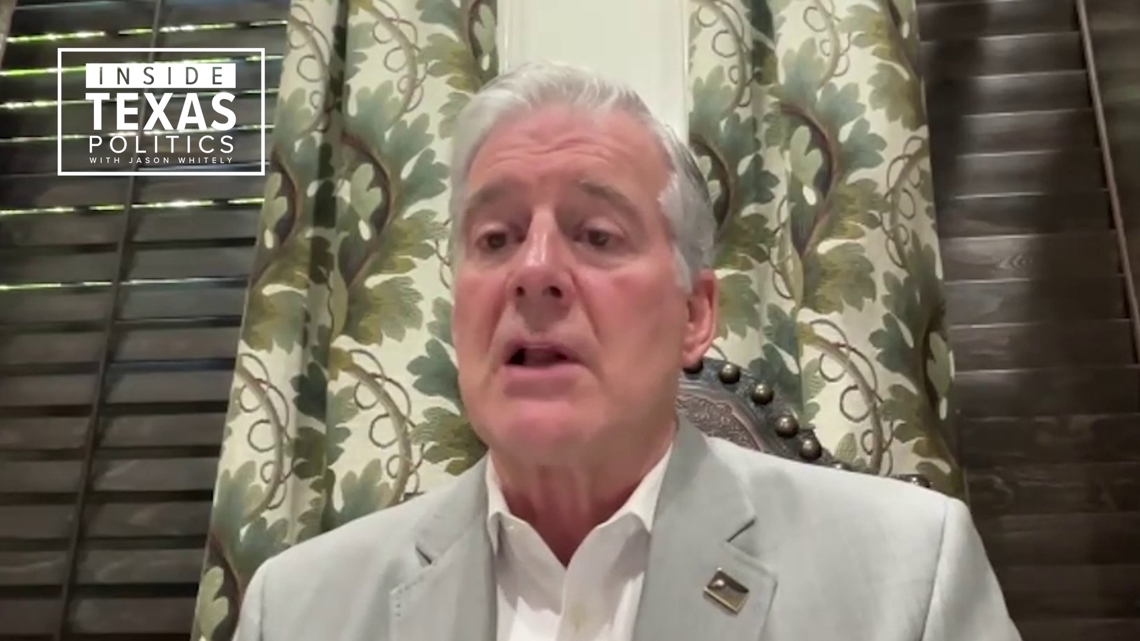
“I would say they’re probably not happy about the offer. But the offer might sound better every day that member cities decide to put it on the ballot as well,” the Mayor told us on Inside Texas Politics. “The rail would be the most important part of what we have. We’ve always told them we didn’t need their buses. We would subcontract micro transit in the rest of Plano ourselves.”
Plano isn’t alone. Farmers Branch, Highland Park, and Irving will also let their voters decide whether to leave DART on May 2, 2026.
DART receives around $850 million every year in sales tax from its 13 member cities, so losing four cities would be a financial blow.
DART CEO Nadine Lee has called the potential withdrawals “heartbreaking,” noting they come just after the opening of the new Silver Line rail connection that runs between Plano’s Shiloh Road Station and DFW International Airport. It’s also just months before the 2026 FIFA World Cup, which will rely heavily on regional transit.
But Plano and the other cities question how much value they receive from the regional transit agency compared with how much they contribute.
Plano has been a DART member since 1983, contributing more than $2.2 billion in local sales-tax revenue. An independent analysis by Ernst & Young found that in 2023, Plano taxpayers paid $109 million to DART, while only $44 million was spent within the city.
City leaders say the imbalance has persisted even as Plano’s western corridor, home to corporate campuses and new development, lacks rail access. Requests for additional bus and GoLink service zones were denied, the city said.
Mayor Muns stressed to us that transportation service will continue regardless of the outcome. The city has set aside funding for alternative options, with a focus on companies that will provide smaller transit vehicles.
“We have been offered somewhere in the $8 to $10 million range annually. Yes, and we’re paying $131 million this year to DART. So, it is significantly different,” the Mayor told us.
And member cities wouldn’t stop paying DART right away, even if voters approve a departure, as there would still be obligations to pay off debt. Mayor Muns estimates that the city would keep paying the full penny of sales tax to DART for another eight years.
“At some point it’s just like paying off a credit card. We’ve got to either come up with an agreement that makes the financial part reasonable for the city of Plano, or we have to just cut it off and just pay down that credit card debt and be free of this financial responsibility. And that’s a tough call to make, but it’s something that has to happen,” Muns said.