
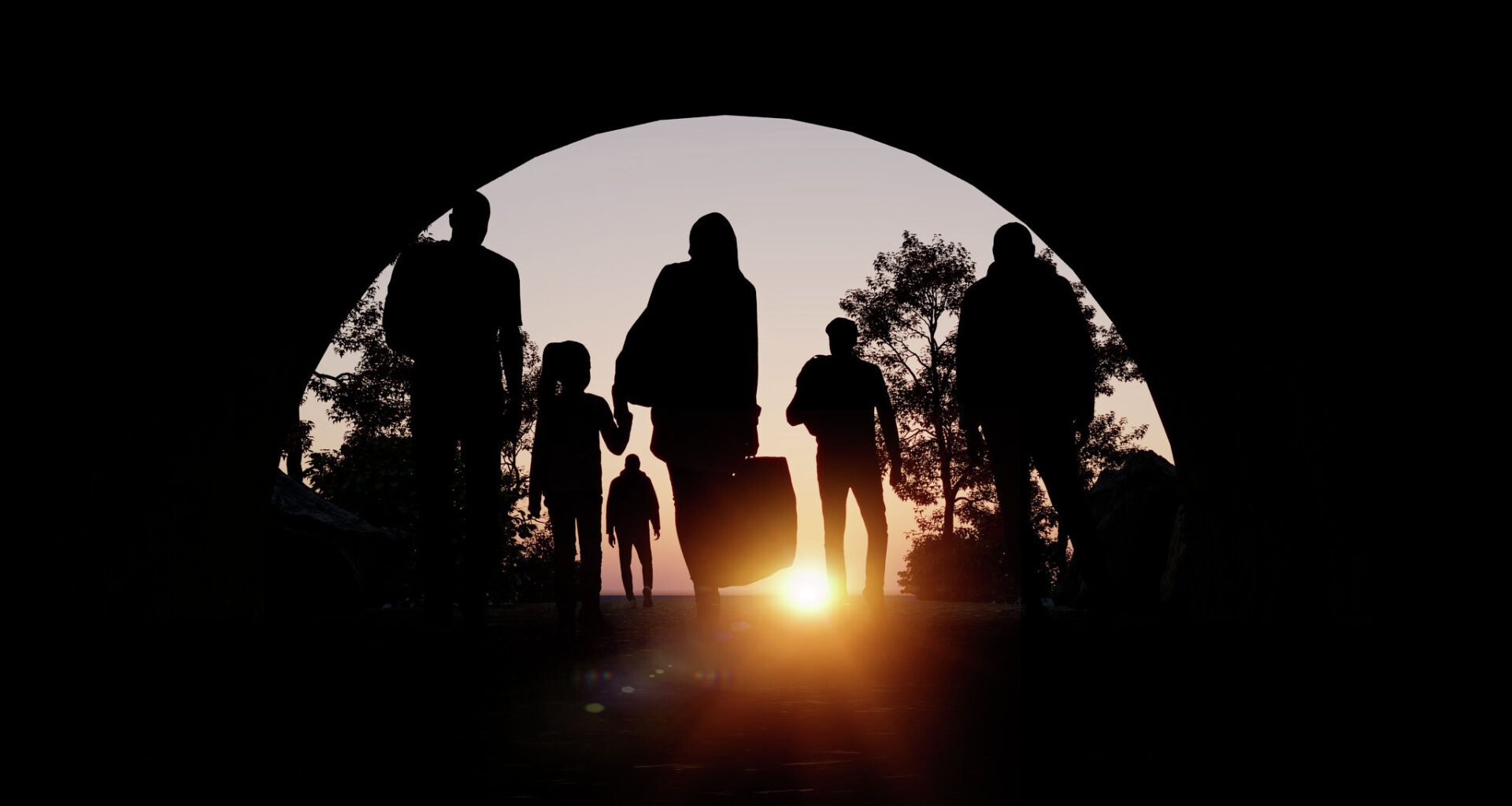
Texas has long been a place where refugees rebuild their lives with dignity, writes Stephanie Flaa.
Naeblys/Getty Images
Scripture is filled with people forced to flee: Moses, David, Elijah, Mary and Joseph, even Jesus himself. Welcoming the stranger is not an abstract idea for us; it is a command woven throughout many faith traditions. A refugee is an immigrant who flees their home not out of desire, but out of desperation — someone whose life is threatened by persecution, violence or war. As Christians, we recognize this story.
Today, persecuted Christians in places such as the Democratic Republic of Congo, Syria and Nigeria face unimaginable violence. Churches are burned, families are targeted and believers are killed simply for practicing their faith. If we take Christ’s call to care for the persecuted seriously, we must also take seriously our obligation to offer refuge. This obligation is enshrined in the Refugee Act of 1980 and should not be a partisan issue.
For decades, Republicans and Democrats agreed that America has a duty to protect people fleeing religious persecution. That commitment is now at risk. So far this fiscal year, refugee admissions have fallen to the lowest level since the U.S. Refugee Admissions Program began in 1980, and recent policy has narrowed protection to such a limited group that many people who clearly meet the international definition of refugee are left out. Past immigration failures deserve honest debate, but closing the door on those who genuinely need safe harbor is not course correction, it is a moral retreat.
Article continues below this ad
Texas has long been a place where refugees rebuild their lives with dignity. When refugees arrive here, as in other places around the country, they enter a structured process that begins with resettlement support — safe housing, health screenings and help navigating their new community. Within weeks, adults enroll in English-language classes, often attending daily sessions while learning transportation, banking and essential life skills. This early support is not charity; it is discipleship in action — helping people stand on their own feet. World Relief Texas has served thousands of refugees in the last several years with education and job training.
Employment follows quickly. Refugees are authorized to work immediately, and Texas employers rely on them to fill essential roles in healthcare, logistics, manufacturing, hospitality and construction. Through job readiness programs and partnerships with local businesses, refugees move rapidly into the workforce. Many start in entry-level positions, but their upward mobility is remarkable. They become nurses, technicians, truck drivers, teachers and small-business owners. Their children enter Texas schools, learn English quickly and, in some cases, outperform their peers within a few years.
The economic impact is undeniable. According to a February 2024 report from the Office of the Assistant Secretary for Planning and Evaluation (ASPE) at the U.S. Department of Health and Human Services, refugees generated $124 billion more in government revenue than they received in services over a 15‑year period. They also contributed $581 billion in taxes at the federal, state and local levels nationwide. These numbers reflect what Texans see every day: Refugees strengthen our economy, expand our tax base and revitalize our communities.
In Fort Worth, Dallas, Houston and Austin, refugee-owned businesses have breathed new life into commercial corridors that once struggled. They open restaurants, repair shops, markets and service businesses that serve both newcomers and longtime residents. They create jobs, stabilize neighborhoods and enrich the cultural and spiritual life of our cities.
But beyond economics, there is a deeper truth: refugees strengthen the moral fabric of our communities. They join churches, volunteer, participate in civic life and bring a richness of faith that inspires those around them. Many arrive with nothing but their belief in God and their determination to rebuild. Their resilience is a testimony to hope and a reminder of what faith looks like under pressure.
Article continues below this ad
Given these realities, the current refugee ceiling does not reflect the scale of global need or the capacity of states like Texas to welcome more people safely and successfully. Raising the ceiling and restoring admissions beyond the narrow categories currently prioritized would allow the United States to respond more effectively to humanitarian crises, especially in regions where Christians and other religious minorities face persecution.
Raising our voice is about living out our faith. It is about recognizing that protecting persecuted people is a moral responsibility shared across party lines. It is about acknowledging that refugees do not drain resources — they expand them. They do not take jobs — they fill critical gaps. They do not weaken communities — they strengthen them.
The path from arrival to English classes to employment is lived every day by families who come here seeking safety and end up contributing far more than they ever expected. Their success is a testament to the power of opportunity and the strength of American communities and to the Christian conviction that every person is made in the image of God. It is a choice to honor our faith, strengthen our future and affirm that Texas and our nation are at their best when we welcome those who need us most.
Stephanie Flaa is the education programs manager at World Relief Texas, a Christian nonprofit organization that welcomes and supports refugees in Dallas-Fort Worth and Austin.
Article continues below this ad
Have thoughts about this? Send a letter to the editor using our letters form or email letters@dallasnews.com. Letters should be no more than 200 words and include the first and last name of the writer and city of residence.