
Across Texas, lakes and reservoirs have seen the benefits of the heavy rains that drenched the state this spring and summer. Outside of San Antonio, beloved Canyon Lake is completely full. In the Coastal Bend, Lake Corpus Christi is nearly full at more than 91%, and Choke Canyon Reservoir has rebounded from a low of 7.4% earlier this year to nearly one-fourth full now.
But in the Rio Grande Valley — the fifth-largest metropolitan area in Texas with a population of about 1.45 million across four counties — the water supply looks much different. Even after a particularly wet spring, the two binational reservoirs that supply freshwater to more than 4 million people on both sides of the border have not seen the same rebounds as other Texas waterways. Long-term drought also continues across much of the region. So, what is the status of the Valley’s reservoirs? Read on to learn more.
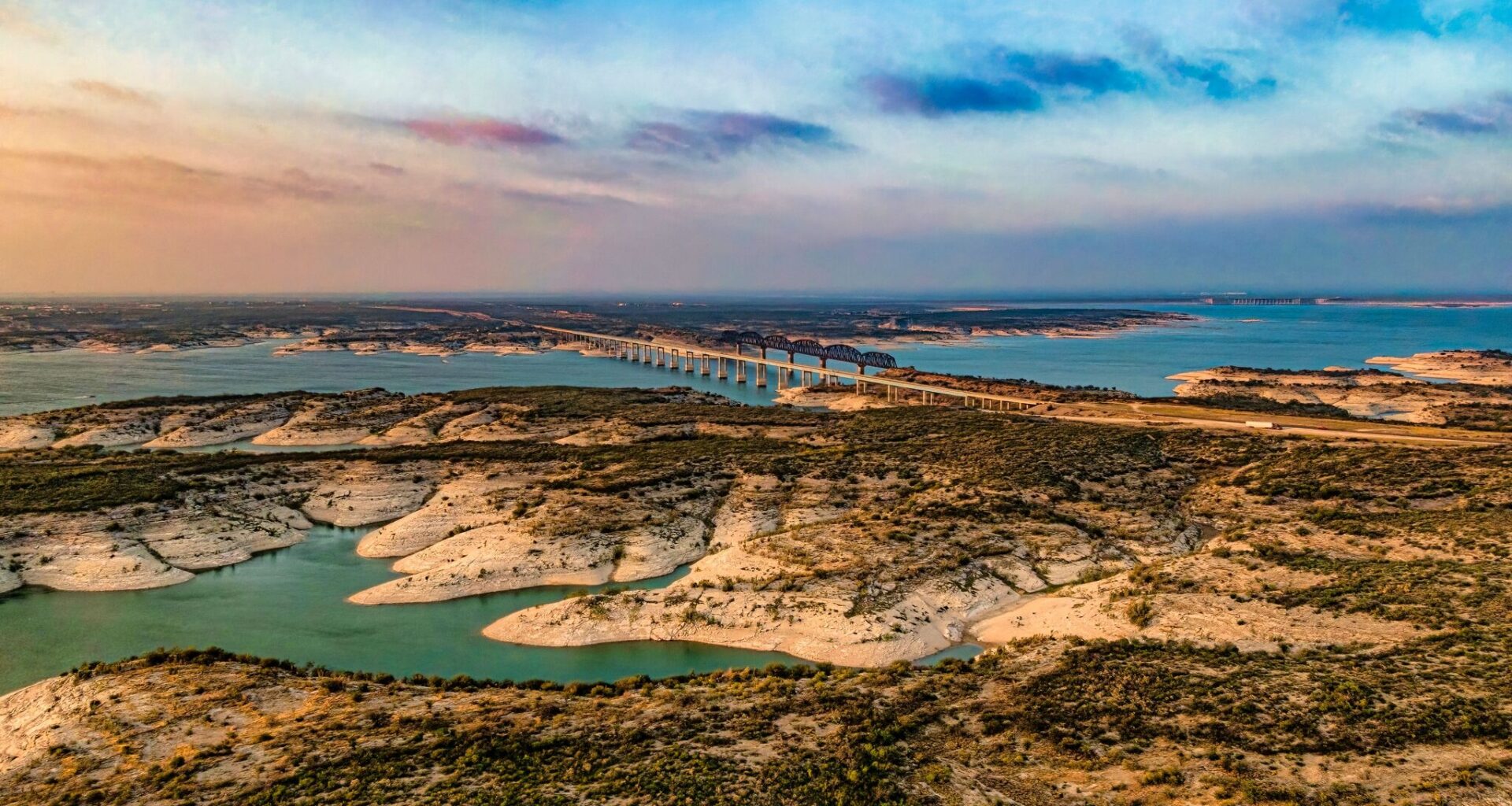
As of Wednesday, August 19, Amistad International Reservoir was 38.3% full, with 695,127 acre-feet of usable water, called “conservation capacity,” out of its more than 1.8 million acre-feet total capacity, according to Water Data for Texas, a water-tracking tool run by the Texas Water Development Board. That’s more than 226 billion gallons of water.
While both reservoirs have hundreds of billions of gallons of water, their levels have barely budged this year.
Levels at Falcon reservoir have climbed just six feet and gained only about 61,000 acre-feet of water over the last six months, and less than nine feet overall since August 19, 2025, Water Data for Texas figures show.
At Amistad, the changes have been nearly negligible. Since February, Amistad has risen a little more than five feet to 38.3% full after several rain events this summer. But Amistad’s levels six months ago in February are nearly identical to its levels a year ago — 33.6% full on August 19, 2025, compared to 33.3% on February 19 of this year.
And while this spring’s and summer’s rains helped ease drought conditions across West and Southwest Texas, arid conditions are already beginning to creep back, according to the U.S. Drought Monitor. New drought estimates are expected to be released on Thursday.