
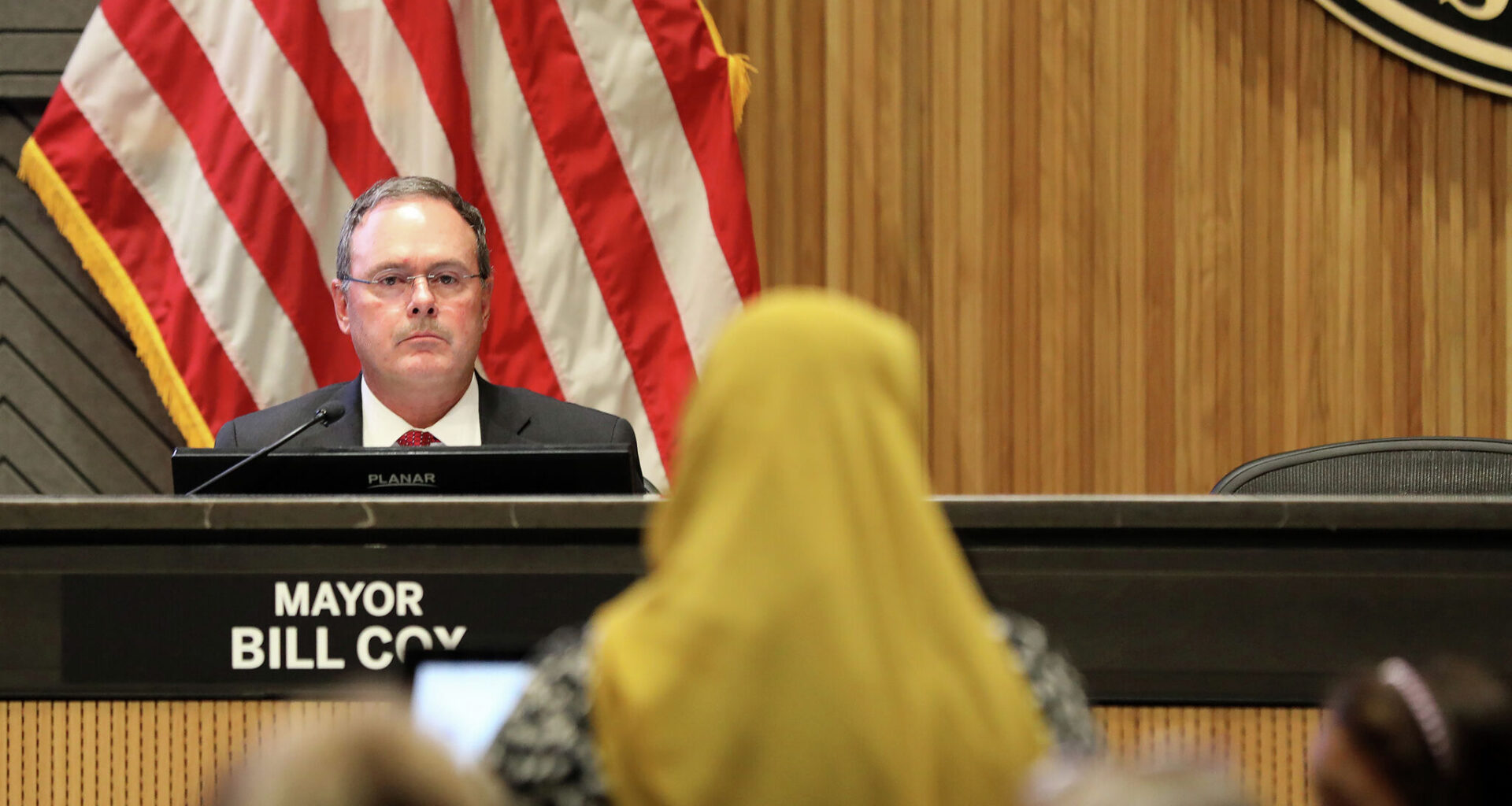
City councils make hundreds of difficult decisions involving zoning, taxes, budgets, public safety, development, infrastructure and neighborhood concerns. Almost every major decision creates winners, losers and passionate opposition, writes Adam Murphy. In McKinney, there is an effort to recall Mayor Bill Cox following a contentious meeting earlier this month.
Anja Schlein/TNS
Local democracy requires elected officials to make decisions. Sometimes we agree with those decisions. Sometimes we strongly disagree. But disagreement over a vote should not automatically become grounds for removing someone from office.
Yet across North Texas, recall threats are increasingly becoming part of the political conversation.
In Dallas, recent efforts have targeted council members Chad West and Gay Donnell Willis over issues including zoning, alley trash collection and the future of City Hall. In McKinney, a recall effort is now underway against Mayor Bill Cox and three city council members, with organizers citing a “loss of public confidence.”
Article continues below this ad
Whether you agree with any of those elected officials or their votes is beside the point.
Recall elections can serve an important purpose. They are a safeguard when voters believe an elected official has committed serious misconduct, abandoned the responsibilities of office or fundamentally violated the public trust.
But they should be an extraordinary remedy, not another political weapon.
City councils make hundreds of difficult decisions involving zoning, taxes, budgets, public safety, development, infrastructure and neighborhood concerns. Almost every major decision creates winners, losers and passionate opposition.
If every controversial zoning vote or budget decision is followed by a recall campaign, we create a dangerous incentive for elected officials to avoid difficult decisions altogether.
Article continues below this ad
That is not good government.
We elect council members to study issues, listen to residents, weigh competing interests and ultimately cast a vote. Sometimes that means voting against a vocal group of constituents. Sometimes it means supporting something that becomes unpopular. Representative government cannot function if elected officials believe every difficult vote could immediately trigger an effort to remove them from office.
There is already a mechanism for holding elected officials accountable: elections.
Campaign against them. Organize. Recruit a better candidate. Knock on doors. Raise money. Explain why you think they got it wrong. Then let voters decide at the next regularly scheduled election.
Elections have consequences in both directions. Winning an election gives someone the responsibility to govern for the duration of the term, not simply until the first controversial vote.
Article continues below this ad
Recalls also are not free. Petitions must be processed, signatures verified and, when successful, elections administered. Those costs ultimately fall on taxpayers. We should think carefully before repeatedly spending public resources to reconsider decisions voters already made at the ballot box.
Dallas’ charter intentionally sets a substantial threshold for recalls. A petition generally requires signatures equal to at least 15% of the voters eligible to vote for that council seat, collected within 60 days after notice is filed. Those requirements reflect the seriousness of overturning the result of an election.
Our politics are already becoming increasingly dominated by single issues. Local government should resist that trend.
A council member should be judged on the totality of his or her service, not one zoning case, one development, one budget item or one controversial vote.
There will always be decisions at city hall that make people angry. That is democracy too.
Article continues below this ad
The answer to every disagreement cannot be, “We’ll recall you.”
If an elected official commits serious misconduct or fundamentally betrays the public trust, the recall process should remain available. But if we simply disagree with how someone voted, the democratic response is much simpler: Remember the vote. Make your case. And vote accordingly at the next election.
That is how representative democracy is supposed to work.
Adam Murphy, a Dallas Realtor with Dave Perry-Miller Real Estate, serves on the board of directors of the Turtle Creek Conservancy and as president of the Oak Lawn Committee.
Article continues below this ad
Have thoughts about this? Send a letter to the editor using our letters form or email letters@dallasnews.com. Letters should be no more than 200 words and include the first and last name of the writer and city of residence.