
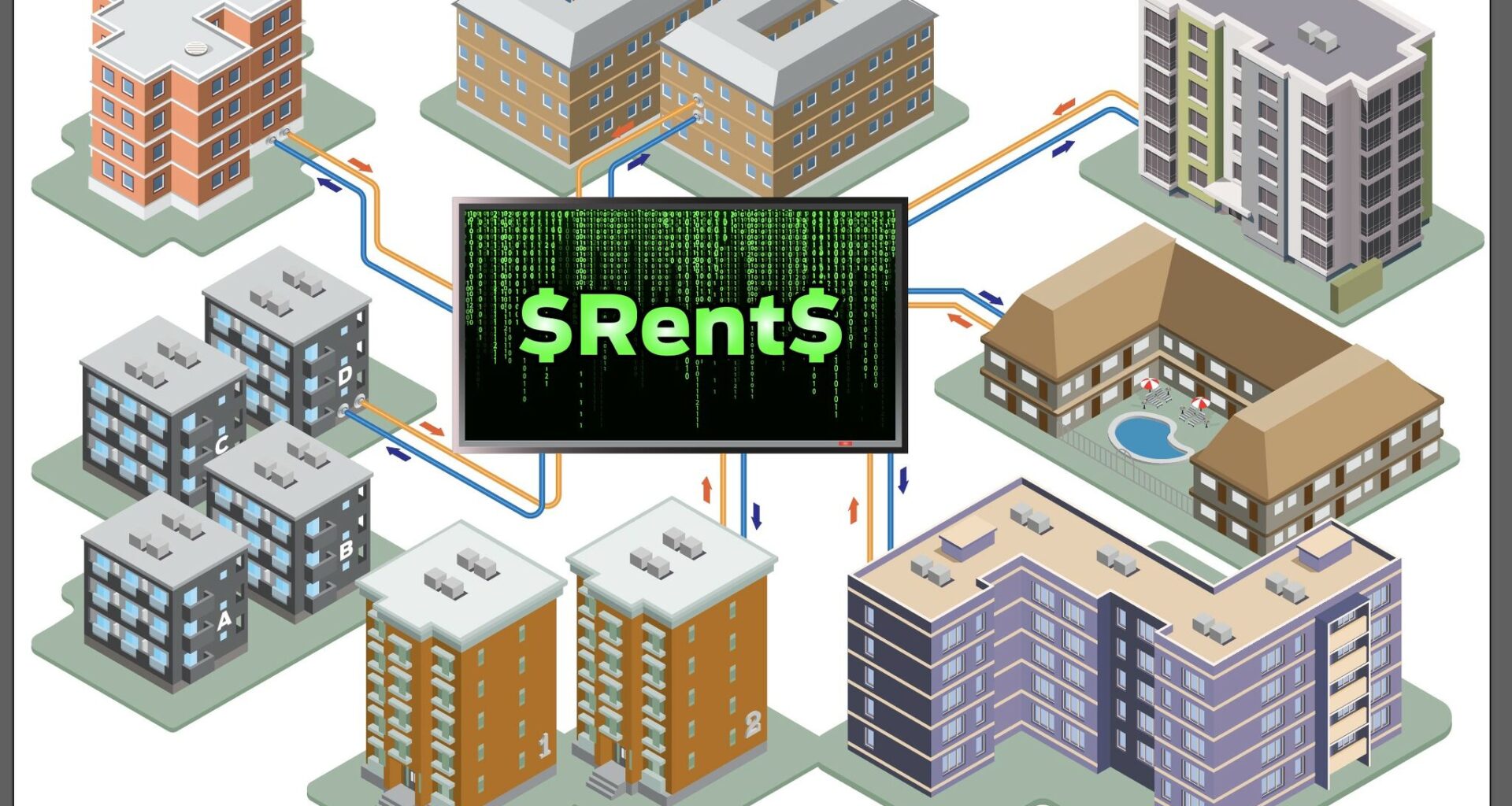
Apartment owners and property managers with Houston-area operations agreed to pay millions to settle a class action lawsuit over their use of the RealPage software, according to court records.
Ken Ellis/Houston Chronicle
If you’ve rented an apartment from a major corporate landlord in the last several years, there’s a chance that you’re eligible for a piece of an $360 million settlement deal involving dozens of landlords and property managers.
More than 20 Houston-area multifamily firms managing tens of thousands of apartments have been accused of colluding to set rent prices by using a popular algorithmic software developed by the technology company RealPage. The apartment companies, along with RealPage, were among roughly 50 defendants named in a class action lawsuit filed in a federal Tennessee court by a group of renters in 2023.
While the lawsuit isn’t over yet, the majority of defendants, including companies like Camden Property Trust and Greystar, have agreed to settle the case. A judge has preliminarily approved the deal, which is expected to be finalized in October. A handful of other landlords, in addition to RealPage and its private equity owner Thoma Bravo, are still fighting the class action lawsuit.
Article continues below this ad
However, renters can now start making claims to receive money on a recently launched settlement website.
Here’s what renters should know about the class action lawsuit:
Article continues below this ad
What is the RealPage litigation about?
RealPage, a Texas-based real estate technology company, has been accused of helping landlords artificially raise rents for millions of renters nationwide, according to a series of lawsuits filed by a group of plaintiffs in Tennessee, the Justice Department and a coalition of states.
RealPage offers a popular revenue management software used by major multifamily owners and operators across the country. The software is promoted as a way to help property managers set rent prices that maximize occupancy, reduce apartment vacancies and raise revenues. In Houston, RealPage products were used by apartment companies who managed or owned an estimated 136,000 apartment units in 2022, according to an earlier Chronicle analysis.
The lawsuits allege that apartment companies used RealPage’s algorithmic software to coordinate rent prices by sharing confidential information such as lease terms, rents prices and occupancy rates. RealPage’s algorithm used that information to recommend rent prices to apartment companies, which they accepted about 90% of the time, the lawsuits claimed.
Article continues below this ad
Plaintiffs have argued that practice led to a widespread collusion across dozens of landlords using RealPage’s platform.
“Nobody would disagree that it would be improper for a bunch of competitors to get in a room and give all their information to Bob, and then Bob recommends a price for everybody,” said Patrick Coughlin, an attorney for the plaintiffs with the law firm Scott & Scott.
RealPage has denied these claims. See here for more about their response.
EARLIER: Thousands of Houston renters could be affected by alleged rent-price fixing scheme
There is also separate ongoing litigation involving RealPage and several landlords sued by the Justice Department and a coalition of states over similar antitrust allegations. RealPage and several landlords have settled the DOJ case. The software company did not admit to any wrongdoing. A handful of defendants are still litigating.
Article continues below this ad
Aerial view of the RealPage offices in Richardson, Texas photographed on Wednesday, Aug. 9, 2017.
Smiley N. Pool/Dallas Morning News
How much were renters allegedly overcharged?
The impacts vary widely across the country, but economists have estimated that RealPage’s software allegedly contributed to overcharging renters by about 2% to 13% across nearly 50 major metropolitan areas, according to an analysis by economic consulting firm Monument Economics Group.
Article continues below this ad
In Houston, San Antonio and Austin, the analysis estimates that renters were allegedly overcharged by about 4% during the roughly five-year period covered by the lawsuit. Renters in Dallas were allegedly overcharged by an estimated 7%, according to the analysis.
Over the course of one-year lease, a 4% overcharge in Houston could amount to roughly $580 annually for a $1200 a month apartment; $720 annually for a $1500 apartment; and $960 annually for a $2,000 apartment.
How much will renters get paid?
It’s not clear yet how much each individual renter will receive, because that depends on how many renters file claims and also, whether additional landlords decide to settle.
Coughlin, the attorney for the plaintiffs with Scott & Scott, said he is negotiating agreements with more defendants could increase the settlement pool by another $50 million.
In Houston, there are still at least two firms that have not yet settled, ZRS Management and Independence Realty. Both companies did not respond to a request for comment.
EARLIER: Department of Justice sues Houston-area apartment firms for alleged rent collusion
How do you know if you are one of the affected renters?
The lawsuit covers millions of renters who lived in properties that used RealPage between October 18, 2018 through November 21, 2025. Many renters have already been contacted through email and mail about the case.
Renters can visit the official settlement website to search for their apartment in a database with addresses and apartment names. Even if a landlord that has not settled in the case, tenants can still file a claim.
Tenants have until September 1 to opt out of the settlement, or until January 29, 2027 to make a claim in the case.
A Camden apartment complex in Midtown Houston.
Marissa Luck/ Houston Chronicle
Which Houston-area landlords and property management firms are implicated?
Among the roughly 50 apartment companies named in the Tennessee-based class action lawsuit, the following operate or own properties in the Houston region:
Allied Orion Group (AOG Living)
Avenue5 Residential
BH Management
Brookfield Properties Multifamily
Camden Property Trust
Cortland Management
Crow Holdings (Trammell Crow Residential)
CWS Apartment Homes
ECI Group
Greystar
Highmark Residential
Independence Realty Trust (Not yet settled)
Kairoi Management
Knightvest Residential
Lincoln Property (Willow Bridge)
Mid-America Communities
Mission Rock Residential
Pinnacle Property Management (Acquired by Cushman and Wakefield)
RPM Living
Simpson Property Group
The Related Companies
Windsor
WinnCompanies
ZRS Management (Not yet settled)
The Grand on Memorial apartment manged by Greystar in Houston.
Houston Apartment Association
What do landlords have to say? And how much did they pay?
Even though many landlords have settled, they have not admitted to wrongdoing or to using the software in any illegal ways.
Most landlords did not respond to requests for comment. Mission Rock, Crow Holdings, Simpson Housing and AOG Living declined to comment.
Here is what the landlords who did comment have to say:
Camden Property Trust, a major Houston landlord with operations across the country, agreed to pay $53 million to settle the case, according to court documents. “Camden maintains that at no point did its use of RealPage’s software ever violate any law; it settled the multidistrict class action to limit the risks and costs inherent in any litigation,” a company spokesperson said. “Camden’s priority continues to be providing living excellence to its residents.”
Greystar, which owns and operates thousands of apartment units in Houston, agreed to pay $50 million to settle, according to court documents. The apartment firm said it resolved the matter last year so that it could continue to focus on serving residents. The company said it would continue to update and adapt its practices to comply with legal and regulatory requirements.
Cortland Management, which at one point had about 5,000 apartments in Houston, agreed to pay $18 million to settle the Tennessee-based lawsuit, court documents show. “Cortland is pleased to have previously resolved this civil litigation and have put this matter behind us,” the company said. Cortland said that it is investing in a propriety revenue management technology to “reinforce our commitment to competition, innovation, compliance and serving our residents”, but did not provide details about its new technology.
The Related Companies, which oversees about 2,000 apartments in Texas, agreed to pay $5 million. Natalie Ravitz, a spokesperson for The Related Companies, said the company stopped using RealPage years ago in part because it believes experienced leasing agents with local market knowledge are “superior to data aggregating software.”
WinnCompanies said it was “surprised and disappointed” to be included on the list of defendants because it has “not used this software for revenue management anywhere in the country for several years.” Additionally, most of the properties WinCompanies manage in Texas are income-restricted with rents set by household incomes, not by any software, the company said. WinnCompanies agreed to pay $1.5 million to settle.
EARLIER: How Houston apartment firms facilitated the rise of controversial RealPage software
RealPage refutes claims that its software artificially raised rents.
Lola Gomez/TNS
What does RealPage say about the allegations?
RealPage said its rent price recommendations are used far less often than the lawsuits alleged.
“The biggest misconception right now is the inaccurate assumption that algorithmic pricing leads to higher rents. That is not true. Affordability challenges are driven by an undersupply of housing, not by math and data that reflect the realities of the underlying housing market,” said Patrick Mendoza, a spokesperson for RealPage.
Mendoza said that in places where more housing has been built, such as Austin, Houston and Dallas, rent prices have gone down in recent years – as opposed to places like San Francisco.
“When there is a supply of housing to meet demand, algorithmic pricing software like ours tends to recommend lowering rents,” Mendoza said.
He also said that RealPage’s rent pricing software relies on publicly available market data and customers’ data, and does not use individual renters personal information to set rent prices.
Mendoza declined to comment on the Tennessee class action lawsuit because the case is ongoing. However, he pointed to RealPage’s earlier settlement reached with the Department of Justice in November 2025, in which there were no findings of wrongdoings or admissions of liability.
“We were happy to resolve that matter and achieve clarity for the industry through the settlement,” Mendoza said. RealPage agreed to modify several of its practices as part of the DOJ settlement, including ceasing the use of competitors’ nonpublic information to determine