
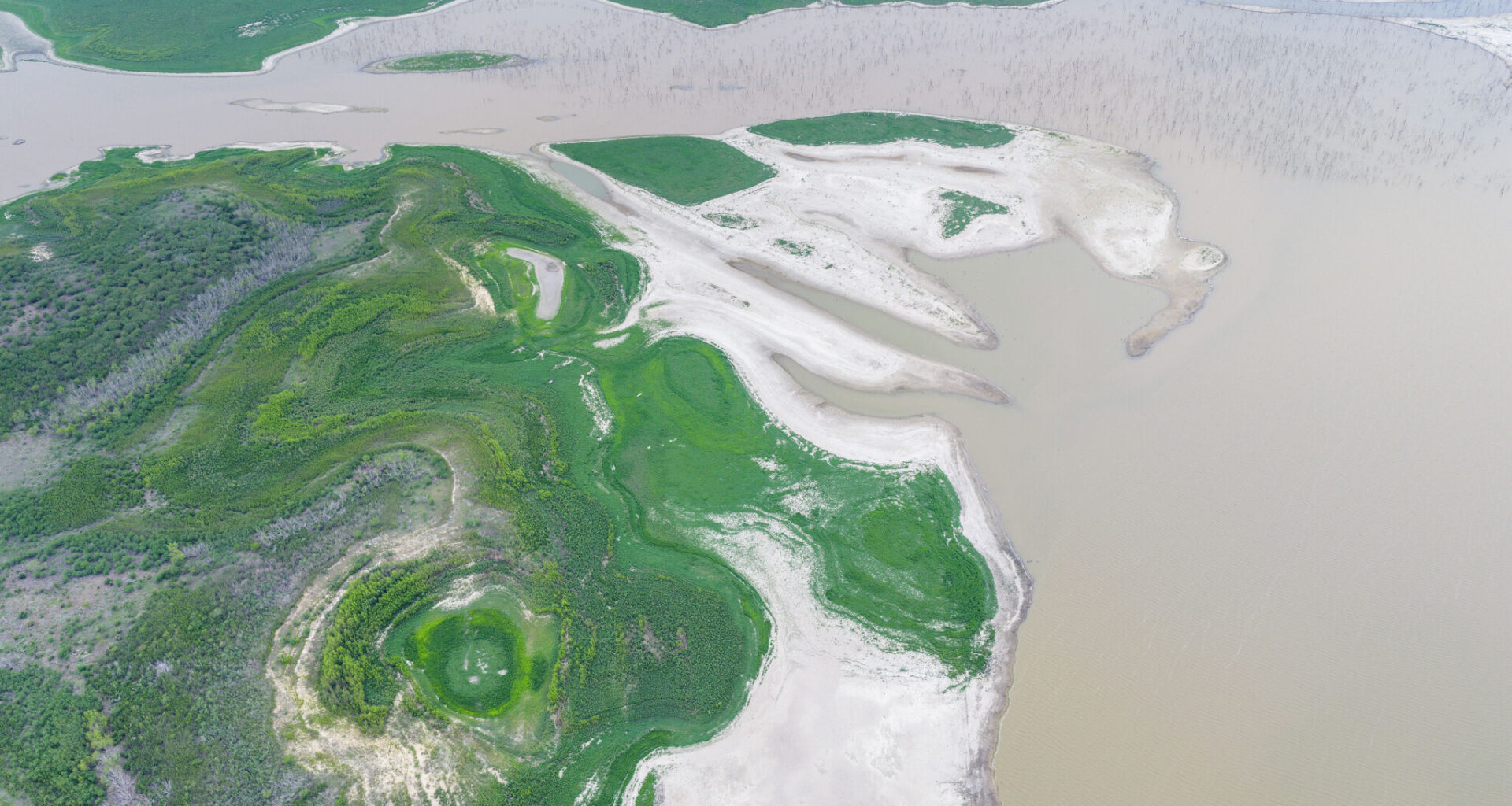
Days of heavy rain earlier this week have significantly raised levels at Canyon Lake to 98% capacity.
Canyon Lake Area Chamber of Commerce

Reservoir data shows a sharp divide across the state, with some reservoirs holding more than 70% of their conservation capacity while others remain below 20% full as of Thursday, August 20, 2026, according to Water Data for Texas.
Article continues below this ad
Central Texas reservoirs have made a major comeback
The picture is much different around New Braunfels and the Hill Country.
Canyon Lake reached its conservation pool in July before hitting 100% full later that month, a dramatic turnaround after months of drought. Heavy summer rainfall has also pushed several Austin-area and Hill Country reservoirs above 70% full.
Thought that recovery stands in stark contrast to other parts of Texas, where many reservoirs remain dangerously low.
Article continues below this ad
The Lower Colorado River Authority announced on July 18 it had enacted floodgate operations at Mansfield Dam — supportive infrastructure located at Lake Travis in Austin — for the first time since 2019.
Courtesy of Lower Colorado River Authority
These Texas reservoirs are still below 20% full
Palo Duro Reservoir — 0.4% full
Palo Duro Reservoir in the Texas Panhandle had about 224 acre-feet of conservation storage compared with a capacity of 61,066 acre-feet.
Article continues below this ad
Greenbelt Lake — 5.1% full
Greenbelt Lake in the Texas Panhandle was holding about 3,087 acre-feet of conservation storage out of a capacity of 59,968 acre-feet.
Twin Buttes Reservoir — 6.7% full
Twin Buttes Reservoir near San Angelo was holding about 12,158 acre-feet of conservation storage. Its total capacity is 182,454 acre-feet.
Article continues below this ad
E.V. Spence Reservoir — 10.2% full
E.V. Spence Reservoir, near Robert Lee in West Texas, had about 52,551 acre-feet of conservation storage compared with a capacity of 517,272 acre-feet.
Lake Abilene — 10.8% full
Lake Abilene, east of Abilene in West Texas, was at 10.8% full, with about 856 acre-feet of conservation storage out of a 7,900-acre-foot capacity.
Article continues below this ad
Mackenzie Reservoir — 11.2% full
Mackenzie Reservoir in the Texas Panhandle was holding about 5,201 acre-feet of conservation storage out of a capacity of 46,450 acre-feet.
O.C. Fisher Lake — 11.9% full
O.C. Fisher Lake near San Angelo was at 11.9% full, with approximately 13,810 acre-feet of conservation storage compared with its 115,742-acre-foot capacity.
Article continues below this ad
Oak Creek Reservoir — 15.2% full
Oak Creek Reservoir near Blackwell in West Texas had about 5,963 acre-feet of conservation storage out of a total capacity of 39,210 acre-feet.
Lake Sweetwater — 18.3% full
Lake Sweetwater near Sweetwater in West Texas was at 18.3% full, with about 2,241 acre-feet of conservation storage compared with its 12,267-acre-foot capacity.
Article continues below this ad
A screen grab of Lake Medina after heavy rainfall rose increased its water levels this week. Medina Lake’s mean water level shot up by 2.85 feet, and its reservoir shot up by more than 2,271-acre-feet this week, after a bout of rainstorms and flood waters raged overnight near San Antonio on June15.
United States Geological Survey
In an aerial view, large swaths of dry land can be seen at Choke Canyon Reservoir on May 07, 2026 in Three Rivers during the height of a five-year drought. at the time, the reservoir stood at about 7% full. As of August 7, 2026, it was just under 25% full.
Brandon Bell/Getty Images
Other major Texas reservoirs remain well below full
Some major reservoirs remain well below half of their conservation capacity.
Article continues below this ad
Falcon Reservoir in South Texas along the Rio Grande was about 24.4% full, with 380,582 acre-feet of conservation storage out of a capacity of 1.56 million acre-feet.
Choke Canyon Reservoir near Three Rivers in South Texas was about 24% full, holding roughly 158,831 acre-feet out of a 662,820-acre-foot capacity.
Medina Lake in the Texas Hill Country, west of San Antonio, was about 29.8% full, with approximately 75,936 acre-feet of conservation storage compared with its 254,823-acre-foot capacity.
Amistad Reservoir near Del Rio along the Rio Grande was about 38.4% full, with roughly 695,677 acre-feet of conservation storage out of a capacity of more than 1.8 million acre-feet.
Article continues below this ad
Lake Meredith in the Texas Panhandle was about 41.8% full, while O.H. Ivie Reservoir near Ballinger and San Angelo was about 44.5% full.
Red Bluff Reservoir on the Texas-New Mexico border was about 46.3% full, and Lake Cisco in Eastland County was also about 44.5% full.
The lowest reservoir is almost completely empty
Palo Duro Reservoir currently stands out as the most extreme example in the data.
Article continues below this ad
At 0.4% full, its roughly 224 acre-feet of conservation storage represents only a tiny fraction of its 61,066-acre-foot capacity.
Twin Buttes Reservoir, another reservoir in the San Angelo area, was only 6.7% full. Several other reservoirs around the Abilene and San Angelo regions were well below 20%.