
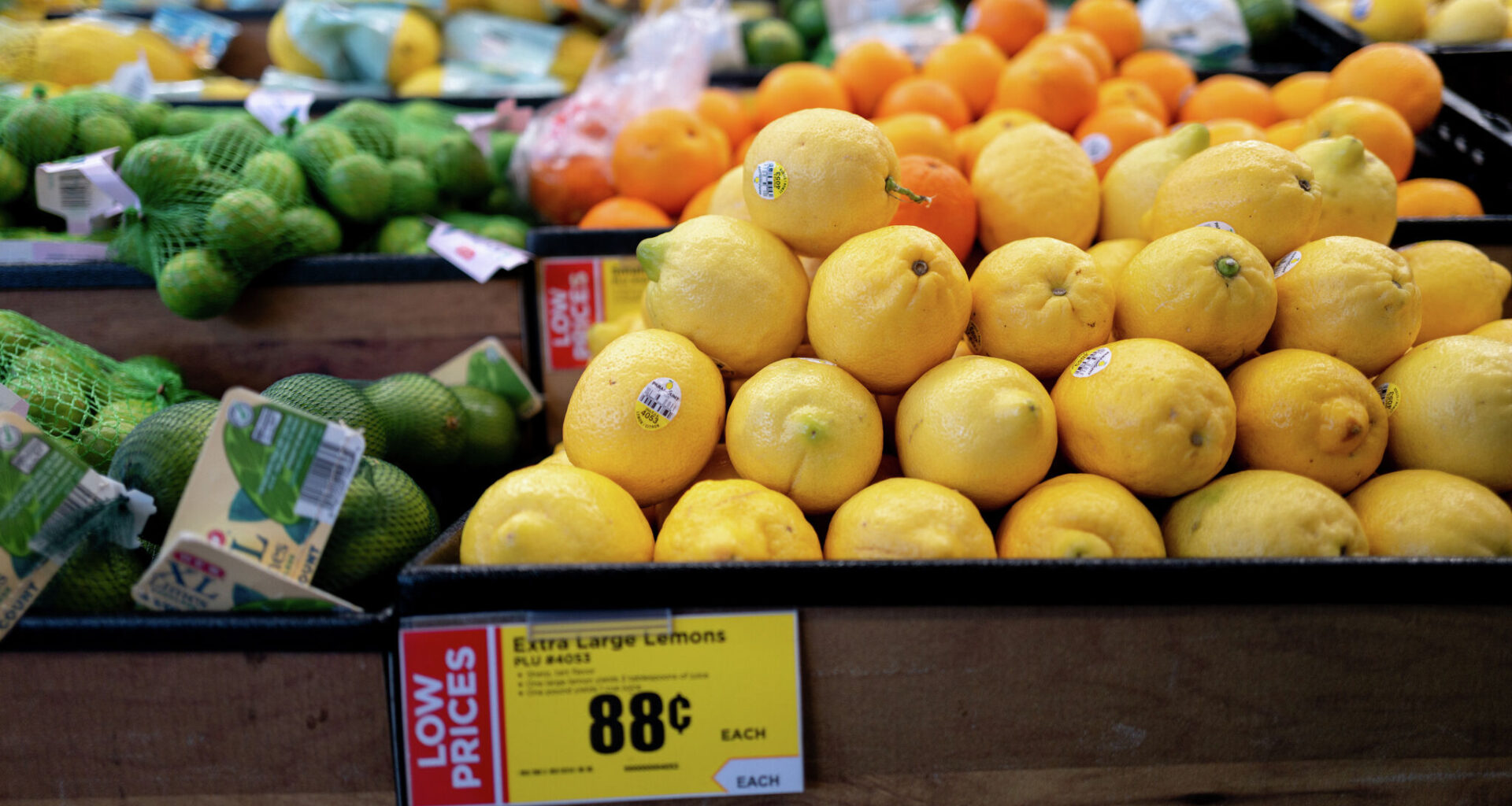
H-E-B’s produce section, pictured in a store in Austin, Texas.
Brandon Bell/Getty Images
No store does more than H-E-B — but where does the unused food go? That’s the question we had for surplus products crafted by Texas’ homegrown grocery chain — particularly as the Lone Star State is home to the highest food insecurity population in America, with 19.4% of Texans classified as food insecure, according to Feeding Texas’ 2026 data analysis.

H-E-B’s “Our Texas, Our Future” sustainability initiative outlines the San Antonio-based grocer’s initiatives to divert food away from landfills and maximize its use. The grocery chain follows a multifaceted approach to minimize food waste, including source reduction, upcycling, donations, composting and industrial uses.
Article continues below this ad
How does H-E-B minimize food waste?
One of the key practices H-E-B follows to reduce food waste is source reduction, with staff monitoring the amount of food stocked on shelves to avoid the risk of a surplus. Those source reduction efforts include:
Marking down fresh products to sell before their sell-by date when they are “still at peak quality,” per H-E-B’s Our Texas, Our Future initiative
Repurposing fresh ingredients not yet sold for use in in-store products like guacamole, croutons and other offerings
Repairing damaged product packaging so the food is still usable and available for shelving
Tracking several inventory management systems to evaluate sales and other data points, seeing what customers’ shopping appetites are and ensuring “the right products — and quantities — are stocked at each store”
“As a food-first company, we know that food recovery starts at the source,” H-E-B’s Our Texas Our Future documents note online. “That’s why we closely monitor the amount of food we put on store shelves, to ensure we don’t end up with a surplus.”
Article continues below this ad
How much food does H-E-B donate to those in need?
For over 40 years, H-E-B has been operating its Hunger Relief program to donate food to those in need. Since its creation back in 1982, the Hunger Relief program has resulted in more than one billion pounds of unused food donated; in recent years, H-E-B has donated more than 33 million pounds of unsold food products in a singular year to food banks statewide.
Examples of donated products include discontinued items, short-dated items and products that might have minor damages to its packaging.
H-E-B’s food composting, food to fuel efforts
Recently, in a single year, H-E-B reallocated 87 million pounds of inedible food toward composting efforts, working with eight Texas composters to recycle the food into soil that can be used for plant and crop growth. Some of those key donations included citrus rinds and produce trimmings from fruits, vegetables and juices sold in stores, dough, potato skins and corn as well as broken pallets from product transportation to be repurposed as wood chips for composters.
Article continues below this ad
Aside from composting, H-E-B also converts approximately 26 million pounds of inedible food each year into biofuel or animal foods, such as bones, fat and trimmings from H-E-B’s meat operations. Those products can help support biogas and liquid biofuels.
“The EPA considers biofuels a more sustainable, renewable fuel source than fossil fuels since they’re produced from renewable feedstocks,” H-E-B officials noted online. “If your car runs on ethanol gas, for example, you’re using biofuels!”
What if food can’t be donated, composted or turned into fuel?
More than 95% of H-E-B stores repurpose unused food and divert it from landfills. However, H-E-B will send unused food to the landfill if it can’t be donated, composted or used as a biogas or biofuel source. As part of its landfill reduction efforts H-E-B oversees a food recovery committee that works on new strategies to reuse food and minimize landfill contributions.