
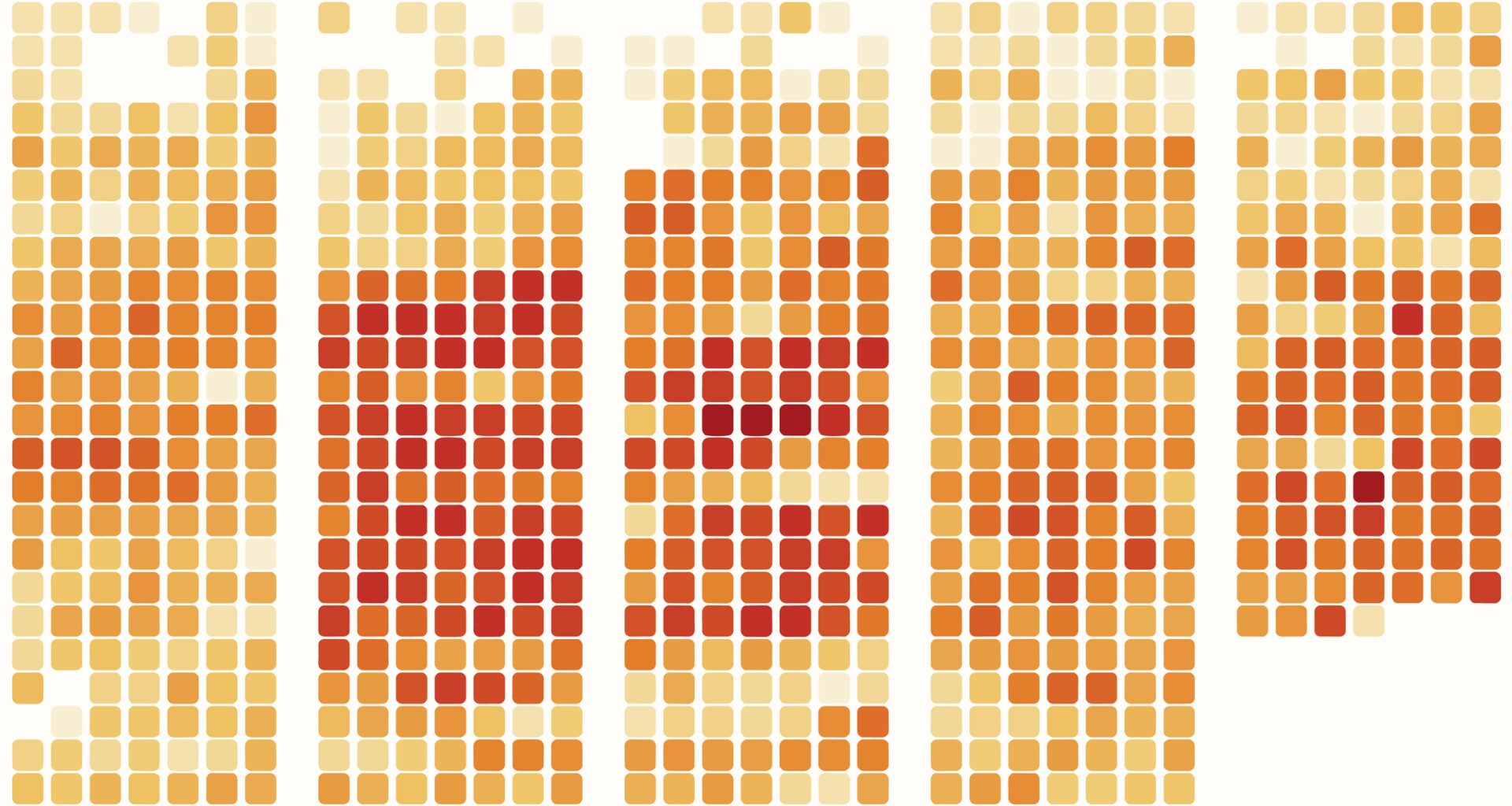
Parts of downtown and northeast Houston are seeing much higher rates of heat emergency visits than elsewhere in the area. Many older community members also face an increased likelihood of treatment for heat illness, as do Black residents across most age groups.
So far this year, hospitals in Harris, Fort Bend and Montgomery counties have recordedemergency visits for heat-related illnesses.
“It’s not getting better, it’s getting worse. There are more extreme heat days,” said University of Texas at San Antonio heat health researcher Jeffrey Howard, so “these exposures are likely to only increase.”
Some spikes in heat illnesses have dovetailed with the city’s hottest, most humid days over the past five years, while others coincided with loss of air conditioning access. After Hurricane Beryl caused widespread power outages in 2024, more than 440 patients were treated for heat-linked symptoms in the first three days following the storm.
Data from local officials show that ER visits for heat illness are more frequent among certain populations.
Heat exposure can vary significantly according to where you live and work and how much time you spend outdoors. A factor known as the “urban heat island effect” raises the temperatures of areas where vegetation has been replaced with materials like pavement.
Different demographics are also treated for heat exhaustion at varying rates.
“The extremes of age tend to be a little bit more vulnerable — the very young and the very old,” said Dr. Robert Flannery, a sports medicine specialist who has worked on heat safety for years.
Houstonians over 65 years old may remember when they could handle the area’s hot weather no problem. But people’s resistance to heat can dwindle as they age.
No chart data available.
Daniel Overman, a paramedic with the Pearland Fire Department, said he most often transports active elderly residents who still work on their own yards and homes.
“They’ll have been outside for multiple hours and not taking in much water. They’re just doing what they’ve always done, for all their life,” Overman said.
Cooling them off in time can stave off life-threatening heat stroke, which is “100% always preventable,” according to Houston Methodist emergency physician Dr. Anh Nguyen.
About the data
The Houston Chronicle is sourcing heat-illness emergency department visit data from the Houston Health Department ESSENCE, which tracks emergency visits by collecting visit information from hospitals. Data is shown for visits to hospitals located in Harris, Fort Bend and Montgomery counties.
New data is updated every Wednesday. HHD notes that daily visit counts are preliminary and may be updated retroactively.
Rates by ZIP code and demographic group are calculated using emergency visit counts for the current year and population data from the 2024 American Community Survey. The “Other” race designation applies to people whose race is listed as “Other” or “2 or more races.” One case involving a patient with gender listed as “Other” was dropped from the demographic analysis because this category was not available in the Census data.
 Get Houston’s best journalism delivered to your inbox with The 713 newsletter.
CreditsReporting by Rebekah F. Ward/Houston Chronicle. Data reporting by Katherine Oung/Houston Chronicle. Graphics, design and development by Katherine Oung/Houston Chronicle and Andrew Williams/Hearst DevHub. Production by Brady Stone/Houston Chronicle. Editing by Caroline Ghisolfi/Houston Chronicle, John Tedesco/Houston Chronicle and Yaffa Fredrick/Houston Chronicle.