
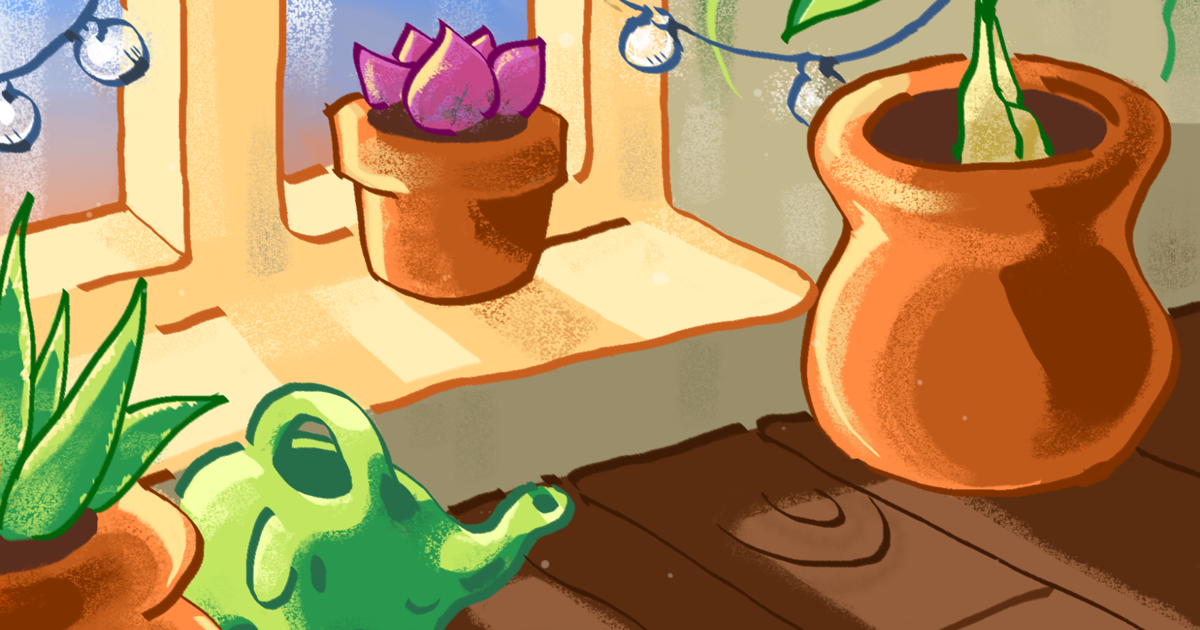


Illustration by Leonardo Cervantes
UTA sits in the heart of Arlington, which is, in turn, the heart of Dallas-Fort Worth. This urban jungle offers many opportunities for students while they further their education.
But being surrounded by concrete can be detrimental to some, as contact with nature is essential for community well-being.
Heather Arterburn, biology associate professor of instruction and director of undergraduate laboratory education, said that while it’s hard to pinpoint, a lot of people feel a connection when they’re out in nature.
“Even just looking up at the trees, just for a minute, kind of gives you this sense of peace,” Arterburn said. “It’s a really great relaxation technique.”
This connection doesn’t have to stop with trees or other outdoor vegetation, as students can bring nature into their dorms.
One benefit of having plants in the bedroom is added natural beauty.
“Environments can be really artificial and sterile, and so when you bring in plants or animals or anything organic, it makes it feel more alive,” Arterburn said.
According to Plantura, a sustainable gardening magazine, plants in the bedroom make it easier to relax and unwind so it’s easier to get a good night’s sleep.
Another benefit plants provide is a better indoor climate. According to the magazine, some plants are able to filter the air, absorbing pollutants and creating more oxygen.
According to The Sill, an online company dedicated to making plants more accessible in daily life, these are some beginner-friendly plants that need watering every one to two weeks, letting the soil dry out in between.
Snake plant
Available in varieties, snake plants are low-maintenance. They prefer medium to high indirect light but can handle low light, as well.
Money tree
Preferring high to medium indirect light, this plant could be ideal for dorms.
Philodendron
Available in many varieties, these plants prefer medium to bright indirect light or direct morning light.
Anthurium
These plants are known as the world’s longest-blooming houseplant, according to The Sill. They thrive in bright indirect light.
Arrowhead plant
Getting their name from its arrowhead-shaped leaves, these plants prefer medium to bright indirect light, though they can tolerate low-light conditions.
“It’s amazing how the tiny little details around us can impact how we feel and then carry forward in how we’re interacting in the world,” Arterburn said.
@noah_logan_little