
If you’ve ever stood along the Congress Avenue Bridge waiting for Austin’s famous bats to emerge, you know it’s more than just a wildlife sighting. It’s an Austin tradition.
Now, a new project called “Bat City” is giving locals and visitors a chance to learn more about the city’s favorite creatures of the night while they wait for the nightly flight.
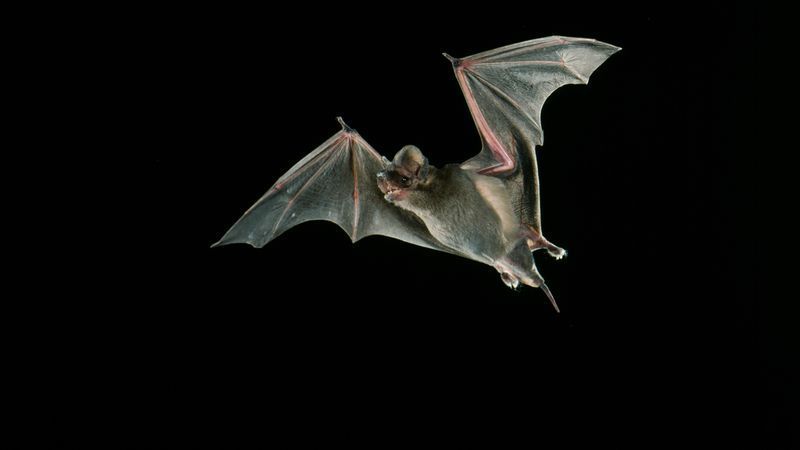
A Brazilian free-tailed bat (Tadarida brasiliensis). Single huge colonies of these bats can consume over 100 tons of insects nightly, including many crop and yard pests, reducing reliance on dangerous pesticides.
Sierra Waggoner and Trevor Scott were joined by Emmy Award-winning wildlife filmmaker Skip Hobbie to talk about “Bat City” and how the new experience is giving people a closer look at one of Austin’s most iconic attractions.

Sierra Waggoner and Trevor Scott were joined by Emmy Award-winning wildlife filmmaker Skip Hobbie to talk about “Bat City” and how the new experience is giving people a closer look at one of Austin’s most iconic attractions.
The Congress Avenue Bridge is home to the largest urban colony of bats in the world, with an estimated 1.5 million Mexican free-tailed bats living underneath the bridge.
And, according to Hobbie, their home was almost a happy accident.
“When they rebuilt the bridge in the 80s, they created these gaps that just made the perfect penthouse suites for the bats,” Hobbie explained. “And they moved in all on their own. They were the original urban dwellers before we had our high rises.”
The bats have since become a major part of Austin’s identity, and Hobbie says they fit right in with two things the city is known for.
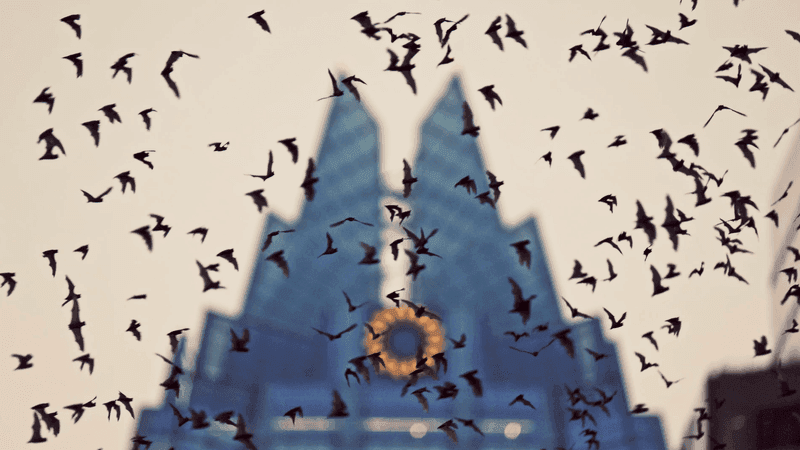
The Congress Avenue Bridge is home to the largest urban colony of bats in the world, with an estimated 1.5 million Mexican free-tailed bats living underneath the bridge.
“I think they take two important boxes for Austin’s identity. One, they’re weird,” he said. “It fits in with the vibe of Austin that way. And two, they’re a piece of our green identity. We’re a city that loves the outdoors, being outdoors.”
More than 150,000 people come out to watch the bats each summer, but Hobbie says there hasn’t always been much for those visitors to do while they’re waiting for the show to begin.
“When they rebuilt the bridge in the 80s, they created these gaps that just made the perfect penthouse suites for the bats,” Hobbie explained. “And they moved in all on their own. They were the original urban dwellers before we had our high rises.”
That’s one of the reasons he created “Bat City” with The Trail Conservancy.
New signs at the Statesman site feature QR codes that connect visitors to educational resources and activities, including a series of six short videos covering everything from bat watching tips and Austin’s conservation history to the work of Dr. Merlin Tuttle, who played an important role in protecting and advocating for Austin’s bats.
The resources also include practical information, including what to do if you find a bat, as well as information about the ways bats benefit Austin’s economy and environment.
Hobbie says the project was inspired in part by the questions he would get while filming Austin’s bats for major outlets like National Geographic, Netflix and the BBC.
“I think they take two important boxes for Austin’s identity. One, they’re weird,” he said. “It fits in with the vibe of Austin that way. And two, they’re a piece of our green identity. We’re a city that loves the outdoors, being outdoors.”
“When I’m out there with a big camera, people gravitate to me with questions, and I’m always happy to answer questions and talk about bats, obviously,” Hobbie said. “But it just made it apparent that we’re not doing enough to educate people.”
His solution was simple: give people something to learn while they’re waiting for the bats.
“So if people are out there sometimes waiting for an hour or more to see the bats, I figured, let’s give them something to look at and learn while they’re waiting,” he said.
That education can also help change the way people think about bats.
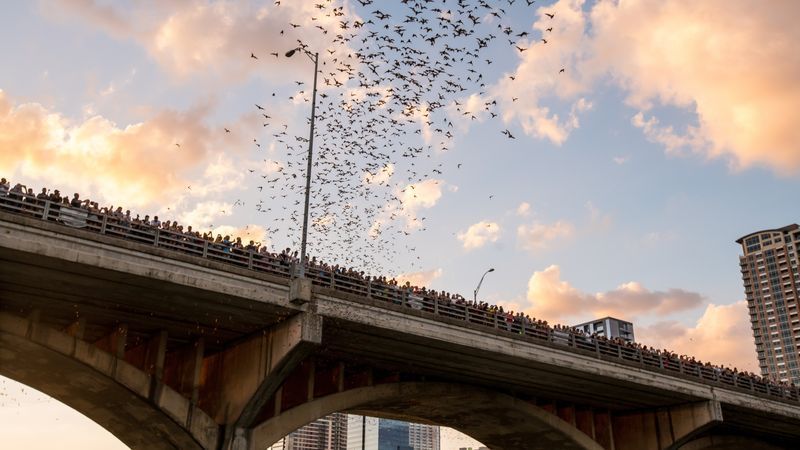
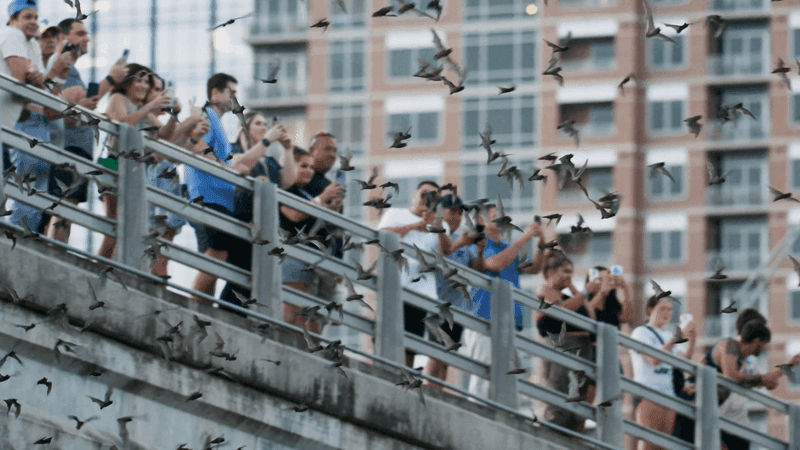
Tourists observing the emergence of 1.5 million Brazilian free-tailed bats from crevices beneath the Congress Avenue Bridge in Austin, Texas.
Hobbie says fear and misinformation often come from the fact that bats are creatures people don’t always get the chance to see up close.
“Humans, we fear what we don’t understand,” he said. “And what’s more mysterious than creatures that fly around in the dark at night?”
There are more than 1,500 species of bats around the world, living on six continents, but Hobbie says projects like “Bat City” can help people see them in a different way.
“There’s a lot of fear and misinformation about disease, and there’s stigmas, and there’s mythology of vampires and all of that,” he said. “But when people get to see bats a little closer up or, like what we’re doing with our films, you slow motion to slow them down so you can really observe them in detail, it really changes people’s perceptions about bats.”
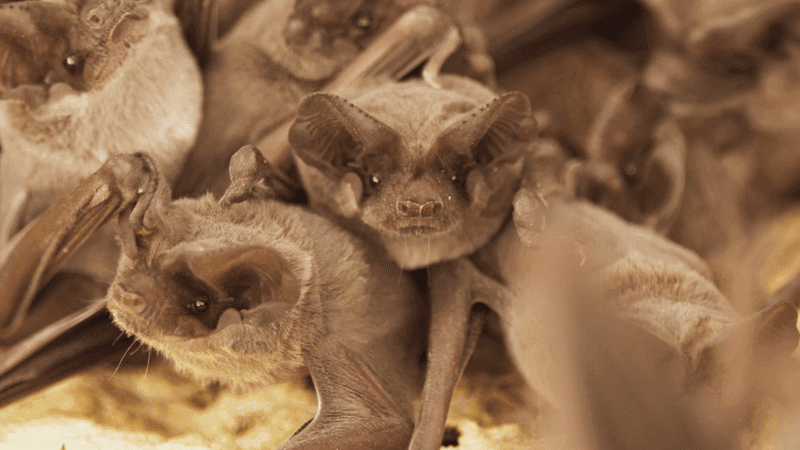
And yes, Hobbie agrees with a very important Austin opinion: bats are cute.
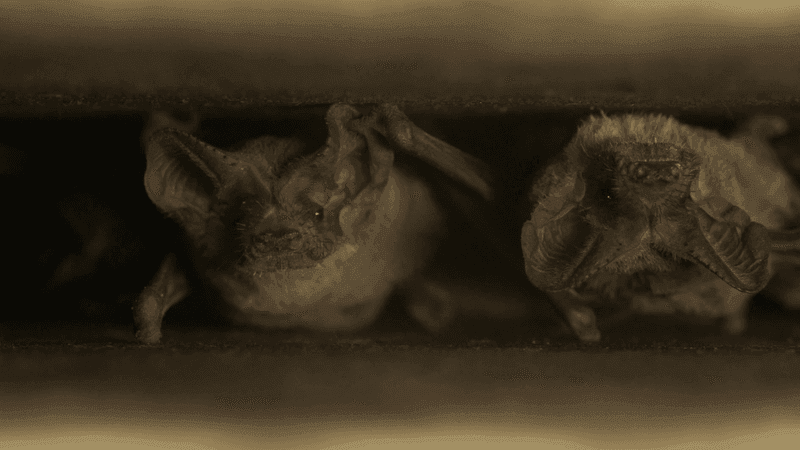
Now, a new project called “Bat City” is giving locals and visitors a chance to learn more about the city’s favorite creatures of the night while they wait for the nightly flight.
They’re also helping keep Austin’s mosquito population in check.
“They’re eating mosquitoes,” Hobbie pointed out. “I mean, if there’s just one thing that you want to love about bats in the summertime, in Austin, Texas, let that be it.”
“Bat City” officially opens Wednesday, which also marks Austin’s official Merlin Tuttle Day. Dr. Merlin Tuttle will be celebrating his 85th birthday, while the occasion also marks 40 years since he moved to Austin and began advocating for the city’s bats.
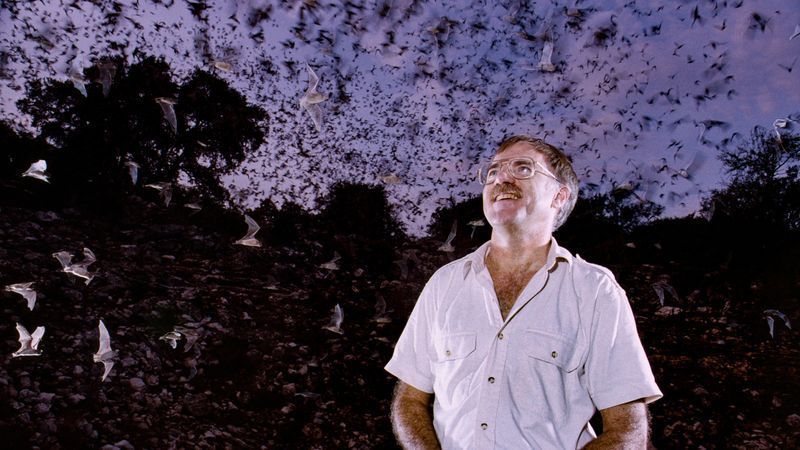
Merlin Tuttle observing millions of Brazilian free-tailed bats (Tadarida brasiliensis) emerge from Bracken Cave in Texas.
For anyone who hasn’t visited the Congress Avenue Bridge bats in a while, Hobbie says this is a great time to go back.
New signs at the Statesman site will feature the QR codes, giving visitors access to the “Bat City” educational resources and videos. The information is also available online at BatCity.info.
The project is still fundraising to help complete the experience, with information about how to support the effort available through the website as well.
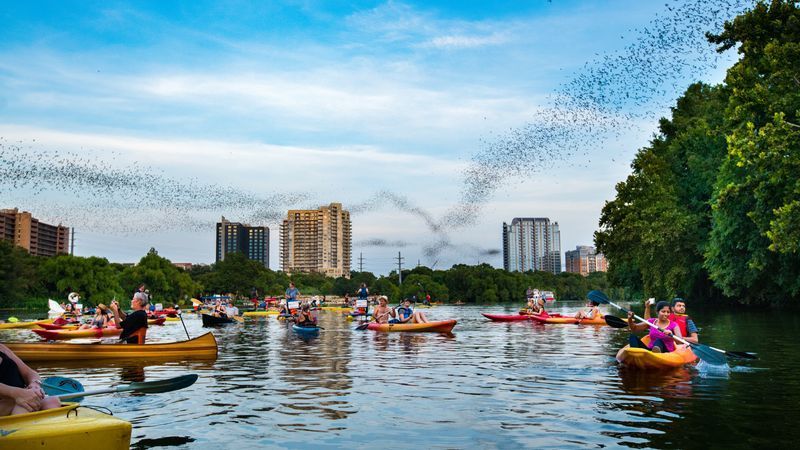
Congress Avenue Bridge emergence of Brazilian free-tailed bats (Tadarida brasiliensis) as tourists enjoy watching. Millions of visitors have viewed this spectacle, close-up, over more than 35 years, and no one has been harmed by a bat. The bats attract millions of tourist dollars each summer and consume tons of crop and yard pests each night.
So the next time you’re heading down to watch Austin’s bats take flight, don’t just wait for the show. Scan the signs, learn something new and get a closer look at the fascinating creatures that have called Austin home for decades.
Because there’s a lot more to the Congress Avenue Bridge bats than just a spectacular sunset flight.