
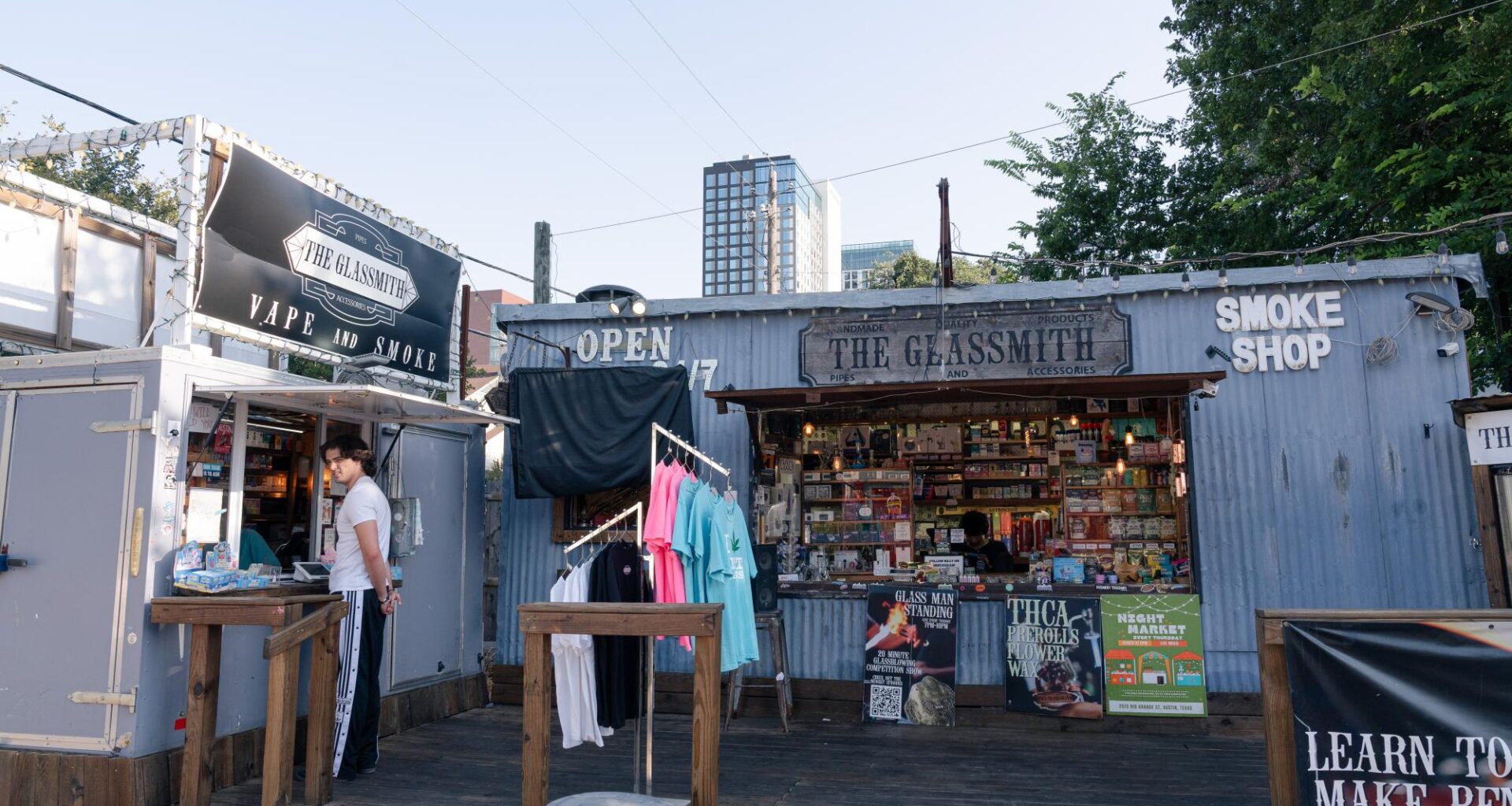
The Texas Supreme Court allowed a ban on delta-8 tetrahydrocannabinol (THC), a compound found in small amounts in cannabis plants that had been legal for nearly five years. The compound is now classified as a Schedule I drug effective July 31.
The change was the latest after a series of changes this year and in 2025. As the Austin Police Department begins to implement changes to Texas law, the Texan broke down how enforcement will look in Austin.
The penalty for holding delta-8 THC depends on the amount carried, but carrying up to one gram results in at least 180 days in state jail.
“That is an extreme risk to the student population because student aid, scholarships, all of these things potentially could run afoul of that,” said Warren Harasz, chief compliance officer at Canaspire, a cannabis consulting company.
According to an email statement from the Austin Police Department, if an individual can prove the substance they have does not contain delta-8 THC through the packaging it was sold in, it will not be seized. If they cannot prove the substance is legal, officers will seize and test it.
For plant materials, officers may make an arrest or issue a citation only when it is a part of an “investigation involving a high-priority, felony-level narcotics case,” according to the email statement.
If officers have probable cause to believe the substance is marijuana, they will seize the item, complete a report, and release the individual if possession of marijuana is the only charge, according to the email.
The statement also said if the substance is an “extract,” such as vape liquid or edibles, it is classified as a Penalty Group 2 controlled substance and will be seized and submitted into evidence.
“Depending on the facts and circumstances of the case, the assigned detective may have the substance tested,” APD said in the email statement. “If testing establishes that the substance contains delta-8 THC or another controlled substance in violation of applicable law, the detective may seek a warrant for the individual.”
Though the processes have been outlined, Cynthia Cabrera, board member and president of the Texas Hemp Business Council, said certain legal hemp products may include a mix or trace amounts of delta-8, which she said could lead to uncertainty in enforcement.
Products containing delta-9, a more common compound found in marijuana and THC products, are still legal in Texas as long as the total concentration does not exceed 0.3% of the dry weight.
“I would say, just because you bought something from a store in good faith, there are going to be a lot of shops out there, especially right now, that haven’t been enforced yet,” Harasz said. “To the students, you walk in and you go, ‘Oh hey, it’s on the shelf,’ and you purchase it, and that could be putting your future at risk.”