
The Texas State University System (TSUS) has approved the reorganization of the College of Science and Engineering (CoSE) into two new colleges: the College of Science and the Ingram College of Engineering.
TSUS approved the reorganization during its Aug. 6 meeting, due to the college’s recent growth. Its planned to be reorganized in Fall 2027, but before the change can be implemented it needs final approval by the Texas Higher Education Coordinating Board.
As of Fall 2025, CoSE was the largest college at Texas State, with 9,760 students enrolled, a 9.3% increase from 2024, according to 2025 enrollment surge press release.
Jesus Jimenez, director and professor of the Ingram School of Engineering, said this reorganization was similar to watching your baby grow until they graduate from college.
“Now that we see the reorganization, it’s like a dream come true and it’s a time for us to be renewing our dreams on what is coming next,” Jimenez said.
Jimenez said that with the new College of Engineering, there will be more opportunities for students, more labs and the ability to expand into directions that Texas State believes are important and relevant.
“Right now I have in just three engineering programs, about 2,800 students. Last year, we had about 2,300 students; we [are] growing at a very fast rate,” Jimenez said. “With the reorganization in engineering, we also have computer science and another department, which is engineering technology and altogether will be around 6,000 students.”
Vice President for Research Shreekanth Mandayam said Texas State is trying to create colleges that are typical in most R1-level research institutions. R1 institutions are defined by the Carnegie Classification of Institutions of Higher Education as institutions having high research activity, spending at least $50 million annually and graduating 70 doctoral students a year for three consecutive years. Texas State is set to achieve R1 status by 2027.
“Right now the situation is, we have a combined college that provides almost 40% of the research expenditures of the university,” Mandayam said.“… so creation of new separate colleges, providing them the resources to grow, providing them research support staff, providing them administrative support staff, providing students the support staff to succeed in two colleges are a good thing and a sign of progress and growth.”
Mandayam said a constant challenge other universities face is getting the college of engineering and science to work together; however, with CoSE having already worked together for years, he doesn’t anticipate Texas State dealing with this issue.
“ … I would say we are investing in the creation of two new colleges that return a lot more benefit to Texas State in terms of reputation, in terms of enrollment,” Mandayam said.
Pranesh Aswath, Provost and Executive Vice President for Academic Affairs, wrote in an email to The Star that the provost’s office is currently in the planning process and will recruit the deans of each college at the start of Fall 2026.
“We are seeking forward-looking deans committed to preparing students for an evolving workforce, supporting faculty research at the highest levels, and actively engaging our alumni and community to engage with and support the colleges,” Aswath wrote.
Aswath wrote that the provost’s office is actively seeking feedback through an open survey and invitation to meet with the designated task force for faculty and staff.
“Our task force is currently working to mitigate possible impacts of the separation, but like any change, there will be challenges that emerge. The likeliest issues are related to untangling systems and communication pathways and ensuring that workflows are all set up correctly,” Aswath wrote.
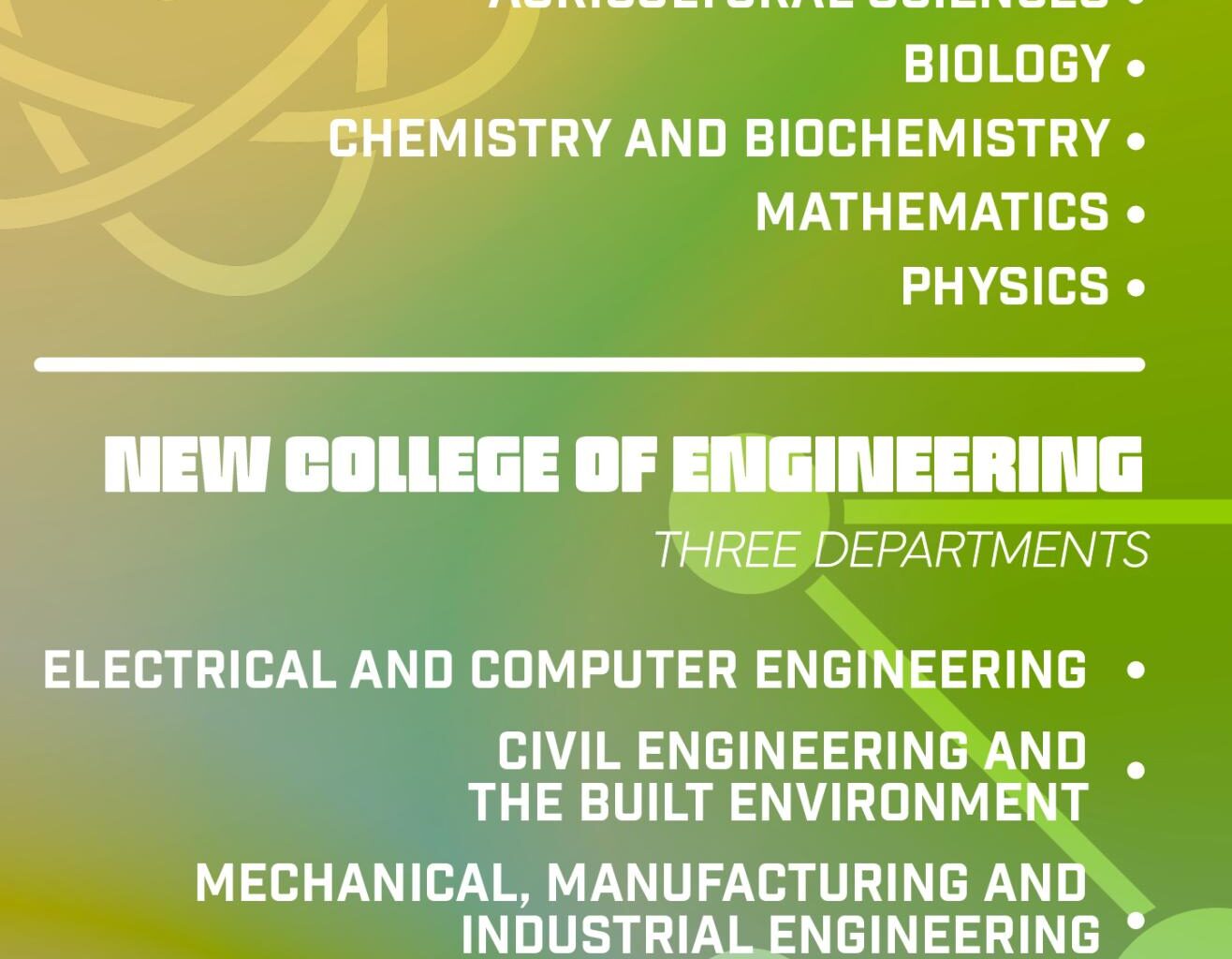
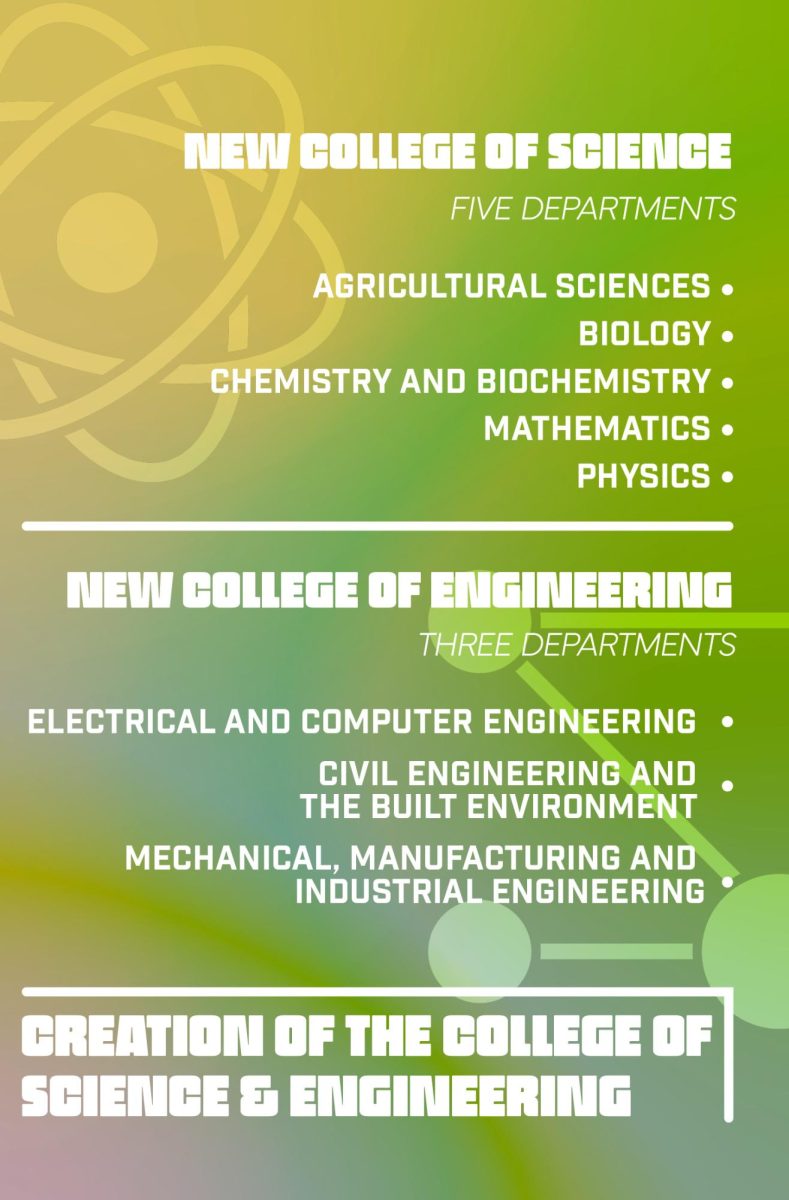
The new Ingram College of Engineering will include one school, three departments and one joint program: School of Computing and Artificial Intelligence, Department of Electrical and Computer Engineering, Department of Civil Engineering and the Built Environment, Department of Mechanical, Manufacturing and Industrial Engineering, Engineering Technology and Engineering Management and Materials Science, Engineering and Commercialization Program with dual reports to the both Deans of the College of Science and the Ingram College of Engineering.
The new College of Science will include five departments and one joint program: Department of Agricultural Sciences, Department of Biology, Department of Chemistry and Biochemistry, Department of Mathematics, Department of Physics and Materials Science, Engineering, and Commercialization Program with dual reports to both of the Deans of the College of Science and Ingram College of Engineering
“You need to have efficiencies to scale here and you cannot have an extremely large organization where you’re trying desperately to support too many aspects and too many students and too many faculty and too many research projects,” Mandayam said. “This is a proper scaling of the organization so that you have two colleges that can be more effectively and efficiently supported.”