
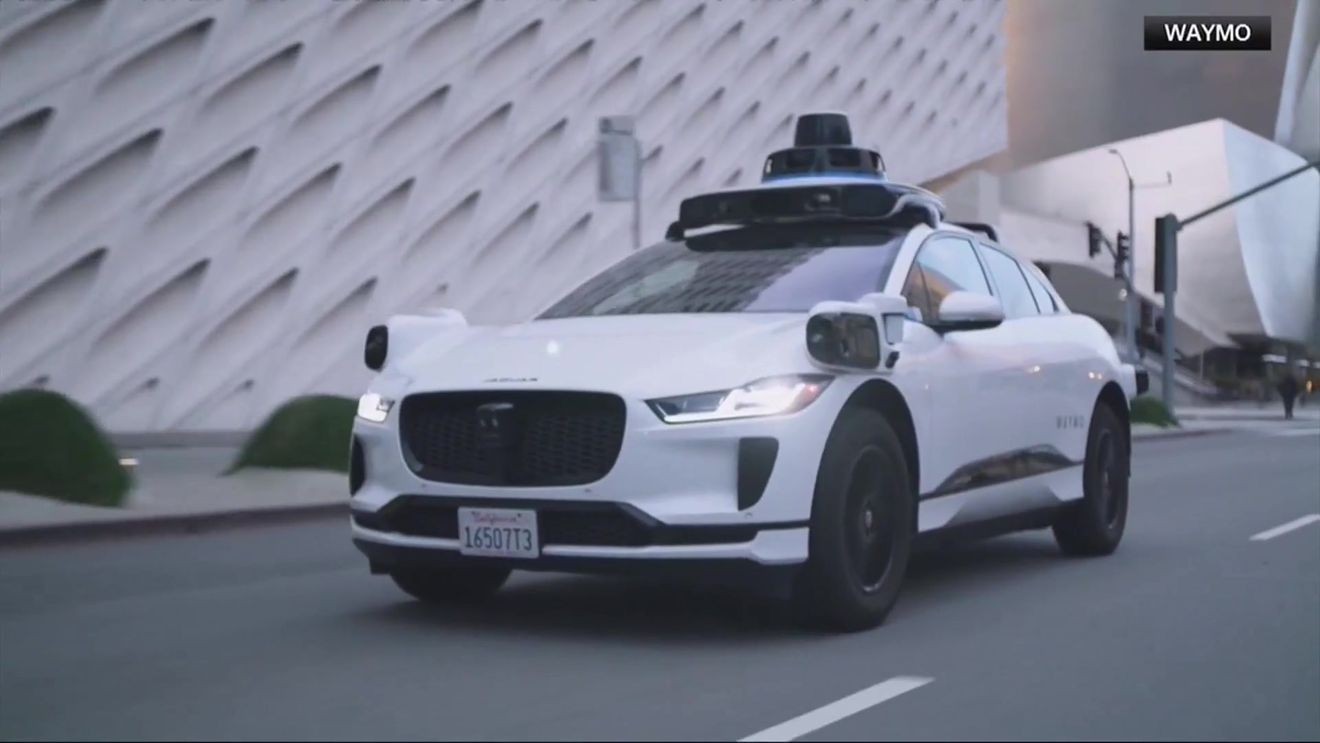
AUSTIN, Texas — The Texas Senate Transportation Committee heard testimony about the impact of Senate Bill 2807 today, which regulates commercial autonomous vehicles (AVs).
During the 89th Texas Legislative Session, SB 2807 was passed into law, requiring commercial AV companies to be authorized by the Texas Department of Motor Vehicles (TxDMV) in order to operate in the state.
Enforcement of the law took full effect in late May 2026, and today, lawmakers received an update on its implementation.
PREVIOUS COVERAGE | New Texas law tightens rules for autonomous vehicle companies, including Waymo
Representatives from the TxDMV reported to the committee that they have received 42 complaints related to AV operations.
SB 2807 gives the TxDMV authority to restrict or pull AVs off the road if it is determined that the vehicles caused or pose a serious risk of bodily injury. However, no AV companies have had their authorization suspended or revoked.
“We haven’t received anything that has led us to issue that notice of intent to pursue the revocation or the suspension, or impose a restriction,” said Corrie Thompson, Director of Enforcement at TxDMV. “But we are still evaluating them to see where the department lies and what is going to reach that standard that will ultimately lead us there.”
One key provision of SB 2807 is that AV companies must provide a first responder interaction plan for emergency personnel to handle autonomous vehicles in cases of emergency. The TxDMV works in partnership with the Texas Department of Public Safety to review these safety plans during an AV company’s authorization application.
State Senator Charles Perry (R-Lubbock) questioned the present TxDMV spokespersons about an incident in Austin, where a Waymo AV blocked the path of an ambulance responding to a mass shooting on 6th St. in March.
RELATED | Waymo to skip Austin safety meeting after robotaxi blocks ambulance during mass shooting
“Waymo was involved in a first responder issue regarding a shooting on 6th St. Has their first responder plan been updated to accommodate the blocking of first responders to [an] active shooter back in Austin, Texas?” asked Senator Perry.
“I’m not aware of the first responder interaction plan being updated as a byproduct of that. We did—Waymo reached out to us directly; we did sit down and meet with them and discuss the incident review footage from the vehicle itself and get an explanation. I did not glean from that that there was a need to update the first responders’ interaction plan,” responded Clint Thompson, Director of the Motor Carrier Division at the TxDMV.
Despite mandatory first responder interaction plans, one Austin police officer testified about APD personnel experiencing repeated issues with AVs.
“We still have issues and, more than that, the same issues seem to occur repeatedly, which is both frustrating and dispiriting for our first responders,” said Lt. William White with APD Highway Enforcement.
Clint Thompson told the committee that the TxDMV “has not identified any needed legislative changes at this point,” regarding the provisions and process of enforcing SB 2807.
ALSO | Study: Waymo robotaxis had fewer crashes than human drivers across four cities
However, some want to see more action taken.
State Representative Vikki Goodwin, representing Austin-area House District 47, is calling for more local control of AV policy despite policymaking authority lying with the state.
Goodwin wrote in a statement to CBS Austin, “In Austin, we have seen autonomous vehicles posing a safety risk, including interfering with emergency vehicles. Local governments should be able to set policy that reflects the challenges their communities are facing.”
One suggestion: pass stricter requirements for AV technology to prevent problems with emergency response personnel in the first place.
“I would be in favor of them making sure that the programming that goes into the vehicles can be able to determine an ambulance or a school zone or something like that; doing a better job at determining where the vehicle is would be very nice to see,” said Kash Roberts, a student at UT Austin.
New legislation regarding the regulation of AVs can be introduced during the next regular legislative session in January 2027.