
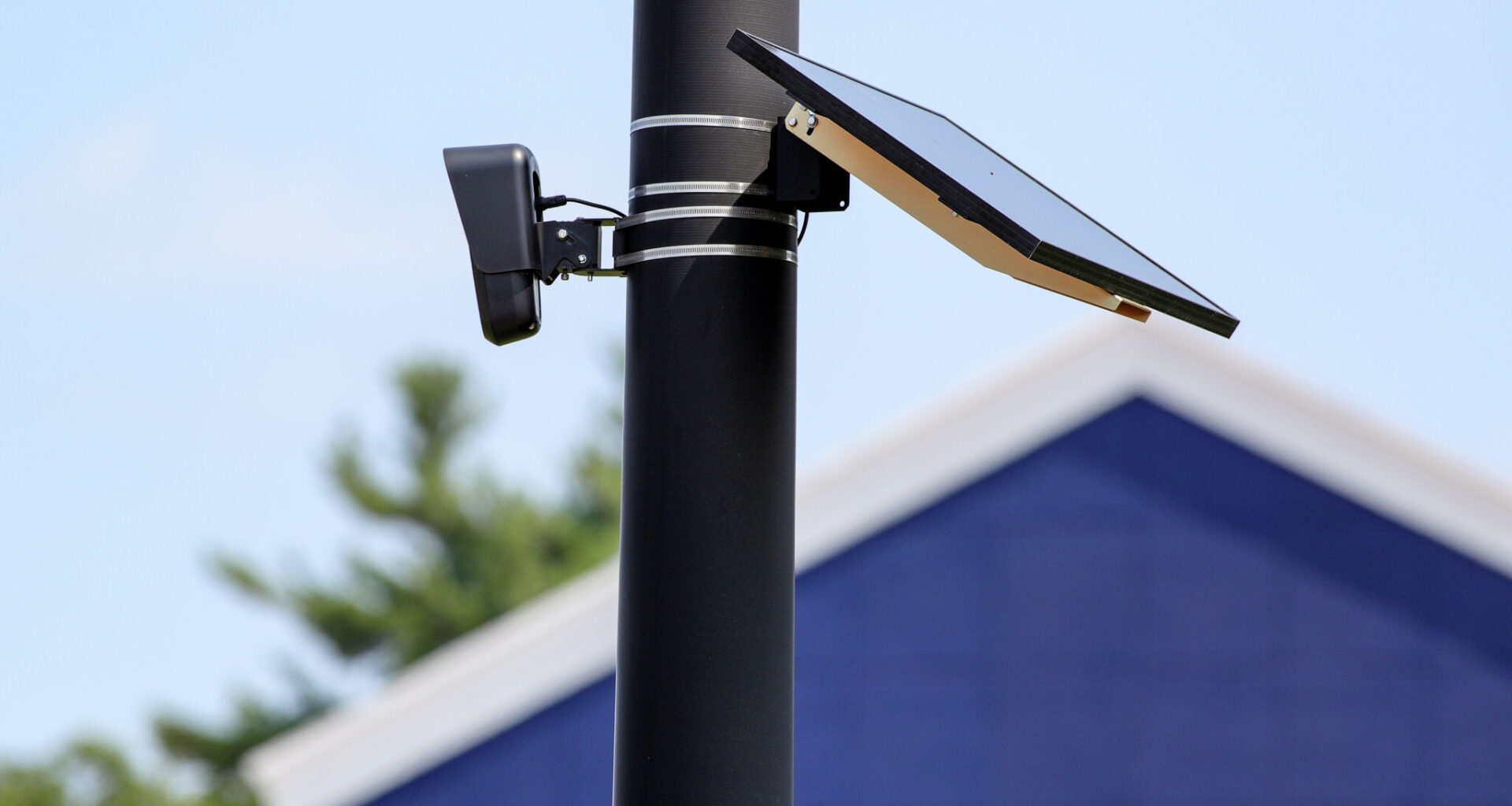
Council members for the city of Pflugerville, a suburb north of Austin, voted unanimously on Tuesday night, August 25 to end the city’s agreement with Flock Safety, disable its 28 automated license plate reader cameras and remove access to the ALPR system. Earlier Tuesday, city staff members began physically covering up Flock Safety cameras installed around town.
Here’s everything we know about the decision behind the disablement.
In a statement released late Tuesday night by the city of Pflugerville and the Pflugerville Police Department, Mayor Doug Weiss referenced “recent revelations about the Flock system” as reason behind the canceled agreement. Pflugerville been been utilizing Flock ALPR cameras within the city since 2020, and a renewal agreement had been up for consideration on the city’s agenda; that item weighed the continual lease of the cameras for two years “with updated privacy, security and data policies.”
“Public safety and public trust have to go hand in hand, and recent revelations about the Flock system have fueled concerns throughout the community; we can’t engage with organizations we can’t trust,” Weiss said in his statement. “Council will continue to explore tools to support law enforcement, but any vendors the City uses would need to have the safeguards in place to earn and keep the community’s confidence.”
What ‘recent revelations’ prompted Pflugerville to discontinue its Flock Safety cameras?
Pflugerville City Council Member Jonathan Coffman flagged on Monday, August 24 public records obtained by a city resident through the Texas Public Information Act, which outlined the city of Pflugerville’s Flock records. Coffman said he reviewed the raw data files obtained and verified the same concerns raised by the resident.
Approximately 80 organizations were listed as having access to Pflugerville’s Flock system, Coffman said, and city staff members have stated Pflugerville does not provide its ALPR data via statewide and nationwide sharing networks. However, Coffman said the Flock network records audited “identifies 459 outside organizations conducting nearly 1.6 million searches that included Pflugerville’s camera network over the last six months.” Those organizations, Coffman said, included both Texas entities located “hundreds of miles away” and out-of-state organizations.
“Whatever Flock calls the setting, this is broad network access to data collected in Pflugerville,” he wrote, emphasizing a substantial discrepancy between public understanding of ALPR camera operations in Pflugerville and data access.
“I am not claiming tonight that every component of Flock or Clearview AI has been misused; I hope they have not,” Coffman wrote in the Monday evening post, where he also called on the Flock system’s suspension. “I am saying that the City has lost the factual foundation needed to justify continuing their operation.”
On Tuesday, Pflugerville officials said the contract has been operational “while under negotiation for extension since the term ended on July 31, 2026.” It was during that interim time period that city and public city leaders learned the operating system had allowed non-partner law enforcement agencies access to that Flock system data.
City council members hosted a work session on the creation of Pflugerville’s inaugural data governance standard as it applies to ongoing technology uses. That policy is slated to be voted on at a future meeting.
“The Pflugerville SAFE policy will codify standards for protecting City data and confidential information, pairing accountable human judgment with technological outputs, and ensuring public transparency around — and City Council approval of — high-risk systems like ALPR technology,” Tuesday night’s statement added.