
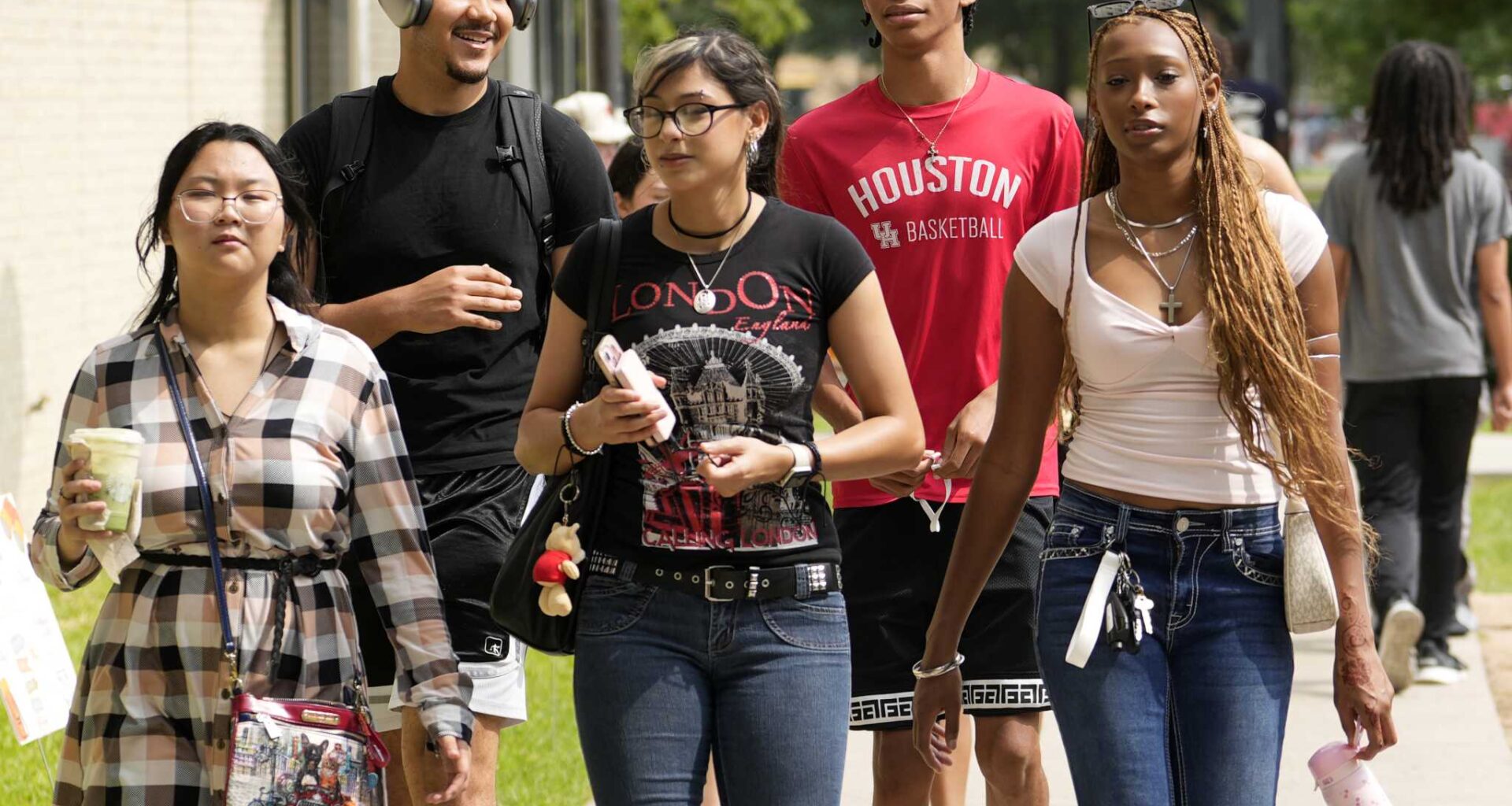
The political movement driving book bans and the censorship of college courses has reached University of Houston, one of Texas’ most ethnically diverse major universities.
I had hoped my alma mater could withstand the political pressure that has pushed other colleges and universities across Texas to eliminate or restrict courses that conservative lawmakers see as “indoctrination.” Instead, UH has slashed roughly 40% of the courses from its core curriculum.
That means a UH student who wants to take courses, such as “Introduction to LGBT Studies,” “Latino Leadership Activism and Organizing,” or even “Intro to Global Climate Change” to satisfy their general education requirements would be out of luck. The courses may still be offered, but they won’t count toward the core requirements.
Any reduction in college curriculum to satisfy fears about indoctrination undermines academic freedom and the diversity of ideas that higher education is supposed to foster. College should be a place where students take off the kid-glasses and learn to see the world through a wider lens. It should challenge assumptions, expose us to ideas we may disagree with and develop the intellectual curiosity to understand perspectives beyond our own.
Still, the cuts at UH could have been much worse. Many of the race and demographic studies courses remain.
In January, Texas A&M University eliminated its entire Women’s and Gender Studies degree program as part of sweeping policy banning the teaching of race and gender ideology. Texas Tech University followed in April by phasing out programs focused on sexual orientation and gender identity.
So far, UH has not touched programs such as Women’s, Gender & Sexuality Studies, which is among my most valued resources for research and information about issues impacting women. And only one of the African American Studies courses was eliminated, “Black Liberation Theology,” which is only offered once a year.
I was fortunate to learn about world religions, such as Buddhism and Taoism, in my Catholic high school curriculum. As a sociology minor at UH, I took courses such as “Society of Sex Roles” and the “Black Experience in the US.” Both expanded my understanding of the world, but I did not become a Buddhist, nor did those courses change my view about my sexuality.
That’s because learning about an idea is not the same as being indoctrinated by it.
Somehow, we’ve twisted the meaning of indoctrination. At its core, it is about teaching someone to accept a specific set of beliefs or ideas without allowing them to question, doubt or think critically about them.
That’s the opposite of what a college education should be.
UH freshman Aleyah Cardwell called the curriculum cuts unfair. “It’s really important for us to learn about the LGBTQ community. Some people just don’t think it’s important … Everybody should feel as one,” she said.
College is where critical thinking blossoms and where we learn — more than anywhere else — that the world is much more interesting because of our differences.
It shouldn’t just prepare students for a career. It should help prepare them to be better thinkers, better citizens and ultimately better people.
That’s not indoctrination. That is education.