
 5 min read
It turns out you can go home again. That is precisely what decorator Todd Romano did in 2016, returning to his birthplace of San Antonio after three rollicking and successful decades in Manhattan.
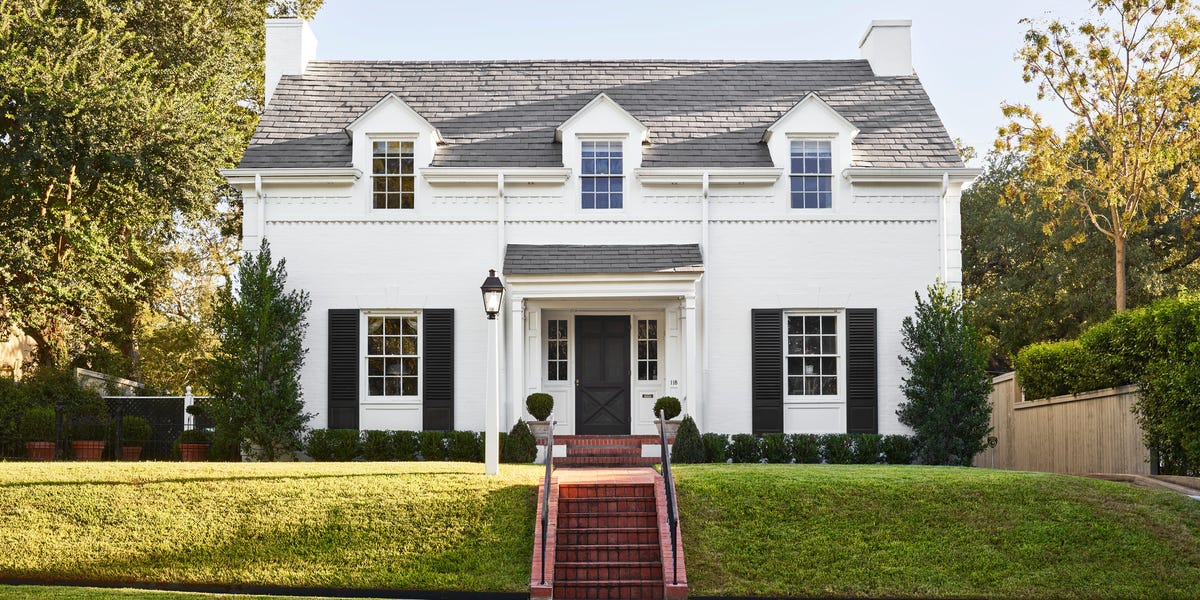
Not only did Romano boomerang back to his hometown—and to the Monte Vista neighborhood he’d known since boyhood—but he settled down in a singular house he’d had his eye on for roughly a quarter of a century. “My parents lived a few blocks away, and I’ve always loved this neighborhood,” he says.
 Douglas Friedman
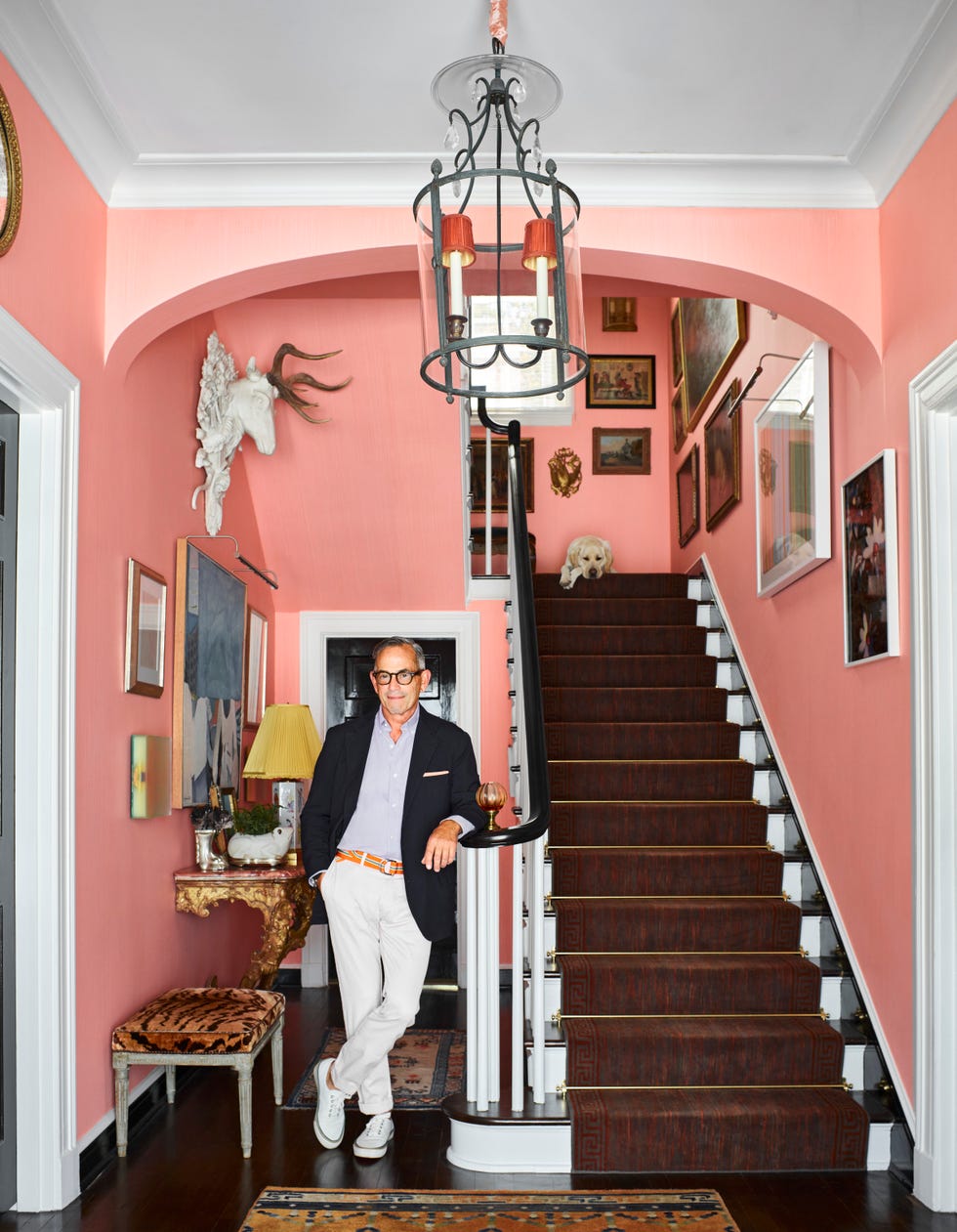
Todd Romano in the entry with English Lab, George.
The house, a modest two-story Georgian Revival structure on a low rise set back from the street, was designed in 1936 by Atlee B. and Robert M. Ayres, a father-and-son architecture firm best known for their municipal structures throughout South-Central Texas and for the Spanish Revival behemoths they designed for the San Antonio elite. The two also produced plans for more modest Georgian Revival structures to house the local professional class. Romano’s is one. Let him explain: “The house was built for a doctor and his wife, people from an old Texas family, and, at 3,100 square feet, it’s probably the smallest house they ever did.”
Visiting town one weekend a quarter century ago, he detoured through Monte Vista on his way to a cocktail party and abruptly hit the brakes. “I just screeched to a stop” at the sight of the house, he says. When a real estate agent and friend later informed him that the house’s longtime owner had recently died, he called on the widow to see if she wanted to sell.
Several jolly cocktails later, it became clear that she did not. And so decades elapsed before Romano found himself established again in Texas and midway through renovating another structure when, out of the blue, in came a call saying his dream house had suddenly come on the market. “I had a ton of money tied up in this Georgian wreck I was fixing, but I came to see it anyway,” he explains. “I was here for 10 minutes and told the agent, ‘Just get it.’”
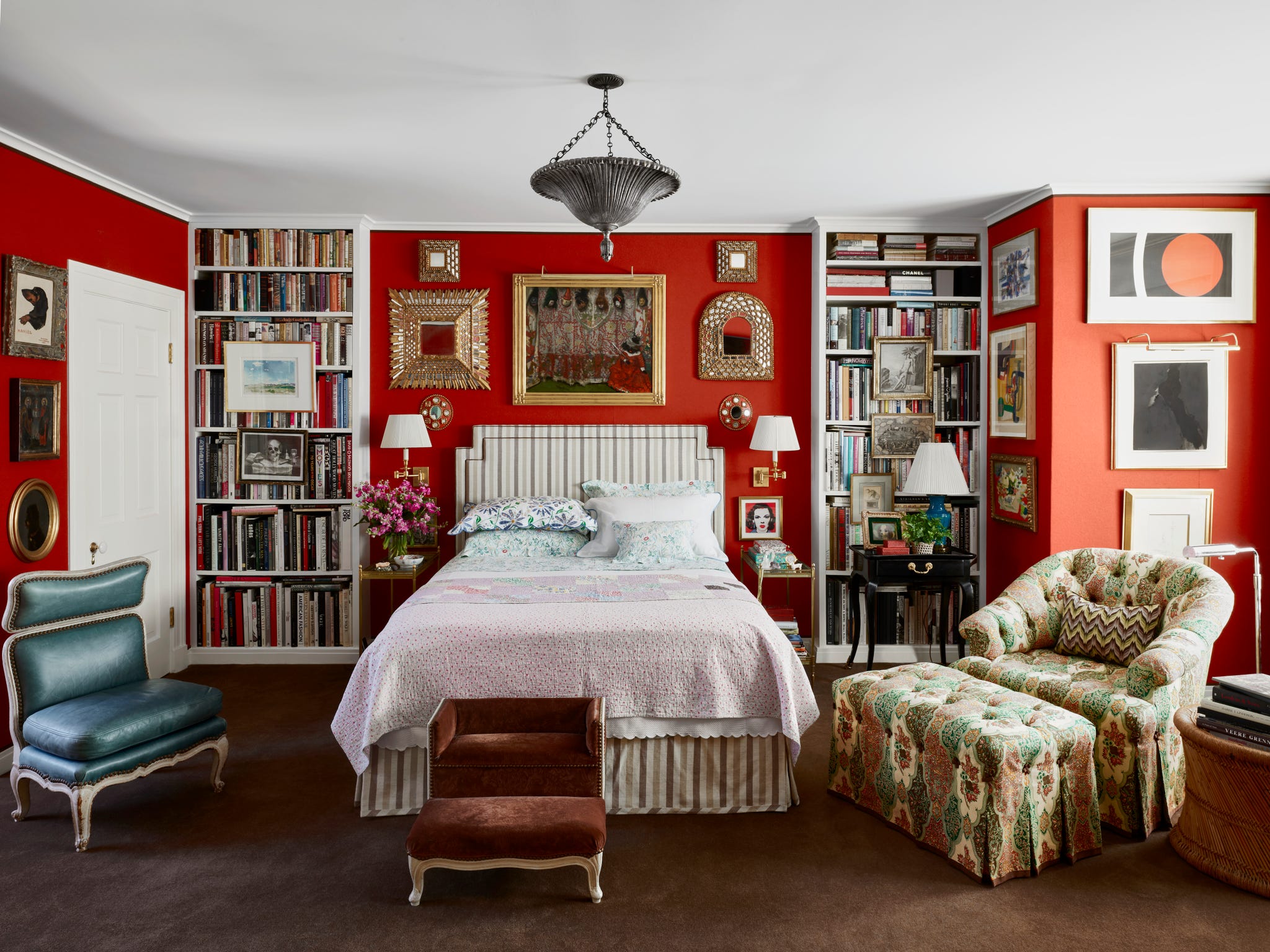 Douglas FriedmanLayered atop a mélange of printed percale bed linens (D. Porthault) is a 19th-century floral Texas quilt. Peruvian and Spanish Colonial mirrors shimmer atop red wool felt walls (Claremont). A Louis XV–style step stool in gauffrage velvet (Lee Jofa) serves as decadent doggie steps.
Yet why this old house? “I love funny, small houses—the scale, the cozy spaces, these 10 oddly tidy little rooms,” says Romano. “Even though this is a modest house, it has proportion and style. And when I think about this place, I truly think of it as coming home—geographically, physically—in terms of lifestyle. It’s a deep emotional thing for me because, for all that I’d done in New York, I realized at a certain point that my life there wasn’t making me happy. I wanted some connection to nature, dirt, and plants and a garden. I’m a country boy, I’ve always said it, though a fancy one. And I love sky.”
For the hoard of assorted objects Romano had amassed through the years, there was also a southward migration. Called in from storage in three separate states, Romano’s magpie collections soon found their way to Texas, where they settled into his new dwelling in surprisingly easy, if off-kilter, juxtapositions. The result, Romano says, is somewhat like having all the people you’ve ever been intimately involved with walk into the same room at once.
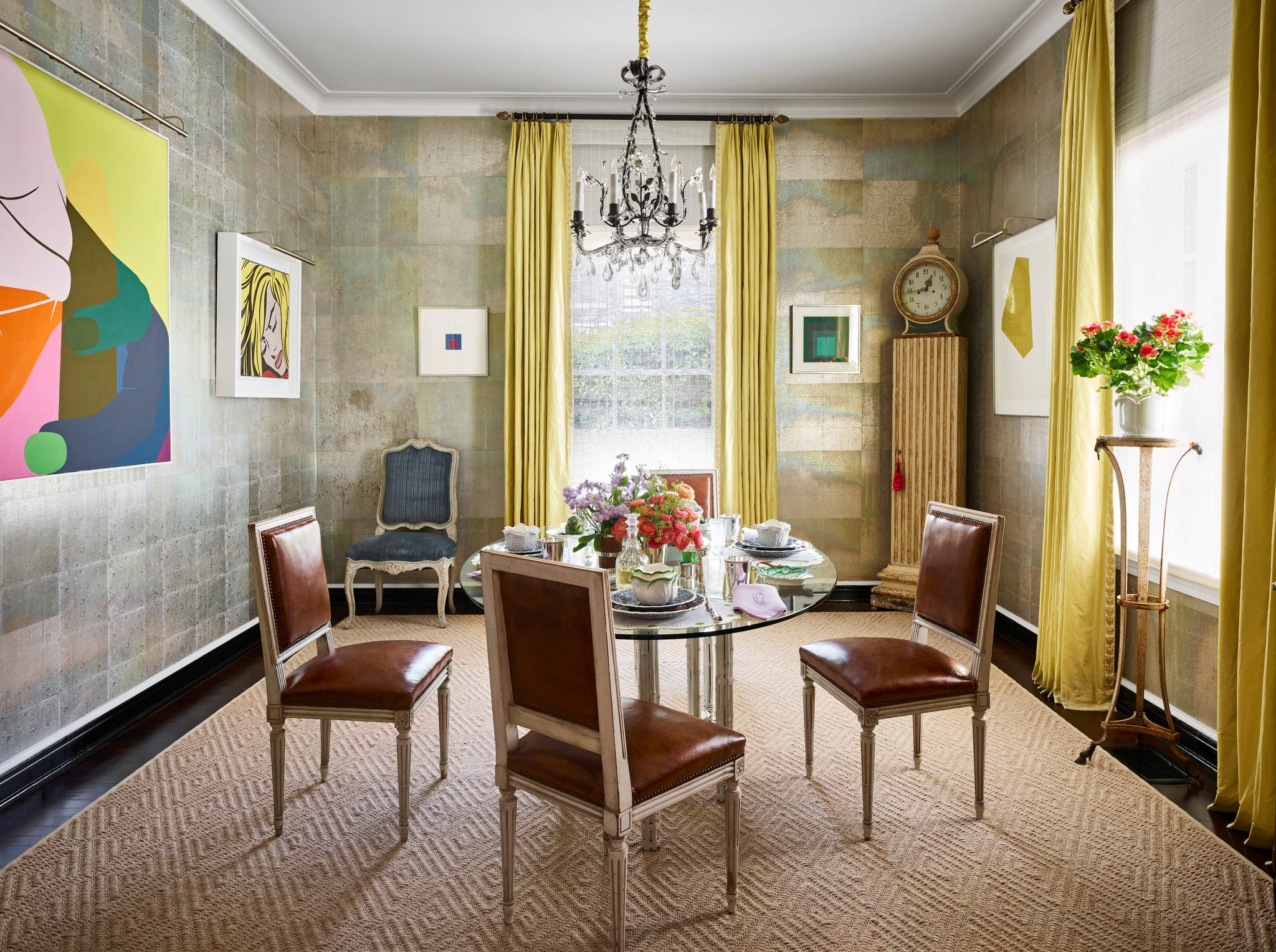 Douglas FriedmanOn exhibit in the dining room: Roy Lichtenstein, George N. Morris, Josef Albers, and Robert Goodnough. A McGuire rattan-and-leather table is paired with Louis XVI painted chairs. Carved 18th- century case clock, ReVue Antiques.
“Anybody who knows me would recognize right away that I decorated with things from my other houses: my Warhol silk-screen print of Liz Taylor; my dining room chairs from Sutton Place; a reupholstered sectional sofa from the Los Angeles apartment; doodads from my various shops. The house became a kind of Todd magnet, attracting this big mix-up from all over the country and the world.”
In a sense, Romano continues, he was also returning consciously to a style of decorating that he grew up with and was forged through his admiration for that generation of storied professionals (Mario Buatta and David Easton among them) who directly preceded him.
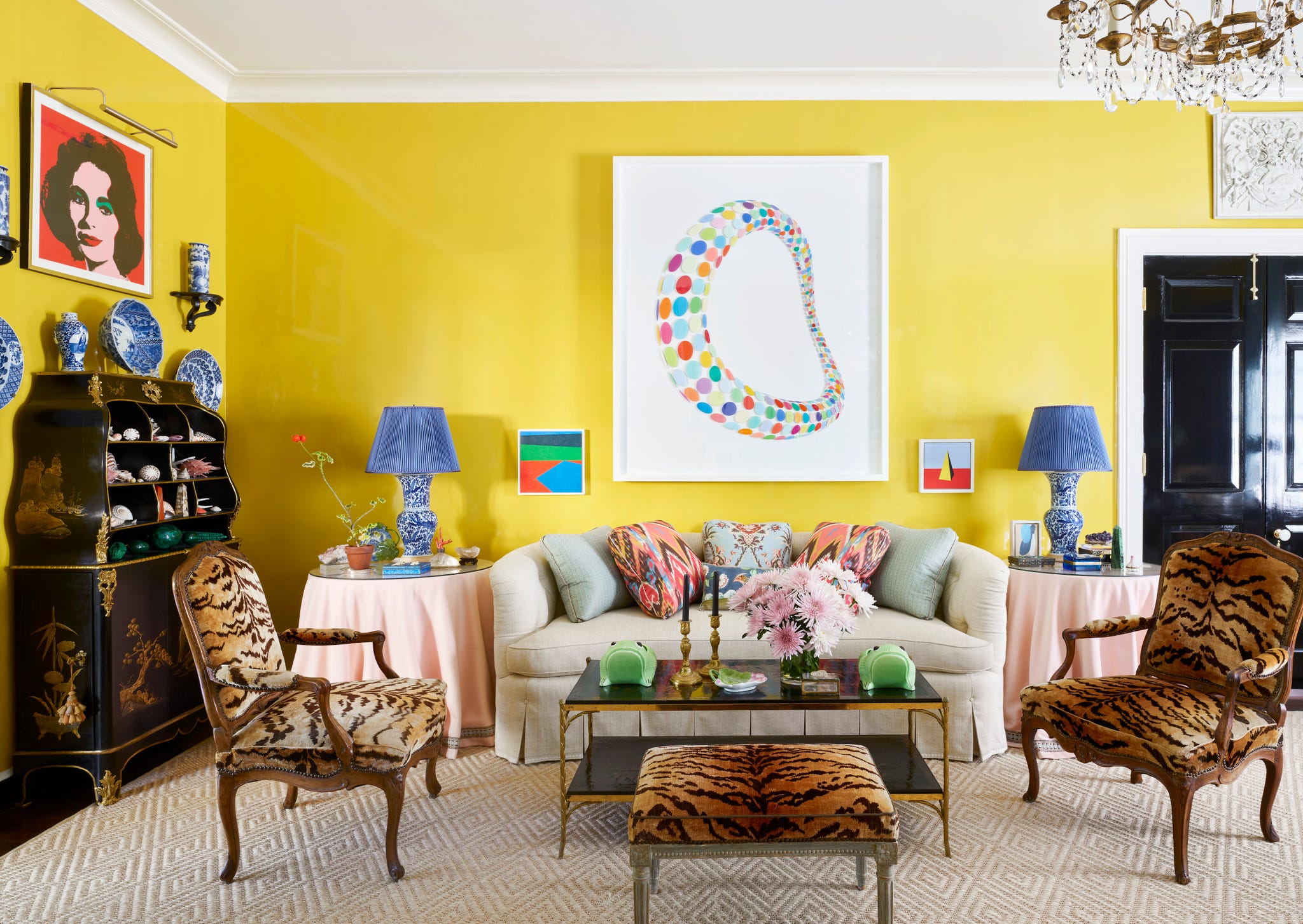 Douglas FriedmanA virtuoso’s guide to owning the color wheel: Taxicab yellow, pure red, and cobalt are a mighty foundation for soft pastels and nuanced naturals. A pair of Chinese baluster vases fitted as lamps bookends a custom button-tufted sofa. Central artwork, C-Ring 1, Todd & Fitch.
“In that regard, the house is traditional,” he explains. “At the same time, I used color intentionally and intensely—lacquered walls of checker-cab yellow or salmon pink; this odd, very Parisian strié carpet going up the stairs; and all these wackadoodle combinations like natural burlap or tomato-red wool felt—precisely because I didn’t want the place to look like my grandmother’s house.”
If he dared himself to push taste to its limits, that is because, says Romano, “I very much wanted a place that would make my pictures and objects pop. I freely admit that the colors are kind of insane, but it’s meant to be provocative and nonserious and fun.”
 Douglas Friedman
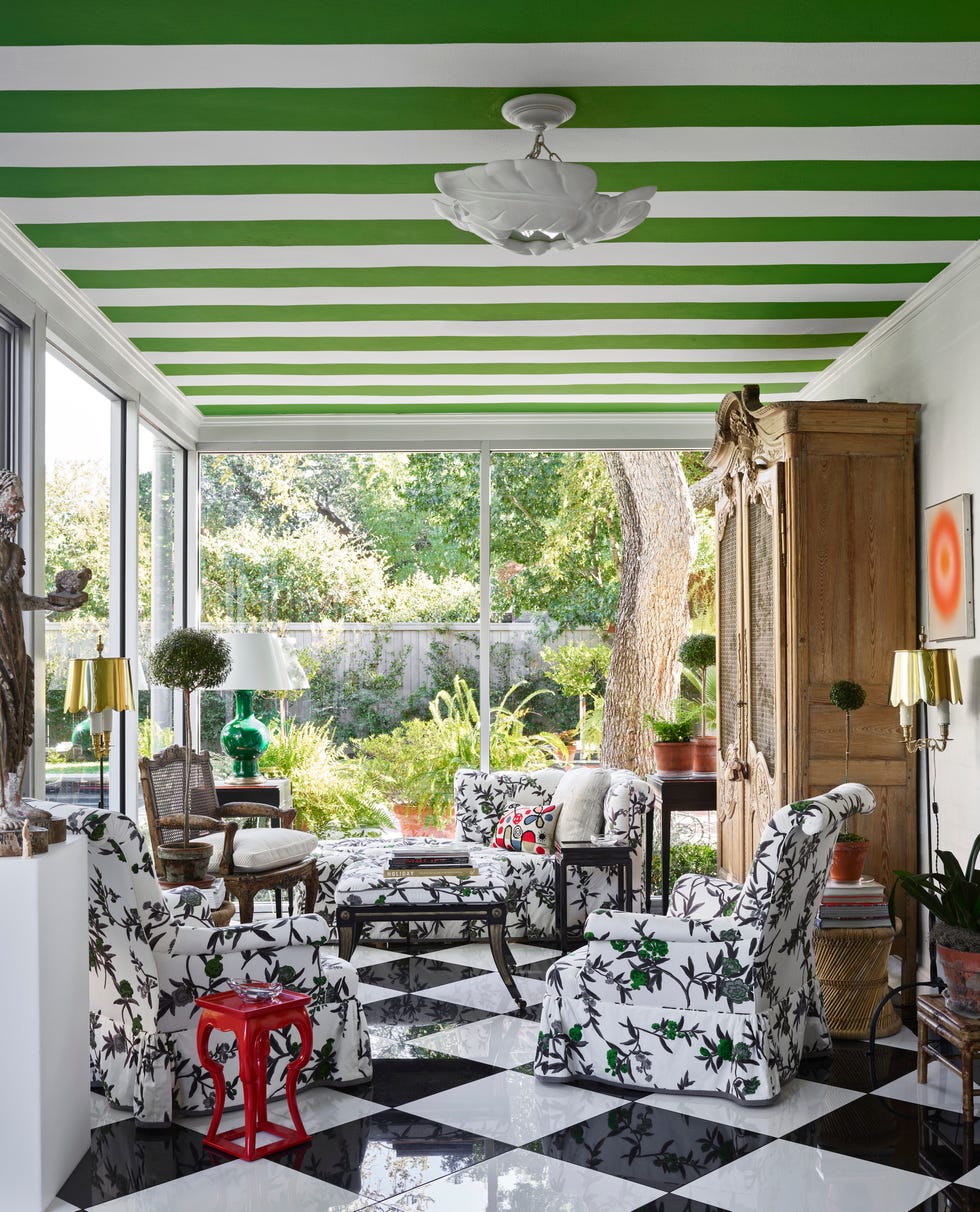
Glass walls and a chic awning-stripe ceiling give the sunroom the liberating air of a country lawn party.
Friends from childhood routinely come around for games of Onze or canasta, Champagne pick-me-ups on the terrace, and ensuing, well-lubricated laughter. Romano’s English Labrador retriever, George, is given run of the house. “I couldn’t care less about the furniture,” Romano says.
“Look, the last thing I’d ever want is for any place of mine to feel stuffy,” he adds. “There are some nice things here, yes, and I do get a kick out of having these painted wood Louis XV side chairs from Jackie Onassis’s apartment. But at the end of the day, it’s all just a frame for your life. I honestly get as much excitement out of a plastic snake that I bought for five bucks.”
Living Room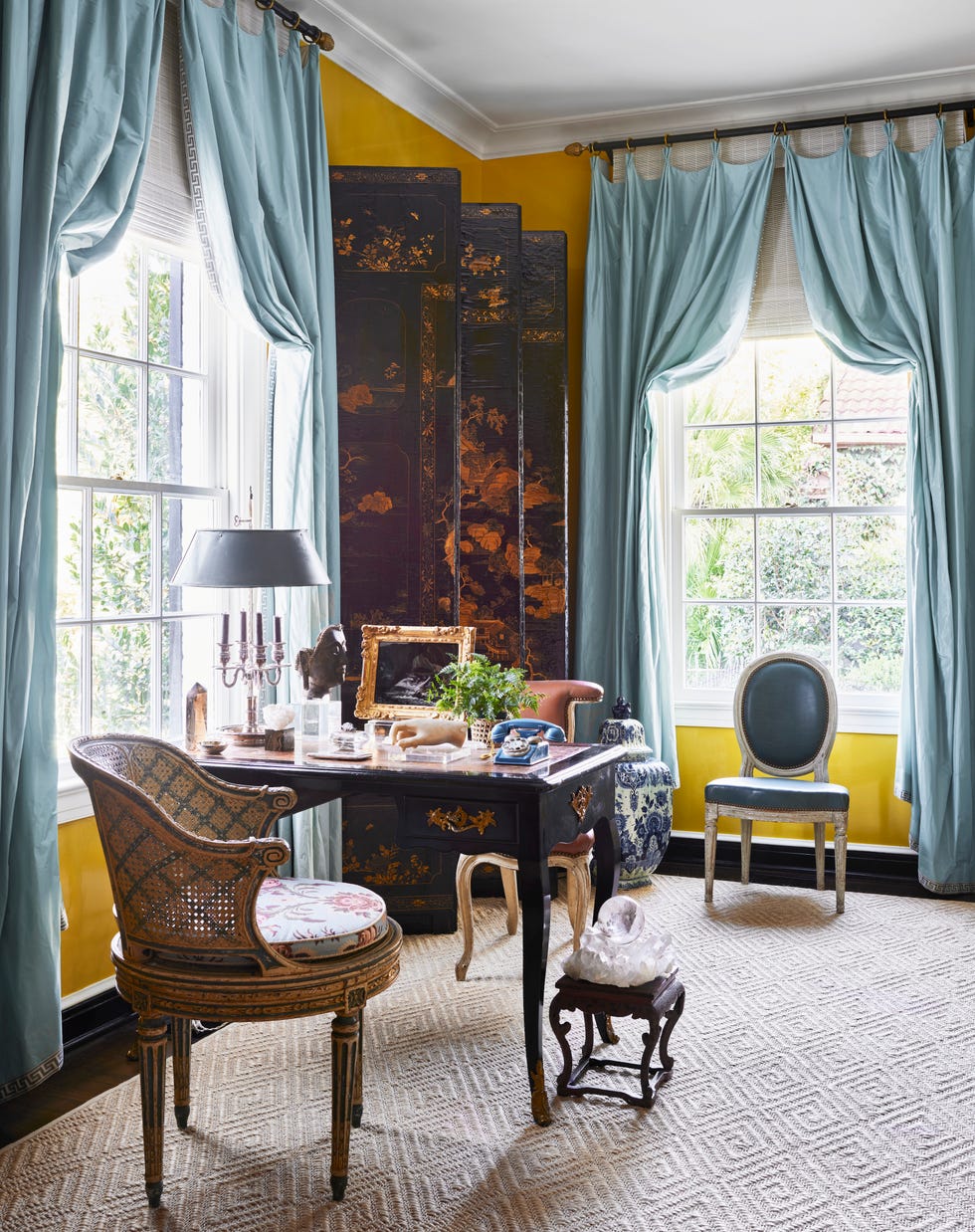
Douglas Friedman
A curvy cane-backed Louis XVI fauteuil with an 18th-century ormolu bureau plat. Silk taffeta drapery fabric, Clarence House.
Dining Room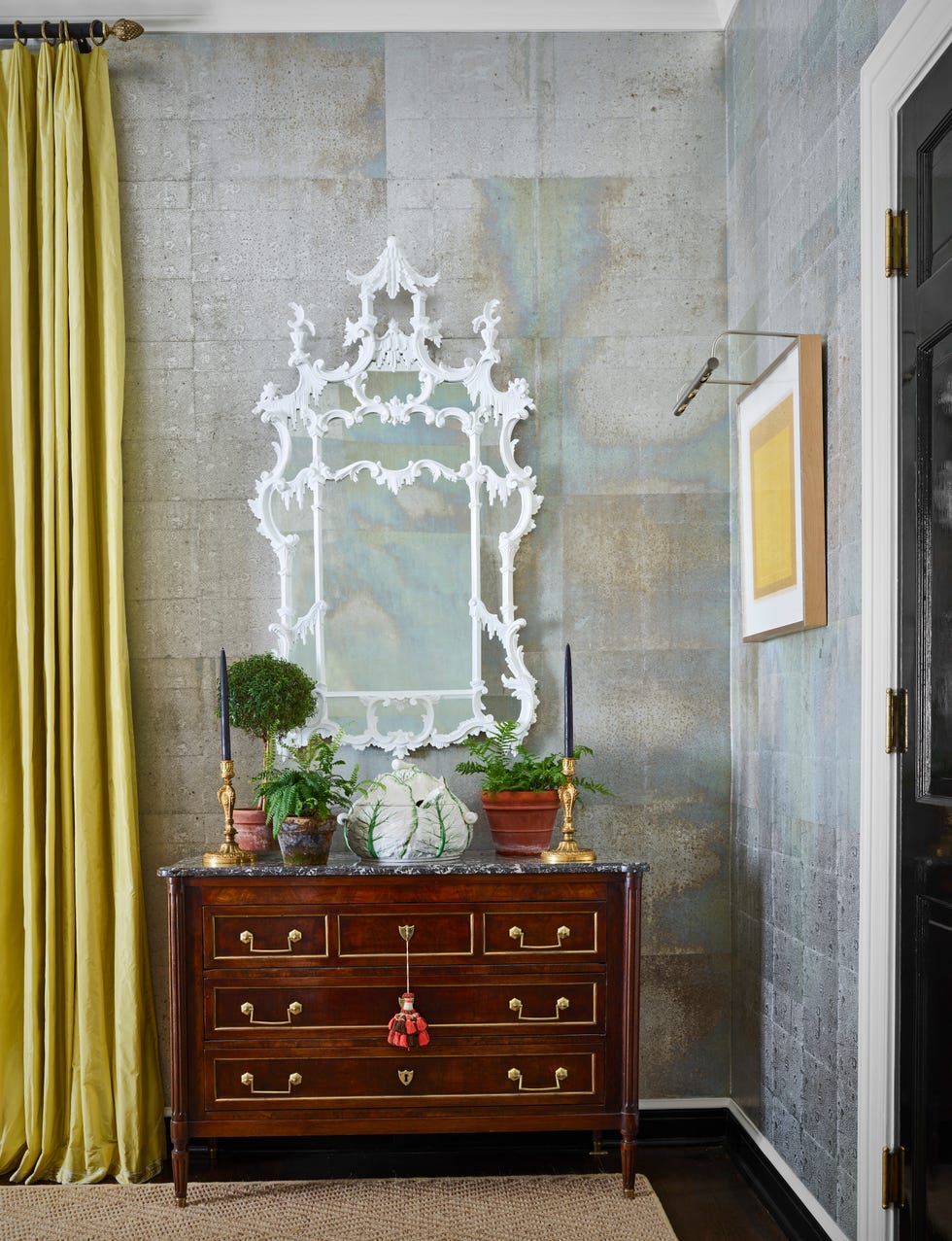
Douglas Friedman
A subtle fret pattern floats across a vintage silver-leaf paper (Gracie), giving it a mercurial sense of movement. A Chinese Chippendale–style mirror (KRB) and a Louis XVI mahogany-and-marble commode in the dining room.
Kitchen + Breakfast Room 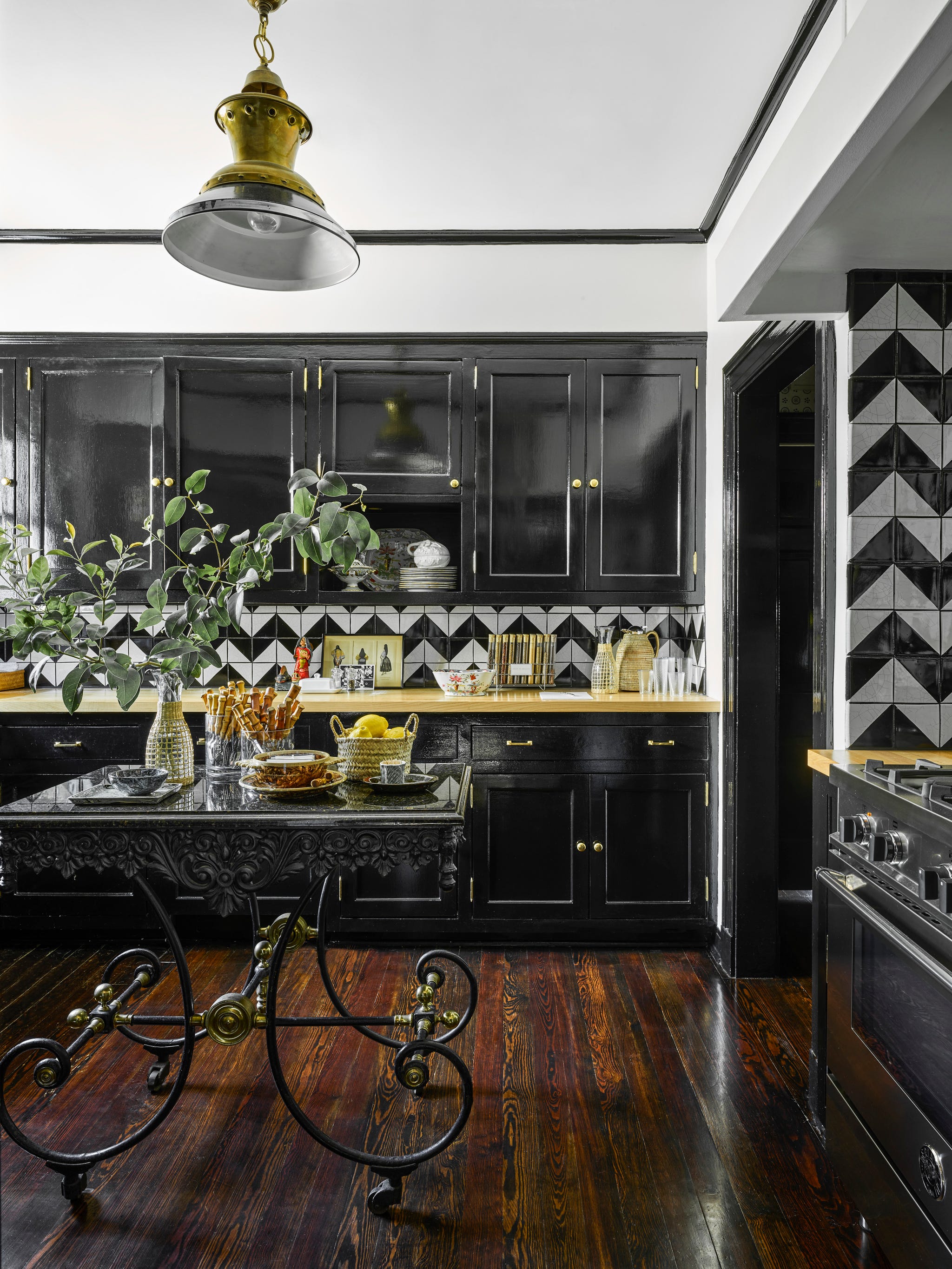
Douglas Friedman
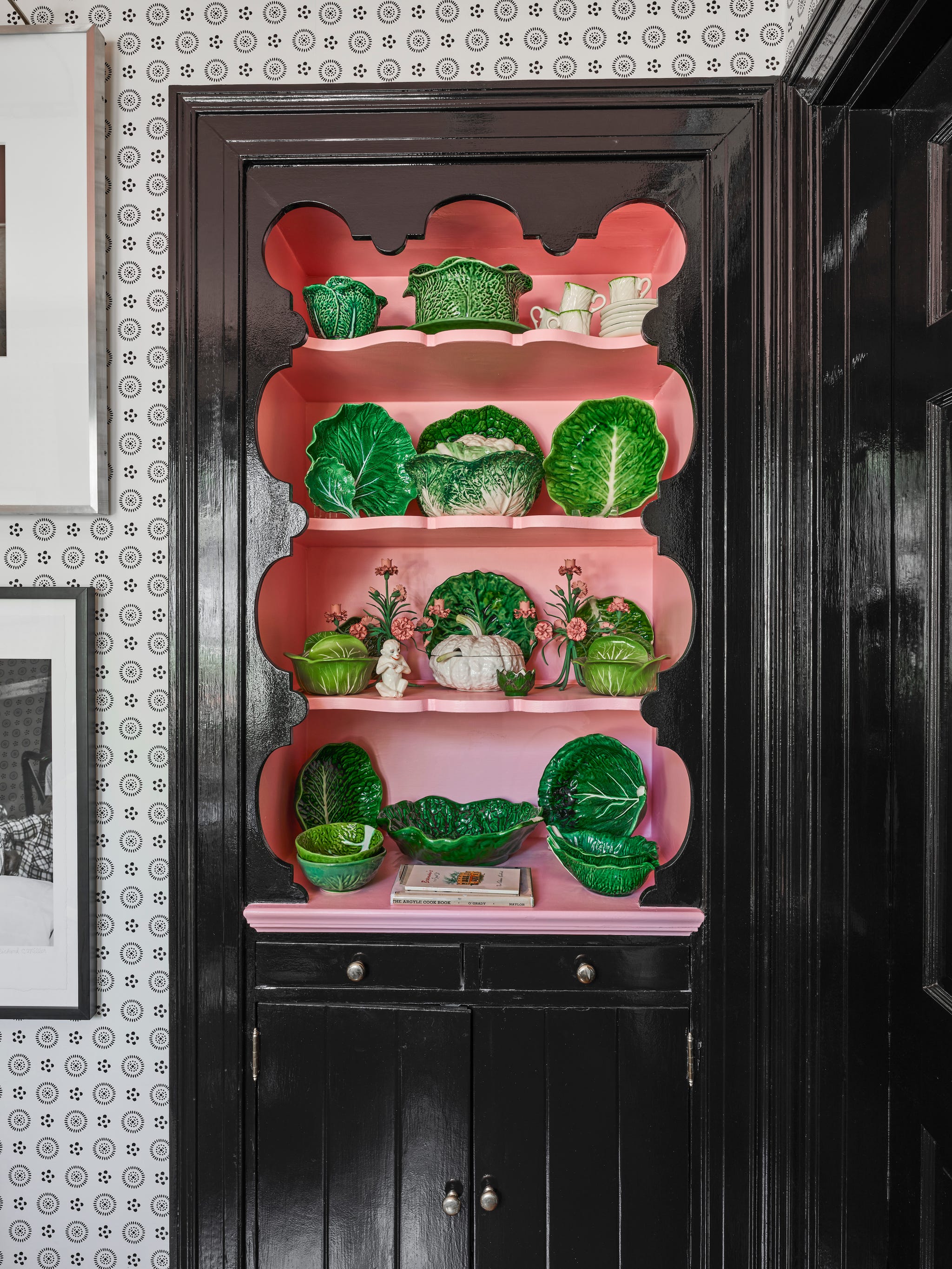
Left: Custom Talavera tiles are arranged in a graphic chevron pattern with glossy ebony cabinetry (Black, Fine Paints of Europe).
Right: A collection of Portuguese and Italian cabbageware on display in the breakfast room.
Staircase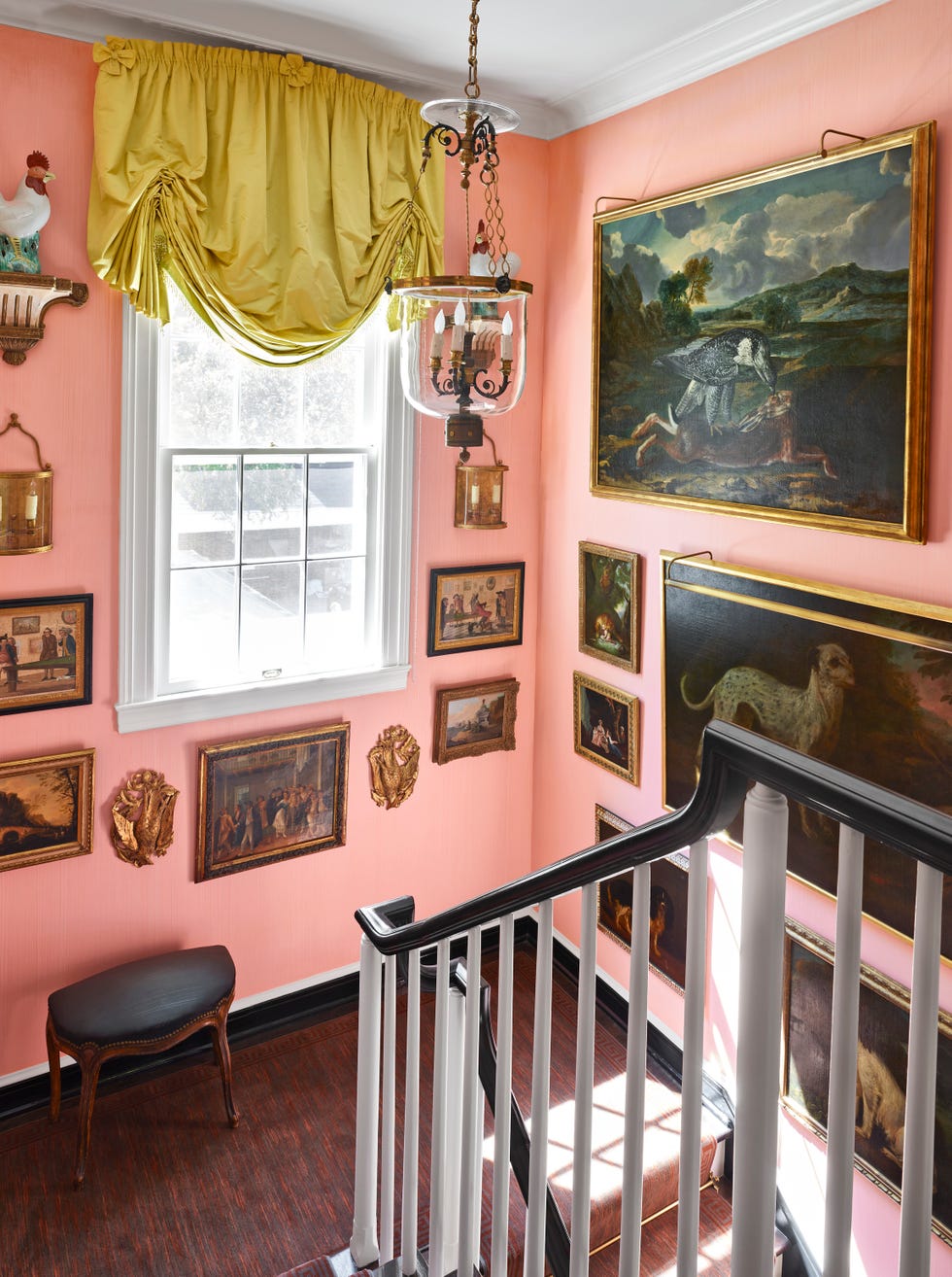
Douglas Friedman
English and Dutch dog portraiture mingles with allegorical and scenic paintings from across Europe.
Library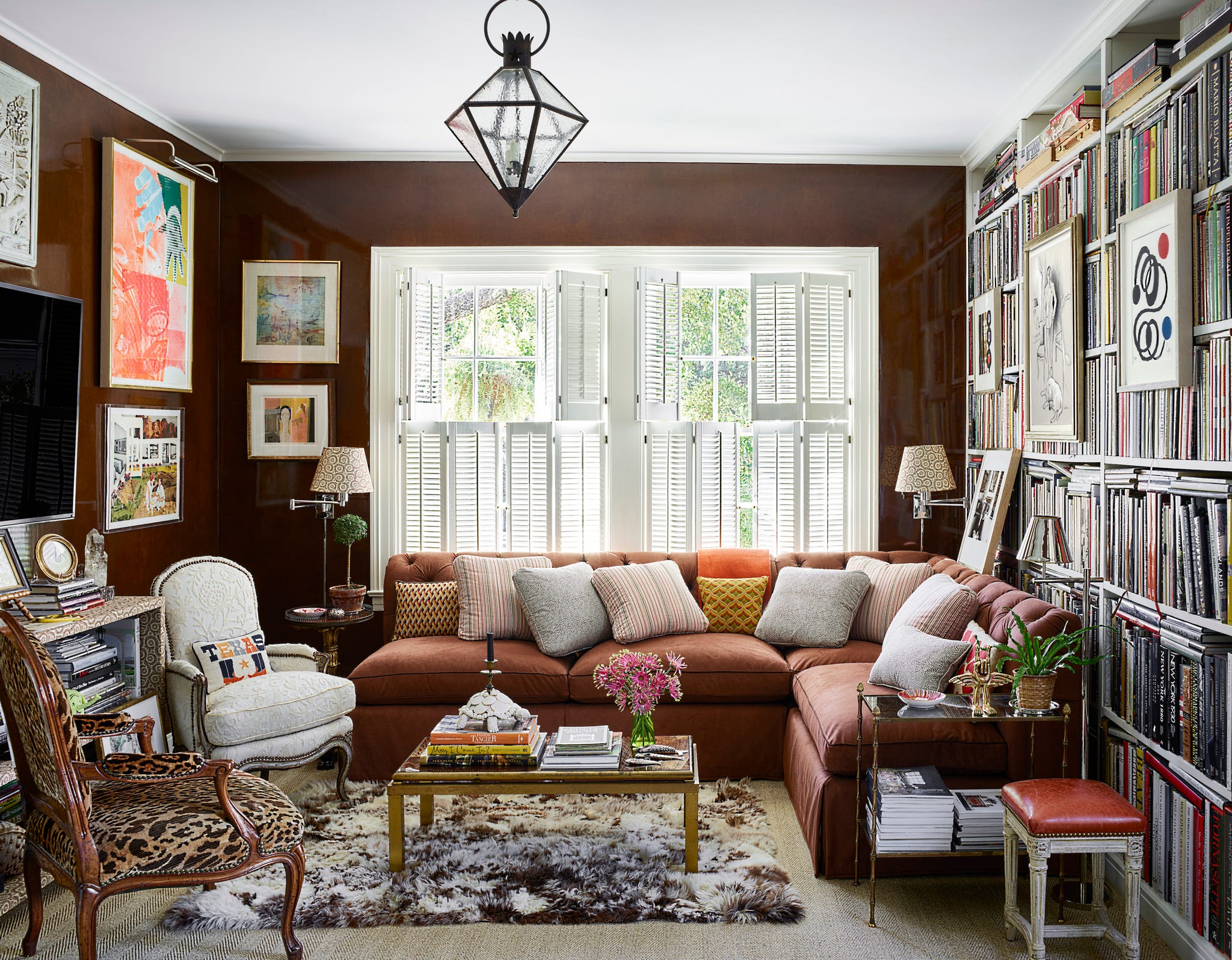
Douglas Friedman
Romano plays up contrasting materials in the library with glazed lacquer walls, Ultrasuede seating, and fur and sisal rugs. A 1930s cast-iron star lantern hangs over a French bronze-and-églomisé glass coffee table. Sconces, Hinson, with Illumé NYC shades.
Bath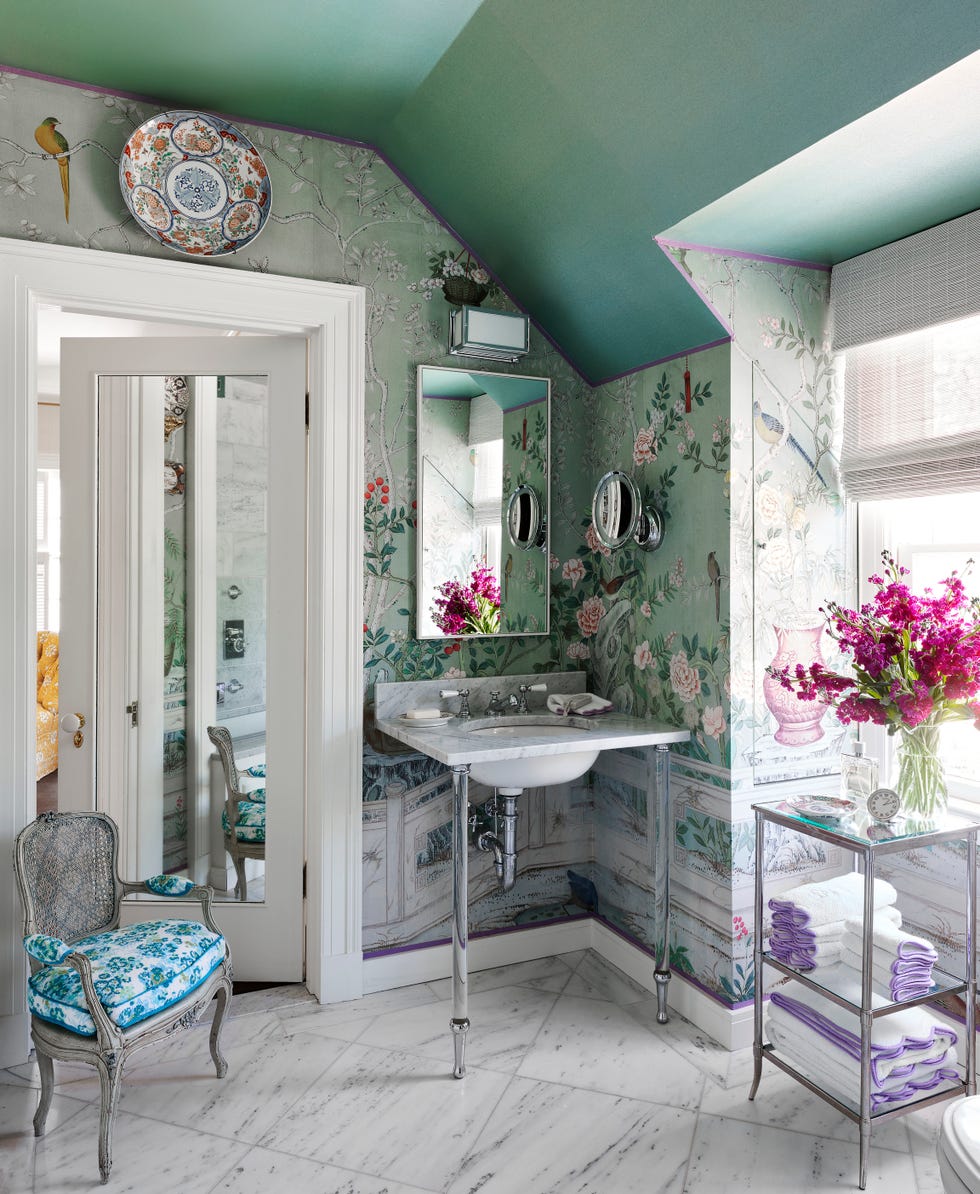
Douglas Friedman
In Romano’s bath, a rose-festooned wallpaper (de Gournay) is trimmed in purple grosgrain ribbon (Samuel & Sons).
Become a VERANDA Design Society Member Become a VERANDA Design Society Member
This feature originally appeared in the May/June 2021 issue of VERANDA. Interior design by Todd Alexander Romano; architectural renovation by William Lancarte, Curtis & Windham; photography by Douglas Friedman; styling by Anita Sarsidi; written by Guy Trebay.