
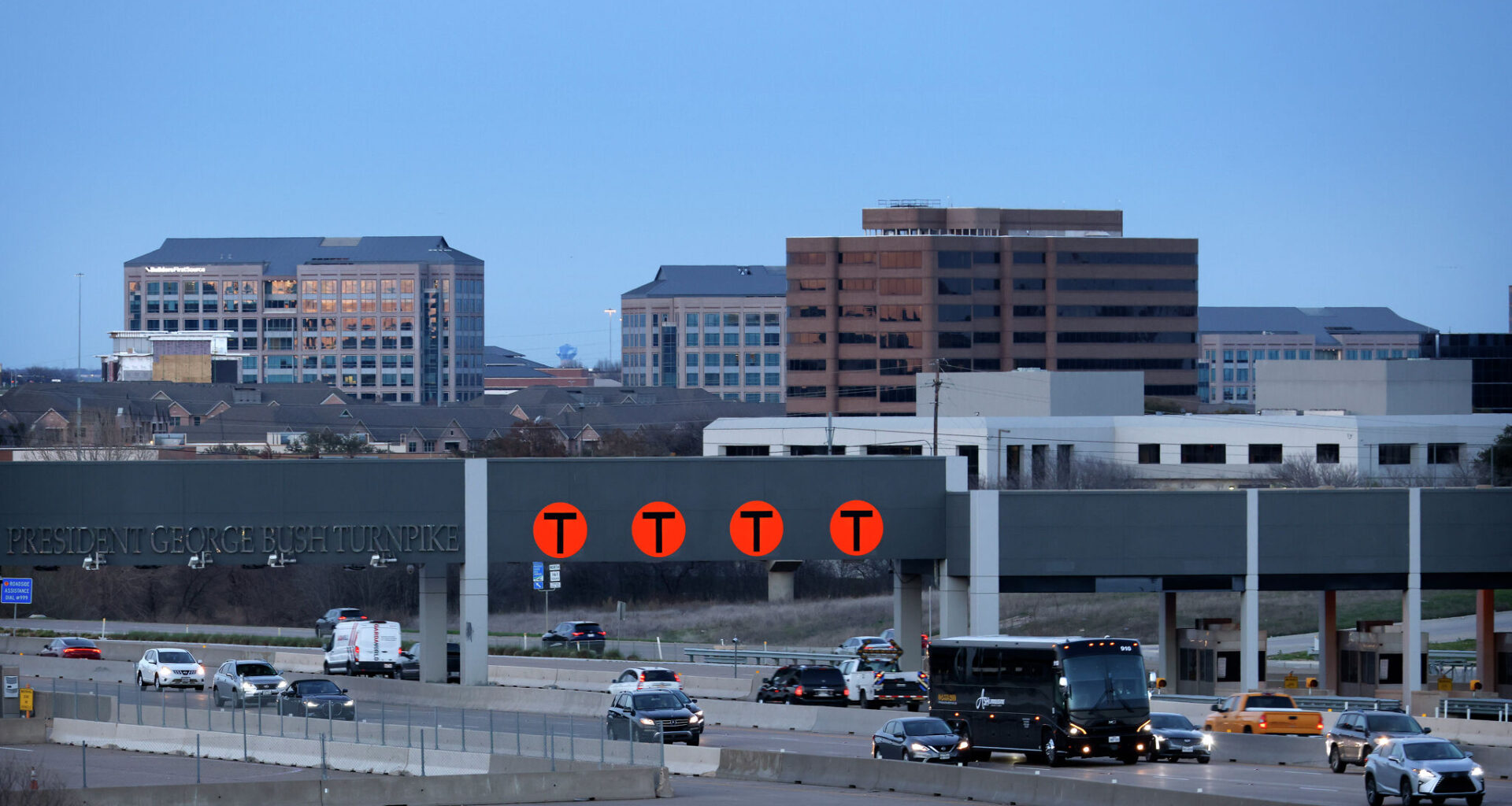
NTTA deactivated traffic signals in 2010 after switching to an all-electric system. Here’s why they disappeared and how open-road tolling works.
Tom Fox/Dallas Morning News
Long time North Texas toll road drivers may remember when red lights controlled traffic, forcing motorists to exit the road, pay their fee and proceed once the light turned green.

Today, drivers can still see remnants of the old toll plaza structures. But the signals? They’ve mostly disappeared.,
One Curious Texas reader asked: “What happened to the traffic lights on the exits of the tollways?”
Article continues below this ad
When did the North Texas Toll Authority get rid of the traffic lights?
The North Texas Toll Authority transitioned to a fully electronic system in December 2010, effectively deactivating all traffic lights at the toll plazas. The Dallas North Tollway, Mountain Creek Lake Bridge, Addison Airport Toll Tunnel and sections of President George Bush Turnpike used this signal system when they were constructed, according to Michael Rey, media relations manager for NTTA.
Although the signals were deactivated, infrastructure, like decommissioned tolls booths and equipment, can still be seen near former toll plazas such as the President George Bush Turnpike near Preston Road.
Related: Where does my toll money go? Five facts about the NTTA
Why did the toll roads need traffic lights?
Prior to all-electronic tolling, drivers encountered toll plazas and were able to pay using cash or coin. TollTag-only lanes were added later to help prevent traffic build up and then removed entirely when the system transitioned, said .
Article continues below this ad
At a traditional toll plaza, drivers would see multiple lanes with concrete barriers separating each booth, similar to the infrastructure still present at DFW International Airport.
When drivers pulled up to the toll plaza, a red light indicated payment was required. A green light appeared once the toll was paid and signaled drivers to drive through. If a yellow light appeared, it meant drivers had a problem with their toll accounts such as a low prepaid balance.
How does open-road tolling work?
Open-road tolling, which is used today, is a fully cashless system allowing motorists to continue driving at highway speeds and pay the required fees without stopping at a toll booth.
“Open road tolling is designed to permit free flow of traffic – there is no stopping and starting and thus no need for these signals,” said Rey.
Article continues below this ad
For drivers with TollTags, the toll is charged to the account. Drivers using ZipCash, or driving without a TollTag, are billed through the system and identified via license plate.
The old system needed traffic lights because drivers were required to stop. Now that drivers continue on the toll roads, the lights are no longer required. Overhead gantries — the sensors and cameras mounted on the tollways — read vehicle information immediately. The sensor registers the transponder, which is an electronic sticker on the TollTag, to charge motorists when they pass through them.
NTTA recommends placing the sticker on the center of the vehicle’s windshield.
Related: What to know about Dallas-Fort Worth tolls: Cost, locations and more
Article continues below this ad
Ask Curious Texas: What questions do you have about our state?
Submit your question, and our journalists may investigate the answer in a future story.
Having trouble seeing the form? Submit your question for Curious Texas here.