

For most of my life I knew a truth about myself that I could not say out loud.
I carried a badge in a Texas town. I raised children. I have been married to the same person for 46 years. And underneath it all, I kept a door shut, because I had learned young that the cost of opening it might be everything I loved.
I know what it does to a person to be told who they are is a thing to be managed, hidden, corrected, prayed away. I do not know it from a study. I know it from the inside. The body keeps that kind of ledger, and it charges interest. I paid on that debt for decades before I ever spoke the truth aloud, and the person who first heard it was my spouse, in our own kitchen, with the door finally open.
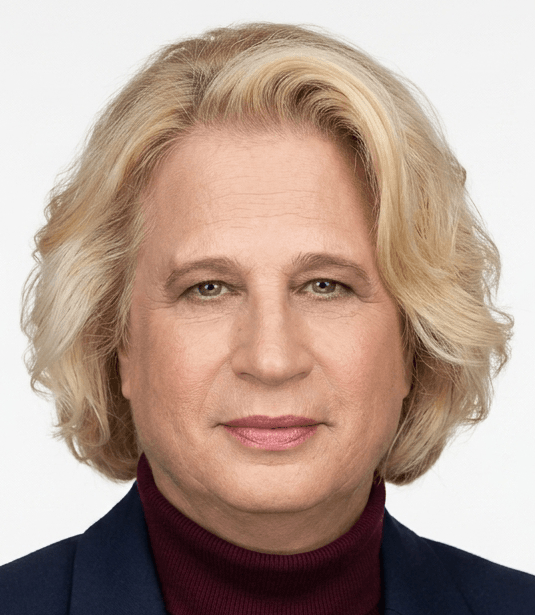
Eileen Monte
So this week, when I read that the governor of Texas had given a judgeship as a reward — a reward, in part, for having stood on the floor of our statehouse and voted to make it harder for a very small number of frightened families to get the care their own doctors believed their children needed — I did not feel the heat of politics. I felt the old cold. I recognized the shut door. Someone had been handed an honor for helping to lock it.
I want to be careful here, because this is not a column about one person, and it is certainly not a column asking you to vote a certain way. I am a person of faith writing to people of faith, and I am asking a question that belongs to us and not to any party: Where does a community of believers spend its energy and on whom?
Consider the arithmetic. The people whose lives are the object of so much of this legislative attention are a very small share of us — well under one in a hundred. And yet around that fraction we have organized conventions and campaigns and legislative sessions, and now, it seems, appointments to the bench. An enormous machine, aimed at a vanishing few.
Watch how the drum is played. In recent days, our governor has campaigned again on keeping boys out of girls’ sports, and the major networks carried it as though a flood were breaking over Texas athletics. So ask the plain question a reasonable voter would ask: How many? Texas has more than 300,000 girls in school sports. Against that number, the state cannot produce a documented list of transgender girls displacing them — because a birth-certificate rule already has governed who plays since before most of this uproar began.
“Against that number, the state cannot produce a documented list of transgender girls displacing them.”
When the law that tightened it was debated, opponents pointed out not a single complaint ever had reached the league about a transgender athlete taking a girl’s place. Not one. The most-remembered Texas case runs the other way entirely: A transgender boy who wanted to wrestle boys was forced by the very rule to wrestle girls, and won. Ask to see the list. There isn’t one.
Now set beside it the arithmetic of the gospel we were raised on. A shepherd has a hundred sheep and loses one, and he leaves the 99 to go after the one. A woman has 10 coins and loses one, and she lights a lamp and sweeps the house until she finds it. The whole scandal of those parables is the math. Heaven does not economize on the few. Heaven leaves the many and goes looking for the one.
I do not say this to score a point. I say it because I cannot make the two sums agree. The movement’s arithmetic spends its greatest energy driving the one from the fold. The gospel’s arithmetic spends its greatest energy going out after the one. These are not the same math, and they cannot both be the mind of Christ.
There is a harder word, and I will say it plainly because Scripture says it plainly. The prophet Isaiah pronounced a woe upon those who call evil good and good evil, who put darkness for light and light for darkness. I have sat with that verse a long time this week. Because the thing that unsettled me was not that a person voted the way she voted. People vote wrongly; I have done wrong myself, and worse than a vote. What unsettled me was that the harm was not merely permitted. It was honored. It became the line on a résumé that earns a seat on a bench.
“These are not the same math, and they cannot both be the mind of Christ.”
When we begin to hand out honors for making a frightened child’s life harder — when that becomes a credential rather than a thing to repent of — something has been turned upside down at the root. I do not think most people in our pews want that. I think most of us, if we sat with it honestly, would find it does not sit right.
I will not try to win you on the medicine. I am not a physician, and this is not that kind of essay. I will only tell you that the arguments I hear made against this care do not survive contact with the doctors who actually provide it, and leave it there, because I did not come to argue. I came to testify.
And my testimony is this. I spent the better part of a lifetime on the wrong side of a shut door. I know how fear feels from the inside, and I know how easily fear dresses itself up as conviction. It wears a very convincing costume. For years I mistook my own fear for faithfulness. I thought the shut door was obedience. It was not. It was fear, and it was killing me by inches.
So when I look at all this, I do not mostly feel anger, although I have felt that too. I feel grief. I grieve for the children this touches, who did not ask to be a battlefield. I grieve, honestly, for a state I love, that it would spend its treasure this way. And I grieve even for the woman who was rewarded — because to be handed an honor for helping close a door on someone is its own kind of loss, whether or not you can feel it yet.
I do not have a tidy ending for you. The door I am describing is still there, in a great many lives, still shut, still leaning on people with the full weight of the state behind it. I only ask that you sit with the arithmetic. Ask which sum you were taught in Sunday school. Ask which one you would want done, if the one lost sheep out on the hillside, in the cold, with the light of the house going out behind it — were yours.
Eileen Monte is a transgender woman writing from Fort Worth, Texas. She seeks to take on the political machine working to legislate trans people out of public life and the inherited fear it runs on. She is not a historian or a member of the clergy. Just a person of deep thoughts, stubborn convictions, and five kids who keep her honest.