
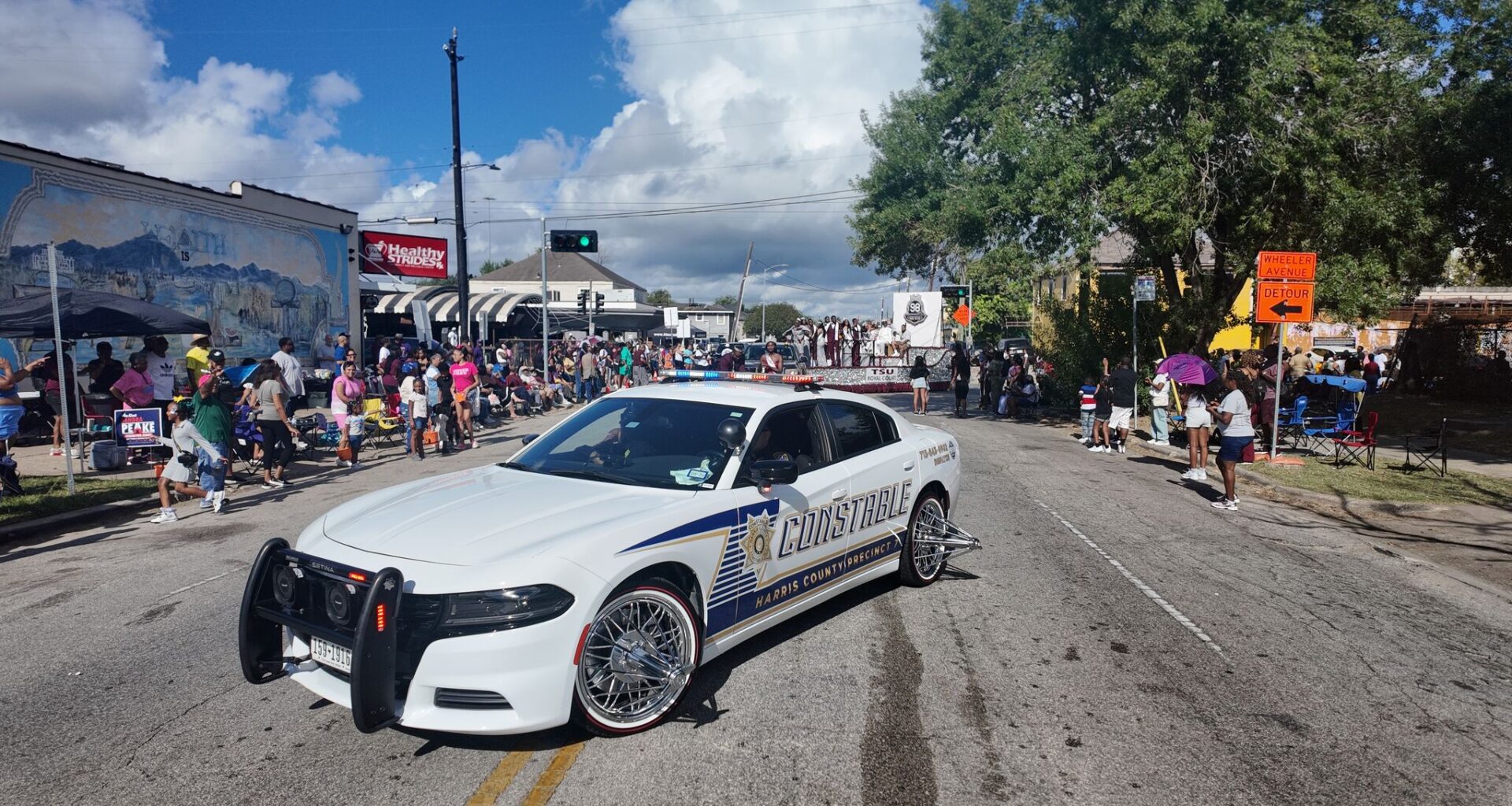
A longtime swanga company has filed a trademark infringement lawsuit in Texas federal court, accusing an unnamed list of online companies of selling pirated versions of the company’s wire-spoked wheels.
Texan Wire Wheels, a company that last year fitted Precinct 7 Constable cars with swangas and teamed up with Beyonce for her 2024 NFL Christmas halftime show, filed suit Aug. 20 in the Southern District of Texas against a whopping list of online sellers, court records show. While the defendants are listed as John and Jane Doe’s 1-100 and “xyz company,” lawyers for Texan Wire Wheels attached to the lawsuit a little under 30 examples of what it considers trademark infringement, court records show.
In a statement posted on the company’s website, Texan Wire Wheels said it is “implementing a program to give notice to and work with e-commerce websites and legal counsel to successfully address and remove fraudulent listings, counterfeits, and infringing products.”
“It is clear that these unscrupulous sellers who wish to make a quick buck are exploiting the goodwill and solid reputation of Texan Wire Wheels, LLC, and in doing so, they are also exploiting our customers,” Bill R. Johnson, a lawyer for the company, wrote in a statement on the website. “We are steadfast in protecting our intellectual property and our customers. We want to make sure that they get our original, high-quality wheel products.”
The company has trademarks for different swanga types and clothing depicting swangas. The company is asking the court to stop all online sales of products they believe to be trademark infringement and to order the infringing products be seized and destroyed.
Lawyers for the company stated in the lawsuit they plan to amend their filings with the identities of companies they accuse of trademark infringement. Texan Wire Wheels launched in 2007, and has locations in Houston and California, according to its website.
The lawsuit targets, among others, individuals selling 3D printed swangas and miniature toy slabs on Facebook Marketplace to sweatshirts with swanga designs sold online. According to the lawsuit, the company sent cease and desist letters to multiple sellers.
The company said in its lawsuit that because it in 2007 created a series of models that poke out 20 inches, the company created a “new feature design, and configuration, which distinguished (its) rims from all other wheels,” the lawsuit states.
“As a result, the consuming public overwhelming identified the protruding wire wheels with (Texan Wire Wheels),” the lawsuit states.