
Survey Says is a weekly series rounding up the most important polling trends or data points you need to know about, plus a vibe check on a trend that’s driving politics or culture.
Last year, Texas Republicans fired the first shot in the Great Mid-Decade Gerrymandering War, further rigging their state’s map in an effort to flip up to five House seats held by Democrats and aid the GOP’s attempts to retain its majority in the chamber.
So how’s that working out? If new polling is to be believed, not so well.
A new poll, conducted by the Barbara Jordan Public Policy Research and Survey Center at Texas Southern University, finds Democratic nominees leading in three heavily gerrymandered districts. Two are held by Democratic representatives whom the GOP seeks to oust with the new map.
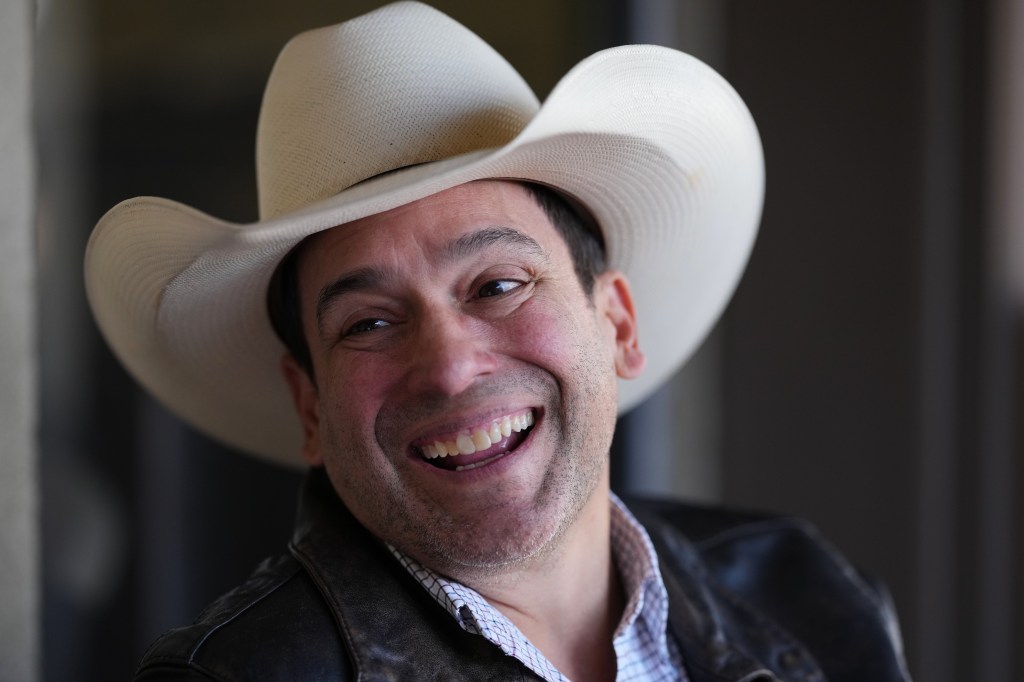 Bobby Pulido, the Democratic nominee in Texas’ 15th District, shown in February.AP
The most surprising result comes in Texas’ 15th District, where Democrat Bobby Pulido leads Republican Rep. Monica De La Cruz, 50% to 45%. That 5-percentage-point margin in a competitive contest would not be shocking on its face—it puts a Republican victory within the margin of error, in fact—but Republicans drew the lines here to be not at all competitive. In 2024, voters in the new district backed President Donald Trump 18 points, according to data from The Downballot.
If Pulido, a superstar in the world of Tejano music, were to win the district by 5 points, it would represent a jaw-dropping 23-point swing in Democrats’ favor.
Similar trends pop up in the poll’s two Democrat-held House districts. In Texas’ 28th District, Democratic Rep. Henry Cuellar leads Republican Tano Tijerina, 45% to 34%, in a district that went for Trump by 10 points in 2024. And in Texas’ 34th District, Democratic Rep. Vicente Gonzalez leads Republican Eric Flores, 45% to 42%, in a district that backed Trump by just over 10 points.
There are caveats here, of course.
We shouldn’t take too much away from any single survey. Even high-quality polls can be wrong sometimes. That said, the Texas Southern University poll represents the first nonpartisan look at these races since May 26, when Texas had runoff elections and its slate of candidates was finalized. Since then, the only other surveys for these races have been sponsored by partisan sources, including a pro-Democratic PAC and two Republican candidates.
If we include all polls conducted since May 26, the races tighten up. But even then, the Democratic nominees are outperforming the 2024 presidential margins in all three districts, suggesting that Lone Star State Republicans’ new map isn’t as solid as they expected it to be.
Another thing to keep in mind about the poll is that none of the Democratic nominees have an outright majority (i.e., 51%). Given the districts’ Republican leanings on paper, undecided voters may skew to the right.
At the same time, the Texas gerrymander is heavily based on the myopic belief that Republican gains among Latino voters are solid, if not improving further. This belief stems from Trump’s consistent improvement with Latino voters. In the 2016 presidential election, he lost these voters by 38 points, according to the Pew Research Center. He closed the gap a little in 2020, losing the group by 25 points, then closed it almost entirely in 2024, losing them by just 3 points.
However, newer data suggests Latinos’ recent support for the GOP is far from solid.
In an average of the first three polls YouGov conducted in Trump’s second term, his net approval rating among Latino voters was -6 points. But across the three most recent polls, it has fallen to -31 points.
Latinos have turned on him more than the broader American public, too. Between the first three surveys of Trump’s second term and the three most recent ones, his average net approval rating has fallen 20 points among all registered voters, but among Latino voters, it’s dropped 25 points.
Other data shows even more of a dropoff. A Pew study released in May found that a large number of Latino Trump voters are souring on him. Ninety-three percent of them approved of the job he was doing as president in February 2025, but that is down to just 66% as of April.
And a July survey from Pew found that 49% Hispanic voters would back the Democratic candidates in their district if the midterm elections were held today. Only 26% would back the Republican candidate. (The remainder are not sure or would back another candidate.) That 23-point margin in favor of Democrats is considerably better than the 13-point lead the party held among Hispanic voters in the final YouGov/Economist poll ahead of the 2024 election.
In Texas, Republicans made a bet—and a gerrymander—based on the idea that their gains with Latino voters were solid. But this new poll suggests that bet may not pay off.
Any updates?
After a shock victory in Wisconsin’s Democratic primary for governor, David Crowley is leading in the general election, per a new poll from the esteemed Marquette University Law School. Forty-nine percent of registered voters back Crowley, while 44% support Republican nominee Tom Tiffany. That doesn’t get the Democrat out of the woods yet—for one thing, he’s still under 50% support—but it’s promising.
Trump’s tariff-based attack on Canada is facing steep repercussions abroad—and at home. A new YouGov poll finds that just 27% of Americans approve of Trump’s 50% tariff on various goods from the Great White North. Meanwhile, nearly two-thirds of Americans (62%) oppose them, including 1 in 4 Republicans.
Trump claims to have a friend who is on, in his words, the “fat drug”—aka weight-loss drugs like Ozempic—and new polling finds that having a friend supporting one’s GLP-1 journey is key to people finding the drugs effective. Among those who have used GLP-1 drugs, 71% say they’ve been effective or extremely effective in aiding their weight loss, according to Gallup. And GLP-1 users who have someone to support their health are almost twice as likely as those without that support to report that the drugs have been extremely effective for them. Trump may have called this GLP-1-using friend of his a “fat slob,” but he also called the man “brilliant,” so maybe that counts as support?
Vibe check
In general, Democrats’ hopes of winning a Senate majority this year take it as a given that they will defend the New Hampshire seat held by Democratic Sen. Jeanne Shaheen, who is retiring. But a new poll from a high-quality nonpartisan firm finds the Democratic front-runner trailing the Republican front-runner in a hypothetical general-election matchup.
Among likely voters in the Granite State, 43% support Democrat Chris Pappas and 45% back Republican John E. Sununu, according to the latest University of New Hampshire survey of the race. It is the first time in five polls, dating back to last September, that Pappas has trailed in this matchup, though recent surveys have seen his support slide.
Likewise, Pappas’ support in the Democratic primary has been dropping. In January, 65% of likely primary voters backed him, but that’s down to 47% now—a fall that has largely tracked with the rise of progressive Karishma Manzur. In January, her support was at 22%, but now it is 34%, putting her only 13 points behind Pappas, a moderate.
In the Republican primary, the pollster’s data shows that Sununu, part of a state political dynasty, has shored up his support and is now a clear favorite against his top competitor, former Massachusetts Sen. Scott Brown.
Senate elections in the Granite State are often close, for what it’s worth. Since 1992, five of its past 11 Senate elections have been decided by less than 5 points.