
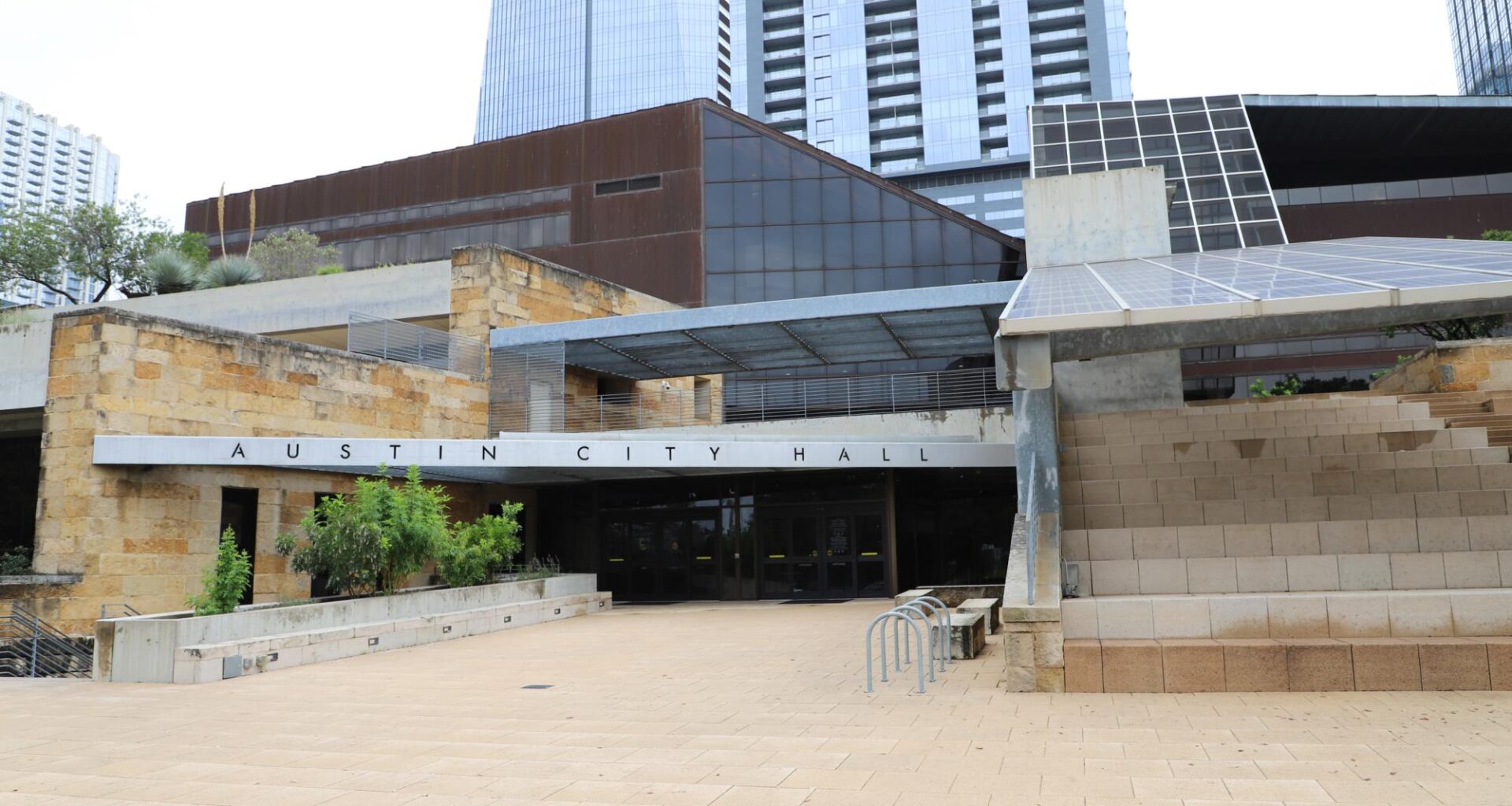
The Austin City Council approved the creation of local regulations for data centers in a Thursday resolution.
The resolution, approved unanimously, directs city staff to establish land use, site development and business regulations for data centers. The item was approved as amended to include regulations for landscaping, heat and impact to flood plains. The amended resolution also directs City Manager T.C. Broadnax to make recommendations for the enforcement of the city’s prospective regulations.
The local regulations follow a separate directive from Gov. Greg Abbott to audit hundreds of projects, including data centers, before they can be connected to the Texas power grid.
According to an Aug. 19 memo from city staff to the Council, some recommended actions include adhering to water and other resource use performance standards and limiting generator use to prevent possible noise and air pollution.
According to the same memo from city staff, Austin Energy identified 10 data centers within city limits. None of the current data centers demand enough energy to be considered a large-load data center. Texas law defines a large-load data center as one that can draw at least 75 megawatts at any given moment. One megawatt powers approximately 250 residential homes, according to the memo.
Before the Council passed this item, Council Member Zohaib “Zo” Qadri, who represents District 9, including UT and West Campus, said he heard concerns about data centers from constituents. Qadri said his biggest concern with data centers was their environmental impact.
“The rapid growth of hyperscale data centers is honestly quite alarming, particularly because it eats up so much energy and water resources, and water scarcity is unfortunately an issue here in Central Texas,” Qadri said. “We have a generation to protect … not only our residents that live in Austin today, but also the Austinites that will be here in 100 years and 200 years.”
Hyperscale data centers, which are known for being much larger than traditional data centers, can encompass millions of square footage, according to an International Business Machines Corporation website. Qadri said that the impact of data centers on natural resources can also “affect the financial viability” of Austin.
“I think it’s a moral responsibility for City Council members here in Austin to protect Austinites because I don’t think the state truthfully protects its own citizens in the manner that they should,” Qadri said.