
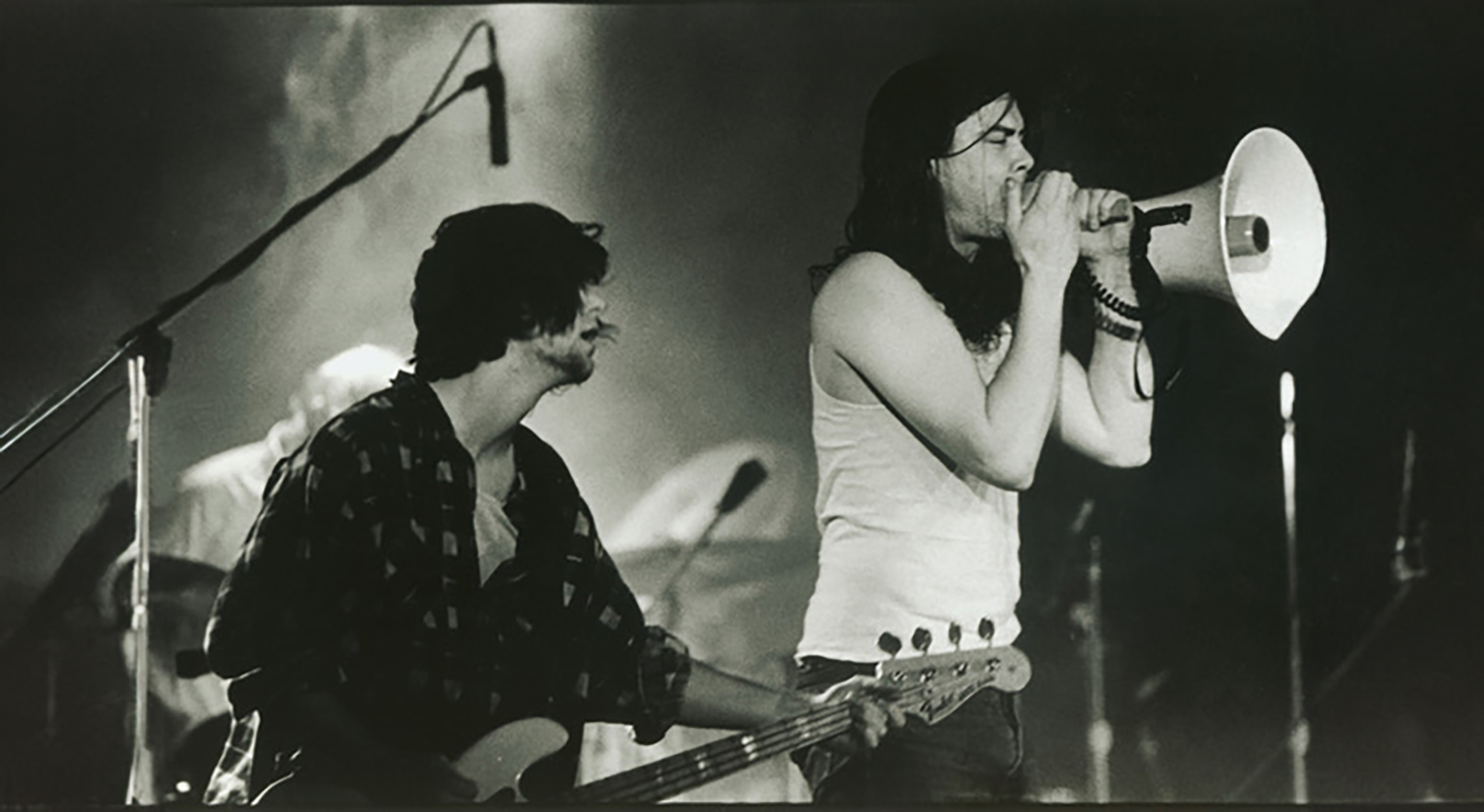
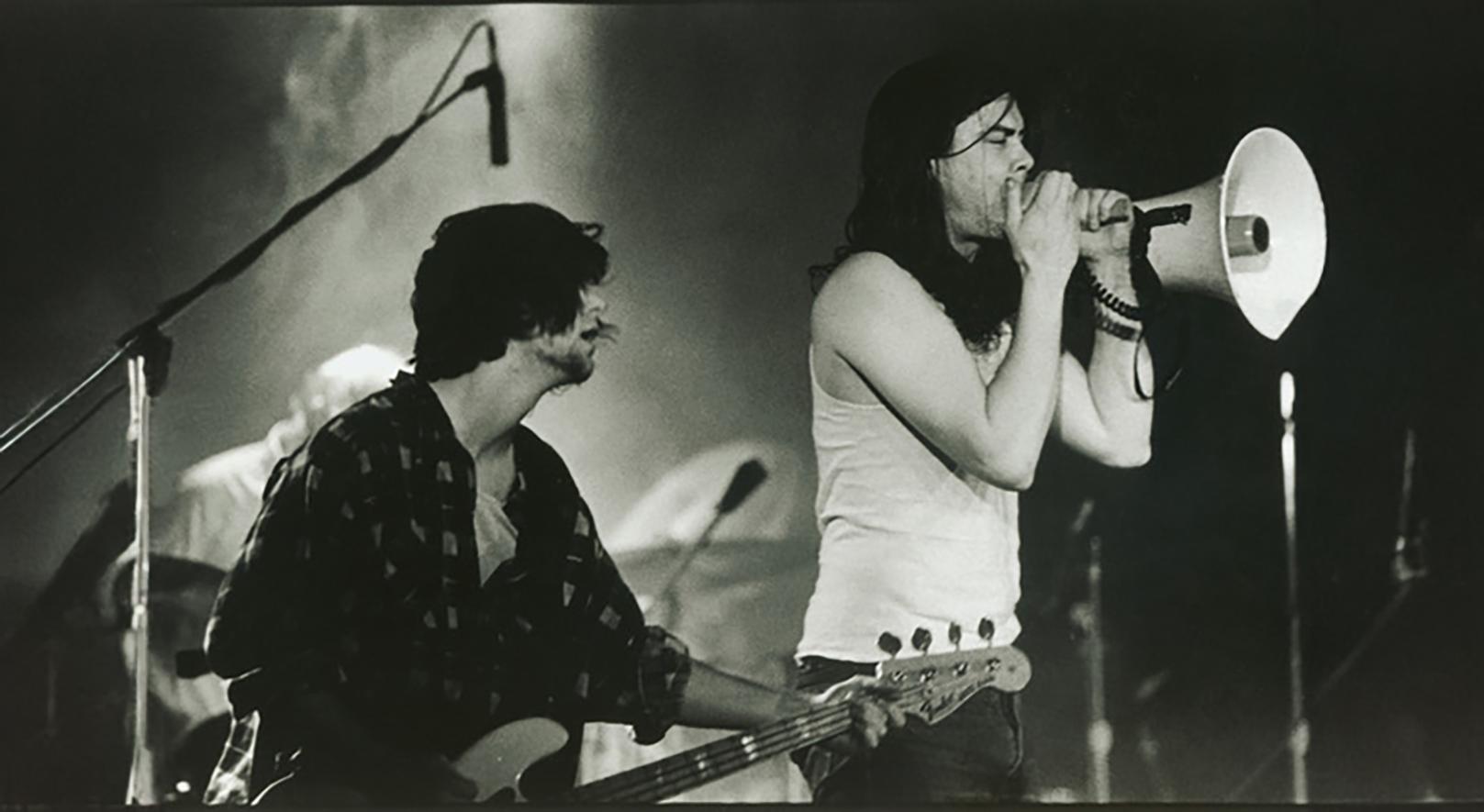
Before the acid-soaked chaos and a No. 1 hit, the Butthole Surfers were just Dallas kids raising hell in Deep Ellum clubs.
Provided by Michael Cain
For generations of Dallas-area kids, Mr. Peppermint was a local institution. Jerry Haynes, in his candy-striped blazer, taught generations of North Texans their manners between cartoons and life lessons on TV, much like Mister Rogers and Captain Kangaroo. What few of those wide-eyed children knew back then was that his son would grow up to front one of the most gloriously deranged bands in American rock history.
That son is Gibby Haynes. And “Butthole Surfers: The Hole Truth and Nothing Butt,” the new documentary from director Tom Stern, finally tells the whole strange, sprawling, sometimes tender story, and with a spotlight that keeps swinging back to Dallas.
A band built from chaos
The Butthole Surfers weren’t made in a garage. They started in a classroom. In 1981, Gibby and Paul Leary met at Trinity University in San Antonio, and were just two clean-cut students studying accounting and stocks, before their shared love of the bizarre pulled them somewhere far weirder.
Sign up for the Music newsletter to get the latest stories delivered to your inbox
THANK YOU!
You’re all set.
CLOSE
Their live shows became the stuff of legend and litigation: strobe-lit fever dreams stitched together with smoke, fire, grotesque films and enough naked chaos to make even seasoned punks blink. They churned through a revolving door of more than nine bassists.
Even the name was an accident. The band cycled through countless monikers until Big Boys’ Chris Gates mistakenly shouted the title of one of their songs as if it were the band’s name. It stuck.
The Dallas threads
For local audiences, the film carries an extra charge. Gibby grew up here, in the long shadow of his beloved father’s fame. Toward the film’s end, we see Gibby return to his Dallas home, confronting his own pain as he’s never done before, and it’s one of the film’s quiet gut-punches.
And the Dallas roots run deeper than biography. The band’s arguably biggest song, “Pepper,” draws directly from Gibby’s memories of people he knew as a teenager in this city — friends and acquaintances caught up in violence, disease and recklessness. One of the song’s most striking images involves a character losing his leg in Dallas, a line that hits differently when you know it isn’t fiction but a distorted reflection of real lives Gibby watched unravel right here in our backyard. The documentary gives those origins context, making “Pepper” feel less like a rock radio staple and more like a eulogy for a specific time and place.
The band also left fingerprints all over our music scene. Anyone who haunted Deep Ellum in its scrappy early days remembers the pull of the now-closed Theatre Gallery and Club Clearview, where the Surfers were part of the noise that gave the district its outlaw shimmer.
Why and where you should see it
“Butthole Surfers: The Hole Truth and Nothing Butt” is a portrait of transformation, a love letter to weirdness, and, for us, a Dallas story hiding inside a national legend. It’s goofy as hell but really touching, too. Plus, it’s neat to see these punks thrash about in places you may know and love.
The film is screening at Alamo Drafthouse locations across the Dallas-Fort Worth area, including the Cedars, Richardson and Denton, through Sept. 2.