
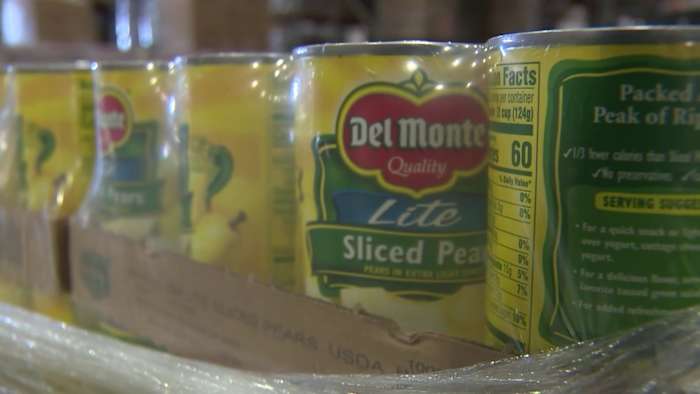
SAN ANTONIO – As more families turn to food assistance, the San Antonio Food Bank is working beyond its warehouse walls to protect the programs many neighbors rely on.
For months, KSAT has reported on the growing number of people needing help with food.
With possible cuts to nutrition programs still being debated, the food bank has a team focused on making sure lawmakers understand how policy decisions affect people in San Antonio and across the state.
Mario Obledo Jr., the San Antonio Food Bank’s chief of government and public affairs, said many people are surprised to learn his position exists.
“The reality of it is, our sister food banks have positions similar to this as well — not only in the state but across the country,” Obledo said.
Obledo, who worked in state and local government for more than two decades, has been with the food bank collectively for 14 years.
Obledo said government relations teams work with groups such as Feeding Texas and Feeding America. Their focus is federal, state and local policy affecting the people food banks serve.
The teams meet with elected officials as well as people in appointed offices like the Texas Department of Agriculture or the Health and Human Services Commission.
“Republican and Democrat, all coming together to help us, but that education and advocacy is critical because if we don’t keep that up then that information goes away,” Obledo said. “It’s not in front of them.”
He emphasized that their work is advocacy, not lobbying.
“We’re not paid lobbyists. We’re not registered lobbyists. We are advocates,” Obledo said. “We’re creating awareness and information that we can disseminate to lawmakers and staff so they can make an educated decision when it comes to voting.”
Obledo said the work has become more difficult as funding for food programs faces uncertainty.
“I’m not going to sugarcoat anything. It’s been tough,” he said. “But we have to remember the mission because people are counting on us. People’s livelihoods count on us.”
Obledo and teammate Stanley Sorrell travel across Texas and make several trips each year to Washington, D.C., to share the food bank’s priorities with lawmakers and staff.
Their work also includes connecting with rural counties, chambers of commerce and government relations teams in other sectors, including VIA Metropolitan Transit, SAWS, CPS Energy, Methodist Healthcare Ministries, University Health and UT San Antonio.
Obledo said those organizations often serve the same people.
“Education, health care, transportation, food, all those issues are tethered,” Obledo said. “So it’s important for us to maximize our strength and to help those clients and those folks out in the community that we’re all serving at the same time.”
A major priority is the federal Farm Bill, which includes measures supporting SNAP and other nutrition programs.
Obledo said Congress will have an opportunity to work on the bill when lawmakers return to Washington. The current Farm Bill expires at the end of September.
If nutrition provisions do not pass, Obledo said it could affect food bank inventory and many people who depend on assistance.
The food bank is also preparing for the Texas legislative session, which begins in January in Austin.
“We are working with our colleagues across the state and also at Feeding Texas to develop a policy priority package that makes sense for the food banks and that will hopefully make gains for the clients that we serve,” Obledo said.
For a full list of items the Food Bank advocacy team is focusing on, head to the organization’s advocacy webpage.
Copyright 2026 by KSAT – All rights reserved.