
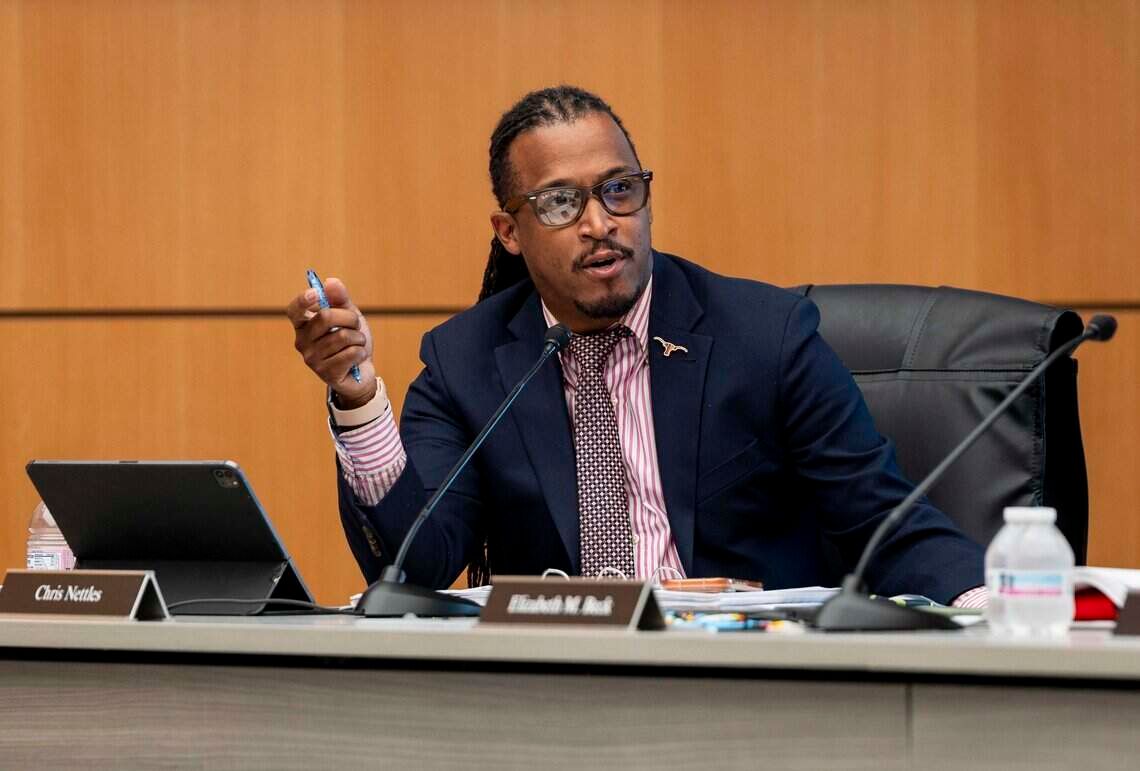
A ministry overseen by pastor and Fort Worth City Council member Chris Nettles is being sued by the state after officials alleged his ministry misused federal food program funding and owes more than $700,000 to the state.
State officials filed a lawsuit Aug. 6 in Travis County District Court against Purpose Driven Ministries, alleging it owed the state $787,873 in “disallowed expenses” through the Child and Adult Care Food Program. Across Texas, there are 924 contract entities that participate in the program and provide meals at more than 9,900 sites, state data shows. At least 141 million breakfasts, lunches and snacks have been served in the program year.
The federal program — overseen by the Texas Department of Agriculture — reimburses the cost of nutritious meals and snacks provided to children at locations such as childcare centers and afterschool programs. The state is seeking monetary relief of $1 million or less, excluding interest, attorney fees and more.
The state does not specify the “disallowed expenses” in its lawsuit.
Nettles did not respond to multiple requests for comment Monday afternoon.
State officials alleged in the lawsuit that Purpose Driven Ministries failed to pay “the amounts determined to be due” to the Department of Agriculture “despite demand for payment.”
“As a result of Defendant Purpose Driven Ministries’ failure to pay the amount due, the Department has referred the debt to the Office of the Attorney General of Texas for collection,” the lawsuit states.
Nettles signed an agreement with the Texas Department of Agriculture in 2018 to participate in the federal program designating that childcare centers would be served. Purpose Driven Ministries previously operated Haven of Purpose Child Care Center, at 3000 Vaughn Blvd., which opened the same year but closed in April. The center voluntarily suspended its permit in July 2024 “to make repairs or to possibly find a new location,” according to Texas Health and Human Services Commission officials.
Purpose Driven Ministries was approved to provide meals to 14 sites during the program’s 2020-2021 period and expanded to 19 sites in the 2021-2022 and 2022-2023 years, records show. The ministry itself is listed as a site where children received meals, in addition to schools primarily in the Everman school district.
In 2023, Nettles and Purpose Driven Ministries were listed on the U.S. Department of Agriculture’s database of people and organizations that are barred from participating in the Child and Adult Care Food Program or other USDA nutrition programs due to noncompliance.
Nettles was first elected in 2021. He represents District 8, which encompasses south and southeast Fort Worth.
Purpose Driven Ministries, at 3000 Vaughn Blvd., was founded by Nettles in 2010, according to the nonprofit’s website.
Early childhood education experts familiar with the Child and Adult Care Food Program told the Star-Telegram that the reporting requirements of the program can become complex when an entity is providing meals to multiple sites.
Audrey Rowland, past president of the Texas Association for the Education of Young Children, said disallowed expenses can happen if officials determine that requirements weren’t met for the amounts of grains, fruits, vegetables and meat purchased. There can also be discrepancies between the number of meals provided compared to the number of children served day to day.
“It can get complicated really fast. … It definitely can happen, and does happen, that sometimes centers have to pay back a little bit of money or get (money) taken off of their next reimbursement,” said Rowland, who is also CEO and founder of Green Space Nature Preschool in Fort Worth.
Shawneequa Blount, managing director of programs and partnerships at Educational First Steps, reiterated how accurate recordkeeping is crucial, especially when enrollment shifts throughout the year and the number of children receiving meals fluctuates. The nonprofit based in Dallas-Fort Worth provides professional development, mentoring and business support to childcare providers.
As far as an example of a disallowed expense in the federal food program, she pointed to junk food and candy. In her previous experience of participating directly in the program, Blount said there isn’t much wiggle room to overspend on items that are approved for purchase, as outlined in the program handbook.
“It’s not like I have a lot of money to spend extra on these types of items anyway. So I am typically well within my ‘budget’ based on the items that I’m buying because I just simply don’t have dispensable money to buy bulk or too many items. I’m buying exactly what I need to ensure the children can eat and that I can be adequately reimbursed, and I start that cycle over for the next month,” Blount said.
Experts stressed to the Star-Telegram the value of programs such as this one with serving children in need and noted how fraud in childcare programs is minimal in Texas. A February 2026 report by the Texas Workforce Commission and the Texas Health and Human Services Commission showed that Texas’ improper payment rate was under 1% — 0.43% — in fiscal year 2022 for its Child Care Services program, which uses federal funding to provide tuition to eligible families.
“In general, people who lead childcare businesses are not trying to do anything nefarious or criminal, but there is a lot of complexity to running a childcare business that people aren’t always aware of,” said Educational First Steps President and CEO Dominique McCain.
In a written statement on Monday, Fort Worth City Attorney Leann Guzman said that the city did not have a comment. Fort Worth is not a named party in the lawsuit.