
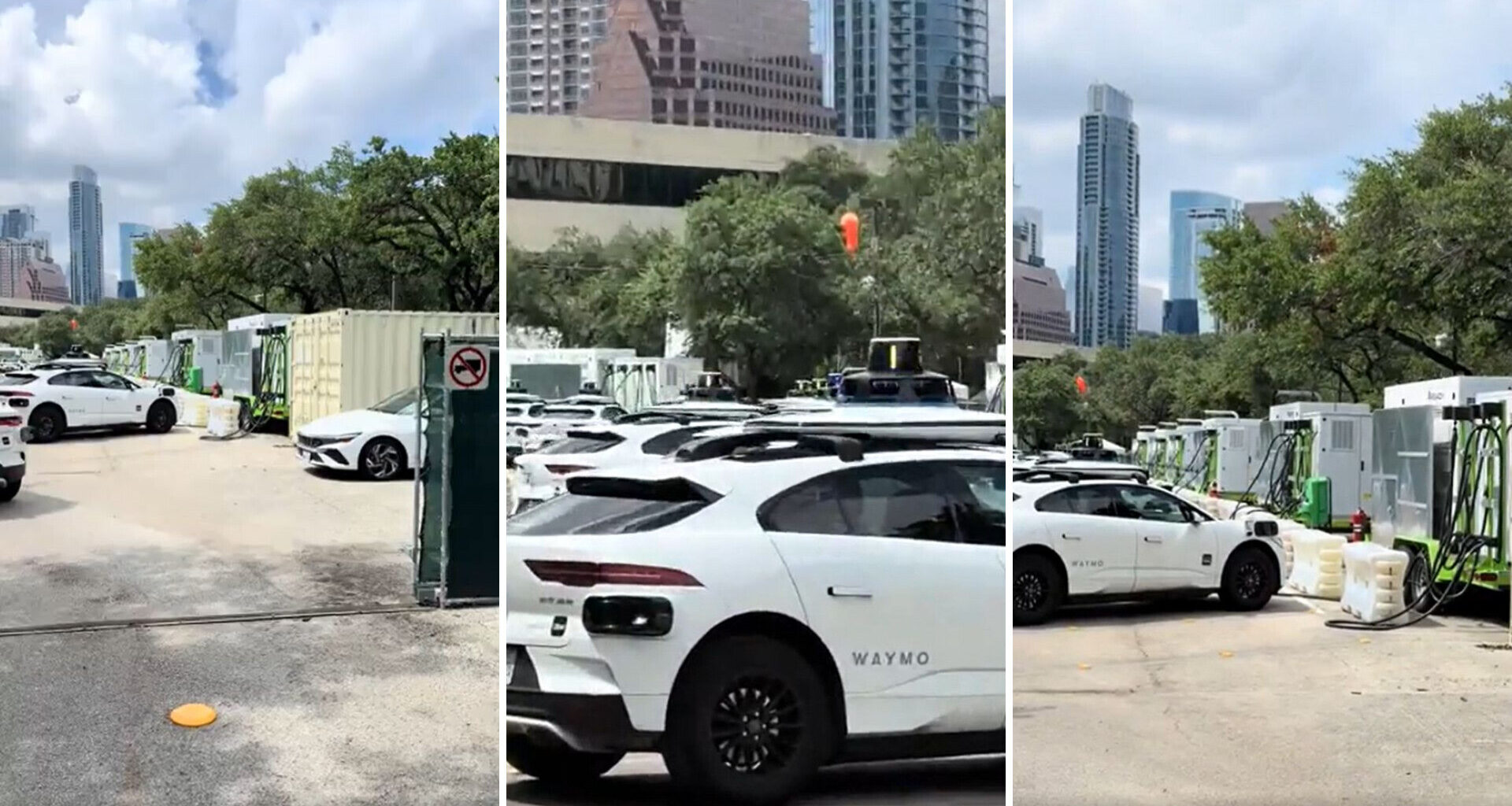
Electric robotaxis are often framed as a sign of a cleaner transportation future. But in Austin, Texas, trailer-mounted gas generators are reportedly charging some Waymo vehicles, raising concerns about noise and pollution.
Here’s what to know
A video in a Reddit post recorded Waymo’s autonomous Jaguar I-Pace vehicles gathering in a surface lot near Lady Bird Lake and South Congress. There, they charge from mobile L-Charge generators.
(Click here to watch the embedded video if it doesn’t appear.)
Rather than plugging into a completed grid-connected charging hub, those units charge with energy from natural gas and propane.
Uber has called the arrangement a temporary measure while a permanent site is developed, but local outlets report that the generators have been in use.
A major reason the site has drawn attention is its proximity to the Ann and Roy Butler Hike-and-Bike Trail. According to the post, local coverage says people using the trail have complained repeatedly.
While Austin inspectors measured the equipment at 61 decibels — below the city’s 70-decibel limit for mechanical noise — that has not done much to reduce irritation among visitors to one of the city’s most-used outdoor spaces.
People are also criticizing the Austin charging setup because Waymo has talked before about using renewable electricity and renewable-energy certificates for its fleet. As reporting noted by the Reddit post stated, people are worried that this is another case of greenwashing.
More background
Electric vehicles generally produce less planet-heating pollution than gas-powered cars, particularly as the electric grid gets cleaner. However, using fossil-fuel generators to charge EVs undercuts part of that benefit while shifting the burden onto nearby residents through noise and air pollution.
This isn’t a rare situation for communities to confront either. And when companies deploy high-profile technology before the necessary infrastructure is in place, residents can be left with the consequences even as corporations press ahead with expansion.
Austin appears to be an outlier compared with Waymo’s general approach to energy. In other markets, the company works with grid operators and battery-storage efforts, but temporary charging workarounds can stick around when service expands faster than available electrical capacity.
Commenters on the Reddit thread were divided.
One wrote, “Statistically not polluting. realistically still polluting.”
Another argued, “I’m not sure what the efficiency of these small generators are, but given that charging EVs from full scale gas plants still generates far less CO2 per mile than an urban ICE, it’s not the slam dunk implied here.”
What’s being done?
Uber says the generators are only a short-term fix, and local reporting says the company has added noise barriers while moving toward a more permanent solution. If that change happens, it could lessen both the sound issues and the reliance on fossil-fuel generation beside the trail.
Grid-connected charging, transparent energy reporting, and stronger permitting standards for temporary generator arrays would make it easier for the public to assess whether a rollout is truly living up to its climate promises.
For now, however, Austin’s current rules focus on noise and don’t address all of the pollution tied to these charging operations. They also do not require public disclosure of generator fuel use or runtime, leaving residents with limited visibility into how much pollution a temporary setup may actually be creating.
Where can I learn more?
Austin isn’t the only town facing a situation like this. Electric technology rollouts everywhere can hinge on the surrounding infrastructure.
• Waymo’s retired robotaxi batteries are being reused to support power grids in California and Texas.
• In a crowded lot, a gas truck blocks an EV charging space, fueling tensions.
• For one homeowner, electric lawn tools are showing how batteries can replace noisy gas engines.
While it’s uncertain when things may change in Austin, spreading awareness about the clean energy transition and holding companies accountable for their actions can make more positive change happen.
Get TCD’s free newsletters for easy tips, smart advice, and a chance to earn $5,000 toward home upgrades. To see more stories like this one, change your Google preferences here.
