
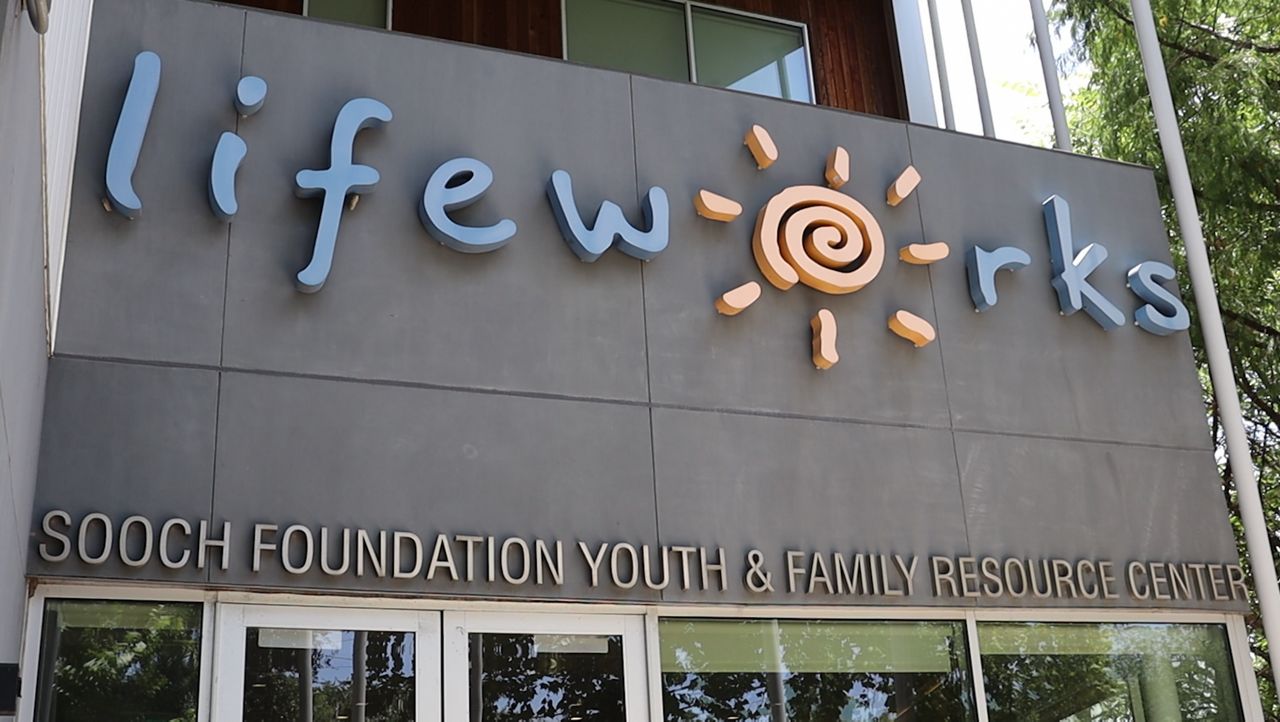
AUSTIN, Texas — The City of Austin approved a $500,000 matching grant for Foster-to-Youth Independence (FYI) voucher supportive services on Aug. 12.
The vouchers themselves are funded by the Department of Housing and Urban Development (HUD) and are given to people transitioning out of the foster care system, a population that faces a 47% risk of homelessness.
Supportive services that accompany the vouchers, however, are not funded by HUD, leaving the responsibility to housing agencies and local governments to determine the funding strategy.
“It would be incredibly challenging for young people, who typically have no experience living independently, to be able to transition from what often are deep histories of trauma, sometimes long histories of being unhoused, to living completely independently,” said Liz Schoenfeld, the CEO of Lifeworks in Austin.
She said the services are not only mandated to come with the vouchers, but they are also crucial for the success of someone transitioning out of the foster care system. Schoenfeld said the matching grant could be used as a national model for other cities to use.
“That is a way for a community and a city to say, ‘Hey, we believe in this. We’re going to put in what we’re able to, but it’s also going to open the door for other folks in the community to step forward and make comparable investments,’” Schoenfeld said.
The services can range from employment readiness skills to counseling and case management, which can cost thousands of dollars per person each year. Austin currently has 127 active FYI vouchers.
“Case management alone, that’s about $7,500 per year for a young person,” Schoenfeld said.
The onetime funding effort was spearheaded by Austin City Council member Ryan Alter. The council was already entering budget season with challenges.
“Entering the budget, we were looking at a $50 million deficit,” Alter said. “That’s why having this be a matching grant was so attractive because it’s not just the city fully funding the program.”
But while Austin officials celebrate the move, other regions say they are struggling to get funding for the services.
“It’s just that there are no supportive services or case management dollars tied to assisting housing vouchers,” said Tara Chisholm, the assistant housing director from the Transition Resource Action Center (TRAC) in North Texas.
TRAC assists with 27 vouchers across the 19 counties it serves.
“TRAC has a housing navigator, that that is their full-time job to assist with housing vouchers. However, TRAC has paid that individual salary out of private funding because there aren’t any contracts or grants available for that position,” said Chisholm.
Chisholm said cities like Dallas have been a great partner to work with on foster youth homelessness, but no contracts or matching grants have been put in place specifically for FYI supportive services. She shared that they are always working on ways to increase funding, and a matching grant could be a potential solution.