
While driving around Dallas, you may notice some neighborhoods hold both homes and industrial facilities.
There have been environmental concerns across Oak Cliff and in South Dallas, where policies allowed for industrial uses near residential areas. One of the most infamous environmental concerns was Shingle Mountain, a tall pile of illegally dumped roofing debris at a recycling facility in the Floral Farms neighborhood of southern Dallas.
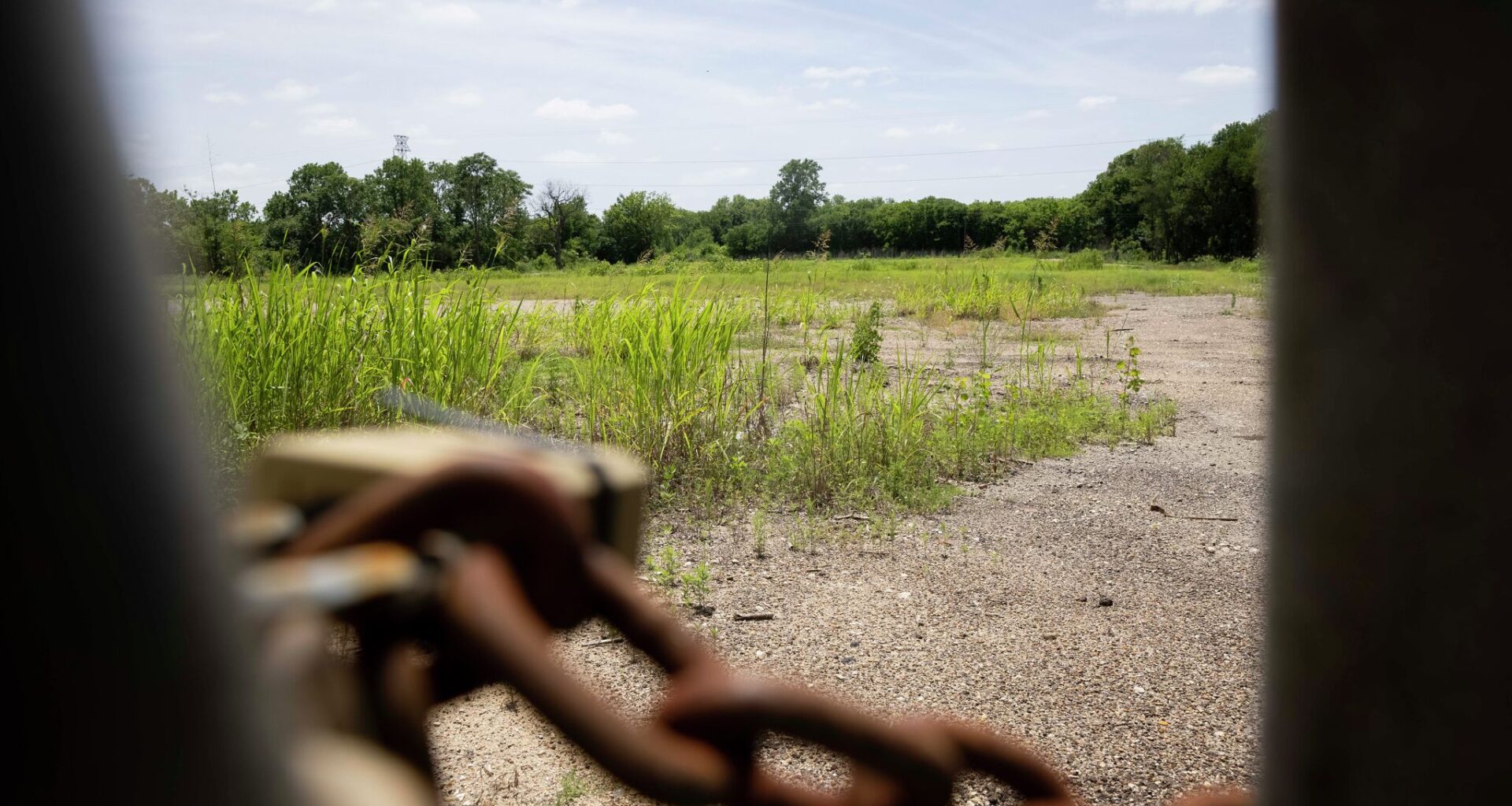
One Curious Texas reader asked: “After Shingle Mountain, why was the city of Dallas prepared to allow a steel fabrication plant next to homes in Fruitdale/South Dallas?”
The Dallas Morning News did not receive any other details and did not find information that showed the city allowing this specific development. Some areas of Dallas currently have zoning for industrial land use, even when they are near residential areas.
But the way the city approaches land use could soon be changing.
Dallas is prioritizing environmental justice issues, acknowledging pollution concerns and considering changes in areas where residents live alongside industrial facilities, according to ForwardDallas, the city’s land use plan.
Dallas City Council passed ForwardDallas 2.0 in 2024. The long-term plan outlines the city’s vision for land use and urban design for the coming decades. That plan is designed to reduce the amount of industry near homes.
“Land use policy has played a significant role in the disparate distribution of environmental burdens, particularly near communities of color, and outdated land use and zoning tools have reinforced barriers to addressing environmental justice concerns,” ForwardDallas says.
Dallas has 70,000 acres of residential areas, which makes up about 32% of its total area. Of that residential land, roughly 10,000 acres — or 5% of the city’s total land — are within 1,000 feet of an industrially zoned district, according to ForwardDallas.
Implementation of ForwardDallas, with policy changes, is underway. The city is also in the process of reforming its development regulations for the first time in decades.
Outdated zoning, which determines how land is used, has also been identified as a stumbling block for developers who hope to bring more housing options to the city.
Large changes to land use policies, however, take several years. Dallas’ zoning reform project kicked off in 2024, and the initial draft of the new development code is expected this fall. That will be followed by public meetings.
Changing regulations for specific neighborhoods also could be a years-long process.
In Floral Farms, residents spent six years seeking zoning changes after Shingle Mountain. The City Council approved the rezoning limiting industrial uses in 2025.
In West Dallas, residents along Singleton Boulevard are going through the rezoning process after having long pushed to reduce industrial sites in their neighborhood.
With ForwardDallas, several neighborhood reviews have been underway, including a review of land use in Joppa that could impact future projects. The neighborhood, also in southeast Dallas, has a decades long history of residents living amid industrial facilities.
City planners are trying to mitigate the negative impacts of industry and resolve inconsistencies within the zoning policy that incorporates the area’s natural features, such as the nearby Trinity River. A majority of roughly 660 acres that are currently being reviewed have industry-related zoning.
That space could go on to support mixed or commercial uses. Changing zoning regulations won’t immediately push businesses out, and business owners will be included in this process along with residents, before city staff blends those ideas into a new land use plan.
The change would not be immediate, but generational, mostly addressing standards around new developments in a particular area, rather than the structures that exist today.
Only the City Council and its City Plan Commission can initiate this process to broadly change zoning in neighborhoods. The city’s planning department said this is done to align with the vision for future land use and address incompatibility.
Ultimately, the Dallas City Council has the final vote in all zoning cases.
This reporting is part of the Future of North Texas, a community-funded journalism initiative supported by the Commit Partnership, Communities Foundation of Texas, The Dallas Foundation, the Dallas Mavericks, the Dallas Regional Chamber, Deedie Rose, Lisa and Charles Siegel, the McCune-Losinger Family Fund, The Meadows Foundation, the Perot Foundation, the United Way of Metropolitan Dallas and the University of Texas at Dallas. The News retains full editorial control of this coverage.