
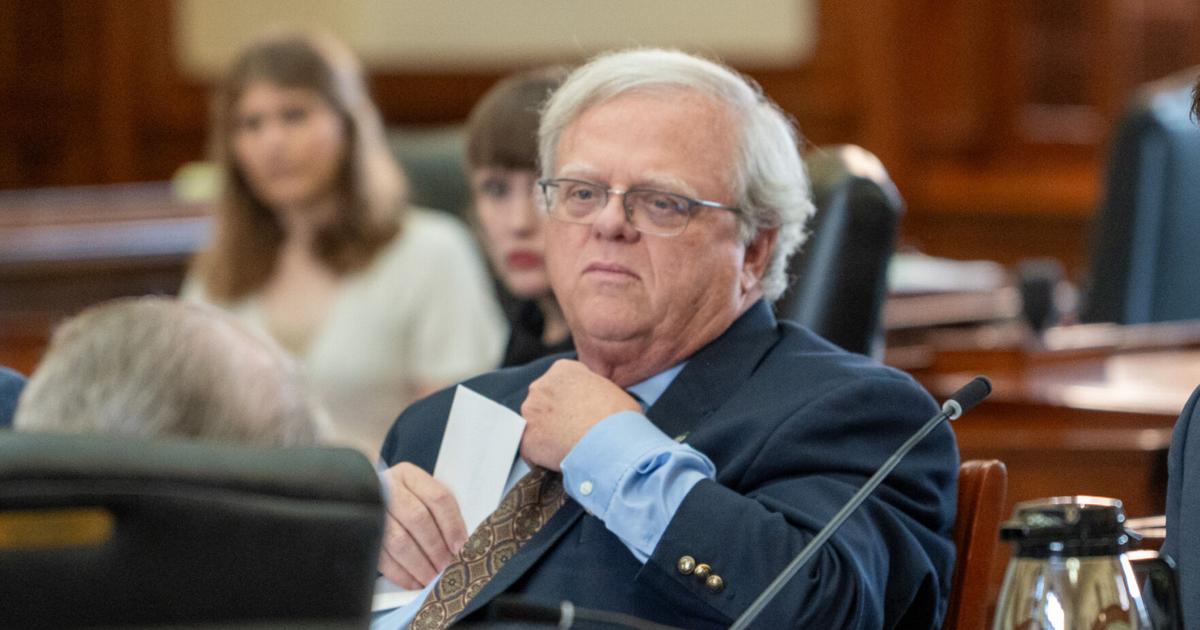
Property taxes have ballooned over the last decade, but so has the share of Texas homeowners who pay no property taxes to school districts, according to an analysis presented this week by state Sen. Paul Bettencourt (R-Houston).
Local governments around the state collected nearly $89.5 billion in property tax revenue last year, an 83 percent increase from the 2014 total of $48.8 billion, according to “a first of its kind statewide data collection effort” prepared by Bettencourt’s office and presented to the Local Government Committee of the Texas Senate on Tuesday. While levies have grown overall, the average independent school district (ISD) tax bill has shrunk, and the share of Texans who pay no ISD property taxes has grown.
All the while, an election cycle focused on affordability and housing costs provides a backdrop to Bettencourt’s study.
“This, by any measurement, is a success,” Bettencourt said.
Background and Results
Bettencourt chairs the Senate Local Government Committee, which met in the Texas Capitol on Tuesday to discuss the results of property tax relief bills dating back to 2015.
According to Bettencourt’s presentation, Texas taxpayers are reaping the benefits after years of state legislation that generally follows two approaches to property tax relief: compression, which uses state money to buy down local property tax rates; and increases to the homestead exemption, a tax break for homeowners’ primary residence.
Thanks to a series of bills, the Legislature has increased the homestead exemption from $15,000 in 2015 to $140,000 for regular homesteads and $200,000 for homeowners who are disabled or over 65 in 2025.
About a quarter of all homesteads don’t pay ISD property taxes, according to the presentation. ISD levies across the state decreased slightly from $41.66 billion in 2024 to $41.65 billion in 2025.
School districts make up the biggest portion of the average property tax bill.
Statewide, the average annual ISD property tax bill has fallen from $1,037 in 2024 to $896 in 2025 for the general homestead, a dip of about 13.6 percent.
Tax savings are particularly concentrated among disabled and senior homeowners. Texas homeowners who are disabled or over 65 saw even greater reductions, with their average tax bill falling by about 33 percent from $565 a year to $380.
Furthermore, the percentage of homeowners in these categories has grown in all of the state’s biggest counties, rising by 164 percent in Harris County.
Critiques
While committee members generally limited themselves to questioning panelists, state Sen. Molly Cook (D-Houston) criticized the state’s compression strategy and called for greater local authority over taxation.
“For the last seven years, the Legislature has promised to deliver true relief by buying down property taxes. We’ve put a shocking $51 billion dollars behind that promise. And what do we have to show for it?” Cook said.
On the other side of the aisle, President of Texas Policy Research Jeramy Kitchen criticized special exemptions as a way to “shift” the tax base rather than reduce local government expenditures.
“Increasing exemptions for one group without restraining spending doesn’t eliminate the tax burden. It increasingly concentrates that burden on the property owners who remain taxable,” Kitchen wrote on X.
Lt. Gov. Dan Patrick, the president of the Texas Senate, has historically favored exemptions over compression and other measures of property tax relief. In 2023, in opposition to Texas House leadership, Patrick criticized plans to use the state’s budget surplus to buy down rates and sought instead to raise the homestead exemption. Last year, Patrick called on the Legislature to increase the homestead exemption further when it convenes in 2027.
2026 Midterms
Bettencourt released his findings during an election cycle particularly focused on the cost of living, including property taxes.
State Rep. Gina Hinojosa (D-Austin), this year’s Democratic nominee for governor, has blamed her Republican opponent, incumbent Gov. Greg Abbott, for high property taxes. Abbott has taken to the campaign trail to defend the Legislature’s record on tax relief and express support for eliminating school district property taxes entirely for homeowners.
Texas Comptroller of Public Accounts Don Huffines, who’s also the Republican nominee for the position this November, has also made property tax relief a key part of his campaign.