
But before The Neighbor’s Loaf, McLaughlin spent a decade in a field far removed from baking.
“I spent about 10 years working at a brain and spinal cord injury rehabilitation facility,” she says. “It was incredibly meaningful work and taught me so much about patience, compassion, resilience and caring for people during some of the most difficult times in their lives.”
She later moved into catering, where food became a new way to care for people.
“I loved creating food for people and seeing how food could make an occasion feel special,” she says.
Eventually, that interest narrowed to baking, especially sourdough.
Unlike breads made with commercial yeast, sourdough relies on a fermented starter that must be regularly fed and maintained. The process requires bakers to pay attention to fermentation, temperature, timing and the behavior of the dough, all things that initially drew her to it.
“There is so much more to it than simply following a recipe,” she says. “There is a whole process of feeding a starter, understanding fermentation, working with the dough and learning how small changes can completely affect the final loaf.”
She began baking for her family before sharing her creations with friends and neighbors. As more people tried the bread, word spread.
“I didn’t start The Neighbor’s Loaf with a big business plan or a storefront,” she says. “It started very small, right in my own neighborhood.”
Turning that hobby into a business meant learning how to produce bigger batches of bread, navigating regulations and registration, packaging and pricing.
“I think that’s one of the most important lessons I’ve learned: you have to be willing to change your plan when circumstances change,” she says.
Much of The Neighbor’s Loaf’s growth has happened the same way it started: one neighbor telling another.
Social media serves as the bakery’s menu board, where customers can see what is available each week and find ordering information. But personal recommendations have been particularly important.
“Someone will try something, love it and then tell someone else,” she says. “Suddenly that person becomes a customer, and then they bring someone else along.”
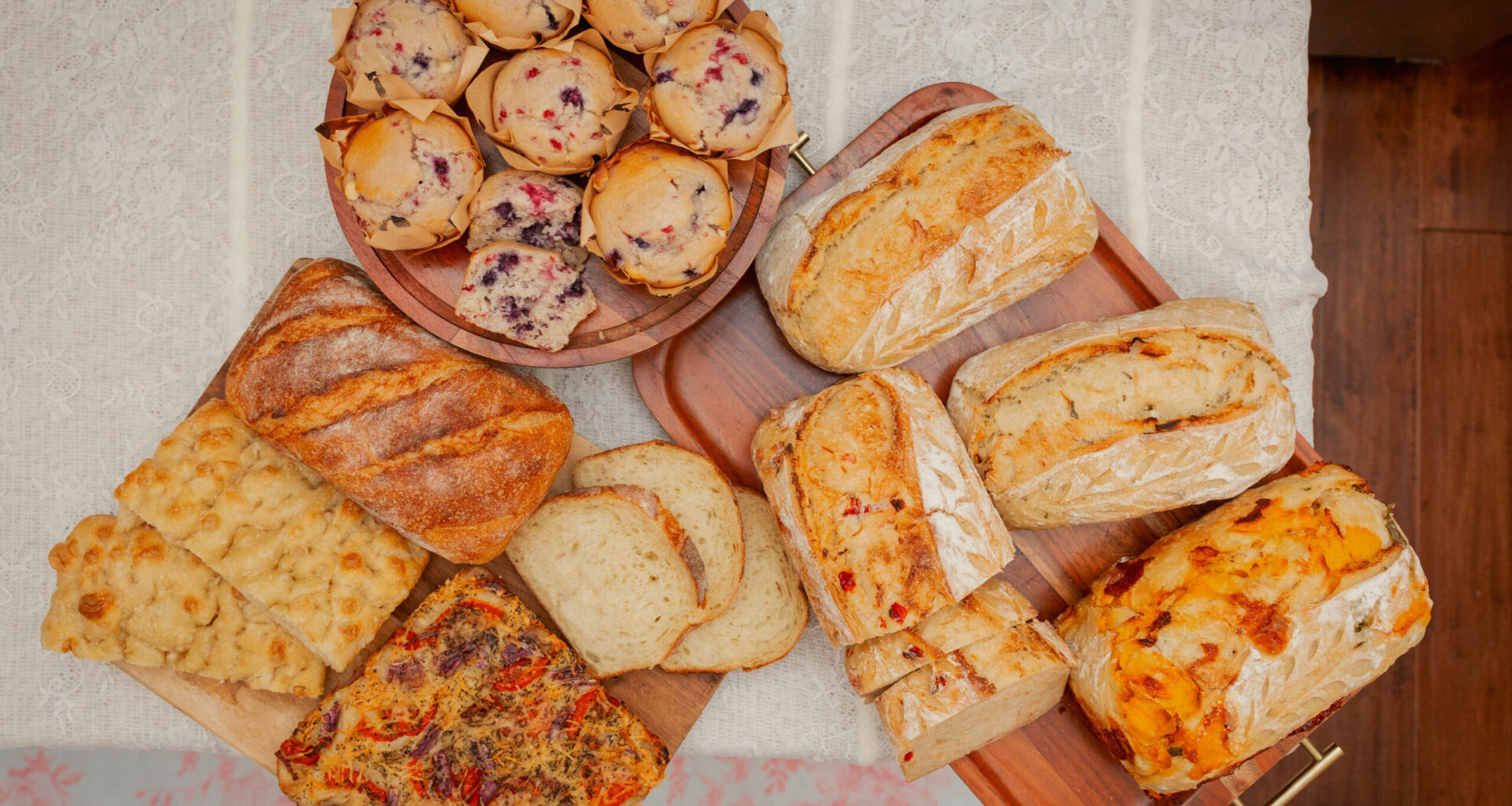
The bakery’s classic sourdough boule (a round loaf) and batard (a football-shaped loaf) remain staples, along with sandwich loaves. Jalapeño cheddar sourdough ($10) and sourdough brownies ($10 and up for an 8×8 pan) are also among its best sellers.
Focaccia ($12), meanwhile, has given the baker room to experiment.
Its adaptable base can be paired with different flavors, toppings and seasonal ingredients, allowing the weekly offerings to change. Some experiments have earned permanent or recurring spots on the menu. Others have taught her that a successful recipe doesn’t necessarily make a successful bakery product.
“I’ve tried products that I was convinced would be huge sellers that ultimately didn’t become permanent menu items,” she says. “I’ve also learned that just because something is delicious doesn’t necessarily mean it makes sense for a small-batch bakery from a production or business standpoint.”
The Neighbor’s Loaf remains a preorder operation rather than a traditional walk-in bakery. Customers find the weekly menu on social media and place orders primarily through Facebook or text during designated preorder times. Orders are then prepared for scheduled pickup.
The model allows her to control how much she produces and keep batches small.
“Keeping it small and intentional is important to me,” she says. “I want everything that leaves my kitchen to be something I’m proud to put my name on.”
Even the business’s name reflects the scale she hopes to maintain.
“The name ‘The Neighbor’s Loaf’ was intentional,” she says. “I love the idea of being the neighborhood baker and the person you can come to when you need a beautiful loaf of bread for dinner, something special to bring to a gathering, or just want to treat yourself.”
For a business built largely through recommendations, those neighborhood connections have become as central to The Neighbor’s Loaf as the bread itself.
“I’m not just selling bread,” she says. “I’m creating food that becomes part of someone’s table, someone’s gathering or someone’s memory.”
The Neighbor’s Loaf, 9717 Southern Hills Drive, 469.579.1325