
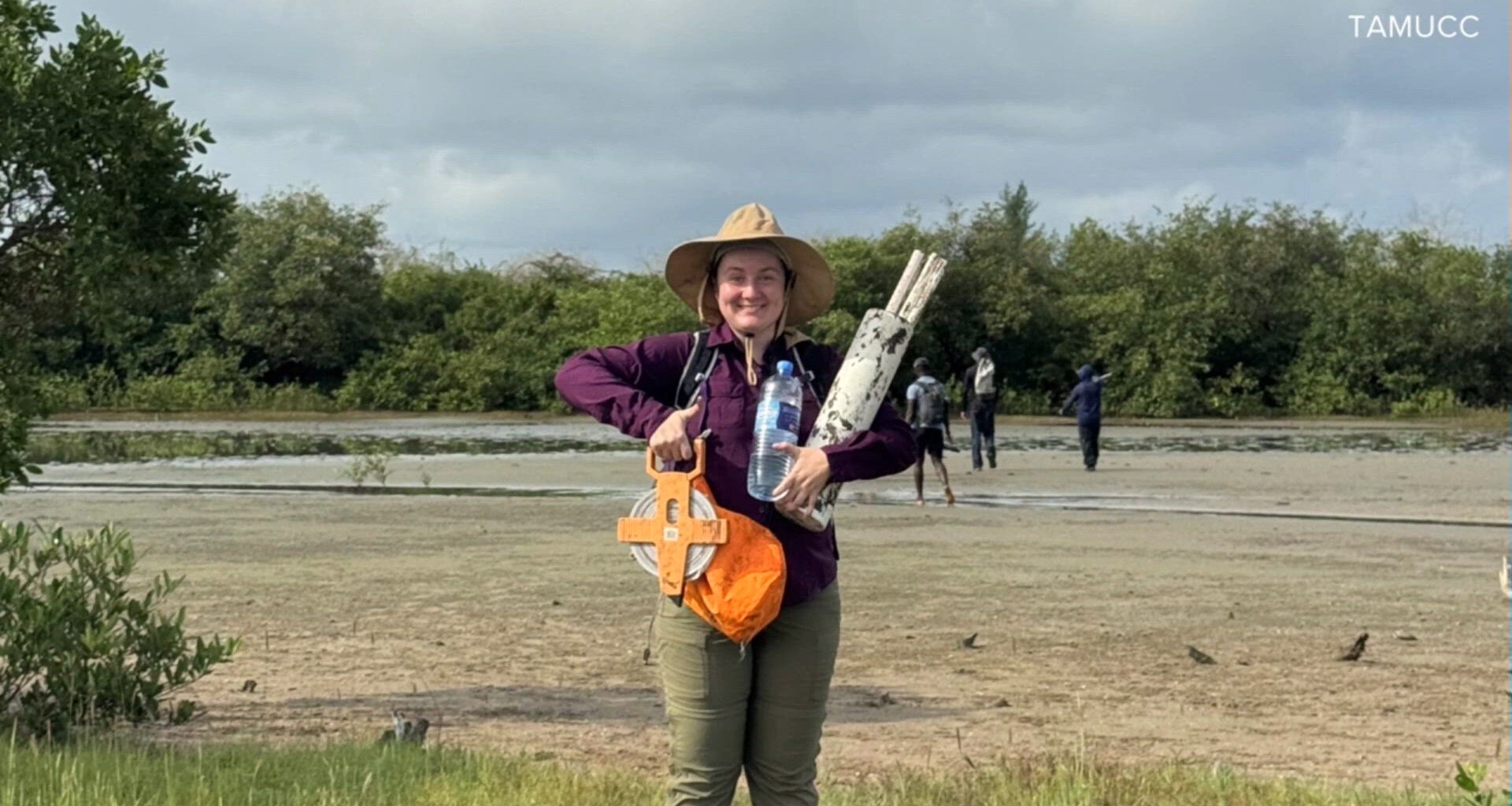
CORPUS CHRISTI, Texas — Researchers at Texas A&M University-Corpus Christi are helping scientists better understand the importance of mangrove ecosystems around the world.
An international research team recently completed three expeditions to The Gambia in West Africa. Scientists are studying the wildlife found in mangrove forests, how much carbon the ecosystems can store and how local communities depend on mangroves for their daily lives and livelihoods.

This story continues below.
Dr. Loretta Battaglia, director of the Center for Coastal Studies at Texas A&M-Corpus Christi, said scientists still have much to learn about the species living in mangrove ecosystems.
“Unfortunately, we just don’t know a lot about which species live in the very important mangrove systems, and so the team really wanted to address this, see who is living there and also their contribution to carbon burial in mangroves because they are known to be big carbon sequesters,” Battaglia said.
The project brings together scientists from the United States, Switzerland, Brazil and The Gambia. It is supported by National Geographic’s Perpetual Planet Initiative.
Researchers hope their findings will help guide future conservation efforts while protecting the communities that rely on mangrove ecosystems.
More from 3NEWS on KIIITV.com:
Email tell3@kiiitv.com so we can get in touch with you about your story should we have questions or need more information. We realize some stories are sensitive in nature. Let us know if you’d like to remain anonymous.