
Far north Fort Worth residents offered a mix of ideas and some strong concerns about continued development Aug. 24, when city parks officials gathered community input for the future design of 68-acre Chapel Hill Park.
More than 20 residents attended the meeting, where parks staff and consultants from Kimley-Horn presented a wide range of possible project designs, amenities and features, and solicited direct feedback. It’s an early step in shaping Chapel Hill Park, which sits immediately south of Eagle Mountain High School in council member Macy Hill’s district.
These informal meetings are one tool the city often uses to gather residents’ views on development projects.
For Chapel Hill Park, the city has conducted a mail-out survey of area residents and offers an online survey and comments portal that will remain open through the planning process to receive input.
As plans develop, the department will host further information-sharing meetings, said Blaise Grissom, project manager for the Fort Worth Park & Recreation Department.
“Nothing’s been designed yet,” Grissom said. “We’re just collecting information.”
The city plans to hold a second public meeting in the coming months to present a preliminary concept based on the community’s input. Initial construction is likely to be three to five years away, Grissom said.
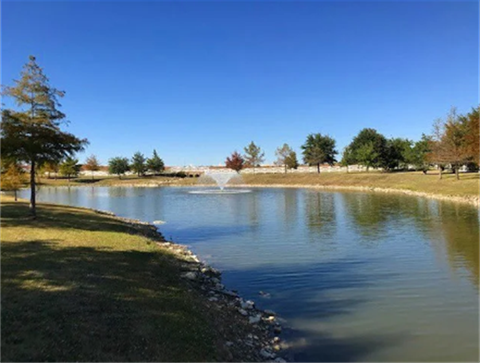
The land is unimproved and largely natural, and a recurring theme Monday evening was to preserve as much of the property’s existing natural character as possible — especially with the prospect of thousands of new homes planned in the area.
Attendees supported nature-oriented features, including butterfly and pollinator areas that could be educational opportunities for children.
Patrick Carroll, who lives in the Chapel Hill subdivision, suggested walking trails, shaded areas, native prairie and opportunities for high school students to use the park for nature education.
Kay Carroll, his wife, emphasized preserving the area’s natural habitat and history. She said residents cannot stop the area’s growth but can decide how to respond.
“Progress is happening,” Kay Carroll said. “It’s been in the (city’s) master plan for 20 years. So, how can we do something that keeps open space and natural land?”
Other residents raised concerns about the loss of open land, increased traffic and construction problems, and the potential effects of a public park next to the high school. One resident questioned whether the park could become a gathering place for inappropriate activity by students or others.
Grissom said a public park cannot be restricted to particular users, although park hours and reporting of inappropriate activity can help address problems.
Landscape consultant Jonathan Campbell of Kimley-Horn said designing amenities that residents actually want to use can provide a form of “built-in security” because regular activity puts more “eyeballs” on the park.
Residents also proposed a range of recreational amenities. Cynthia Jimenez, who lives in Eagle Mountain, recommended pickleball courts, noting the sport’s popularity among people of all ages.
What residents indicated they want:
Programmed sports. Residents appeared more interested in flexible outdoor recreation and exercise than in heavily programmed sports facilities.
Programmed recreation. Trails and lower-key recreational activities like disc golf, horseshoes, bocce ball and croquet were favored over skate-oriented and similar facilities.
Nature immersion. Preserving the site’s natural character and using it for education and appreciation of nature was one of the evening’s clearest themes.
Recreation. Informal, nature-based recreation was broadly welcomed.
Rest and relaxation. Residents appeared to favor smaller-scale, shaded and comfortable places to gather; they were more opposed to large, heavily programmed gathering spaces like large picnic or event-style areas.
Programmed play. Residents appeared to prefer play that is inclusive, nature-oriented, and usable by different ages and abilities. They generally opposed themed and competitive play options.
Walkability was another concern. One resident asked whether sidewalks could eventually connect surrounding neighborhoods with the park. Grissom said that is the goal, and that sidewalks along Bonds Ranch Road are planned.
Residents also asked about parking, restrooms and the possibility of a community center. Grissom said two small, ADA-accessible restrooms with changing tables could be included, with features such as timed locks to secure them when the park closes.
A community center is not in the works for the park, she said, but the idea could be part of broader city discussions.
Such a facility would likely require bond revenue or general-fund money rather than rely on developer park fees, which are paying for the new park.
Funding and timing remain uncertain. Grissom said the city currently has money for the master-planning process, but the park is not included in the 2026 bond program and has no general-fund allocation.
Construction could be phased, as developer park fees accumulate, with the possibility of state grants helping fund future improvements.
After discussion, meeting participants were invited to review six large posters that provided a visual, interactive way to show the parks department and Kimley-Horn consultants what amenities they would — and would not — like to see in the proposed Chapel Hill Park.
Each poster represented one category of features (e.g, rest and relaxation) and showed photographs of several types of activities or features that fell into that category.
Meeting participants were given three green dot stickers to place on options they favored and three red dot stickers for those they opposed. Residents could also add written comments or complete the accompanying online survey.
“Everything is on the table,” Campbell told residents.
Chapel Hill Park Public Input Meeting
Documenter: Lou Chapman
Date: Aug. 24, 2026
Learn more about this meeting by clicking here.
Lou Chapman is a member of the Fort Worth Report Documenters crew. If you believe anything in this account is inaccurate, please email us at news@fortworthreport.org with “Correction Request” in the subject line.
This <a target=”_blank” href=”https://fortworthreport.org/2026/09/02/residents-urge-fort-worth-to-preserve-natural-setting-in-chapel-hill-park-plans/”>article</a> first appeared on <a target=”_blank” href=”https://fortworthreport.org”>Fort Worth Report</a> and is republished here under a <a target=”_blank” href=”https://creativecommons.org/licenses/by-nd/4.0/”>Creative Commons Attribution-NoDerivatives 4.0 International License</a>.<img src=”https://i0.wp.com/fortworthreport.org/wp-content/uploads/2021/04/cropped-favicon.png?resize=150%2C150&ssl=1″ style=”width:1em;height:1em;margin-left:10px;”>
<img id=”republication-tracker-tool-source” src=”https://fortworthreport.org/?republication-pixel=true&post=752918&ga4=2820184429″ style=”width:1px;height:1px;”><script> PARSELY = { autotrack: false, onload: function() { PARSELY.beacon.trackPageView({ url: “https://fortworthreport.org/2026/09/02/residents-urge-fort-worth-to-preserve-natural-setting-in-chapel-hill-park-plans/”, urlref: window.location.href }); } } </script> <script id=”parsely-cfg” src=”//cdn.parsely.com/keys/fortworthreport.org/p.js”></script>