
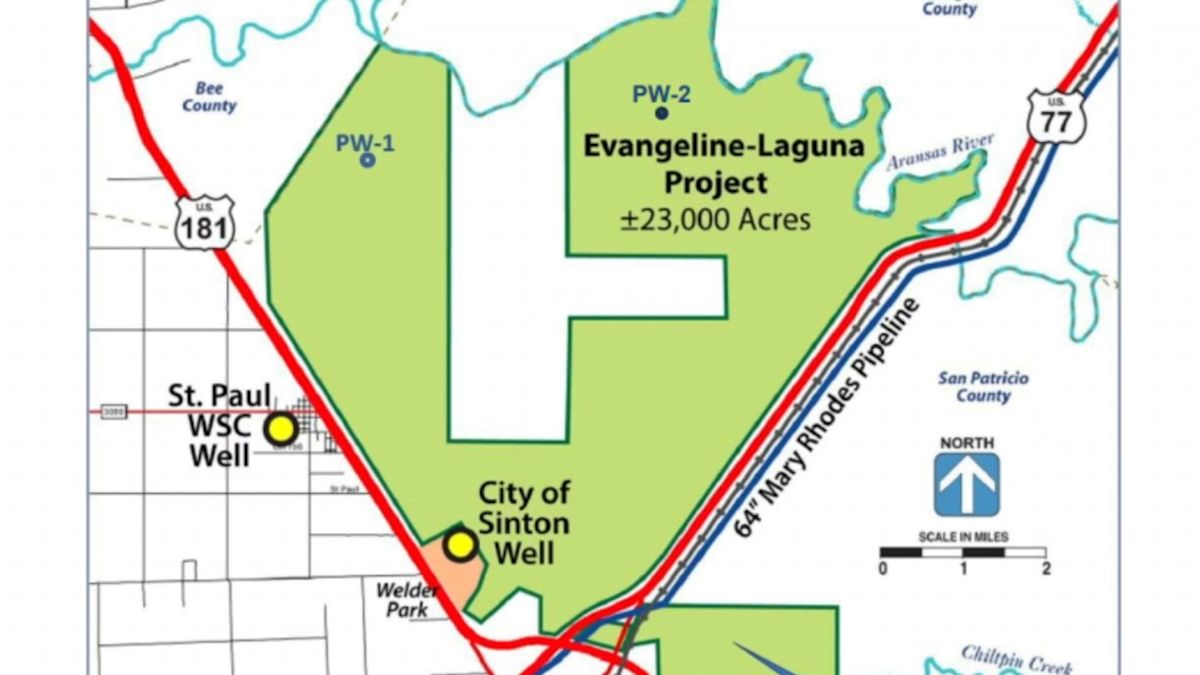
The Inner Harbor Desalination Project is on the back burner following Tuesday’s Corpus Christi City Council meeting, with attention now shifting to another key part of the city’s water plan: the Evangeline Aquifer water project.
Council members discussed the project Tuesday as they sought an update on where negotiations stand.
Corpus Christi City Manager Peter Zanoni said getting to this point has involved extensive negotiations between the parties.
The city has been at the negotiating table for months, trying to determine what the future of the Evangeline water project could look like.
“So this is very much about us trying to help the region and have better water security. Most notably for San Patricio County,” Zanoni said.
But the project continues to face opposition from San Patricio County residents, who have raised concerns about the aquifer and the potential for overpumping.
Barbara Lopez, a San Patricio County resident who spoke during Tuesday’s public comment, said the bigger issue is trust. She said she does not see how that trust can be restored moving forward.
“On the agenda today, you’re asking to approve even more taxpayer money associated with moving this Evangeline project toward construction, and the groundwater project isn’t even finished,” Lopez said.
Lopez said she believes the city is moving prematurely.
“It’s an awful expensive cart to be building before you know whether you have permission to hitch the horse,” she said.
The City of Sinton is also continuing to challenge the project through a contested case hearing.
Sinton City Manager John Hobson provided the following statement:
“The City of Sinton will continue with the contested case hearing. Corpus Christi’s council’s decision to give us a deadline to sign a settlement agreement was not received in a manner that would encourage negotiations.”
Zanoni said the city is still working to find common ground and said the current work on the project is intended to give the city more flexibility in managing the water supply.
“The work that’s being done right now, it doesn’t mean we have to produce the water at this rate. The number of wells would allow for better water management, whether they’re in production or not,” Zanoni said.