
TEXAS — The Mark Cuban Foundation is expanding its artificial intelligence education efforts to adult learners at Dallas College, giving students hands-on experience with technology that is rapidly changing the workplace.
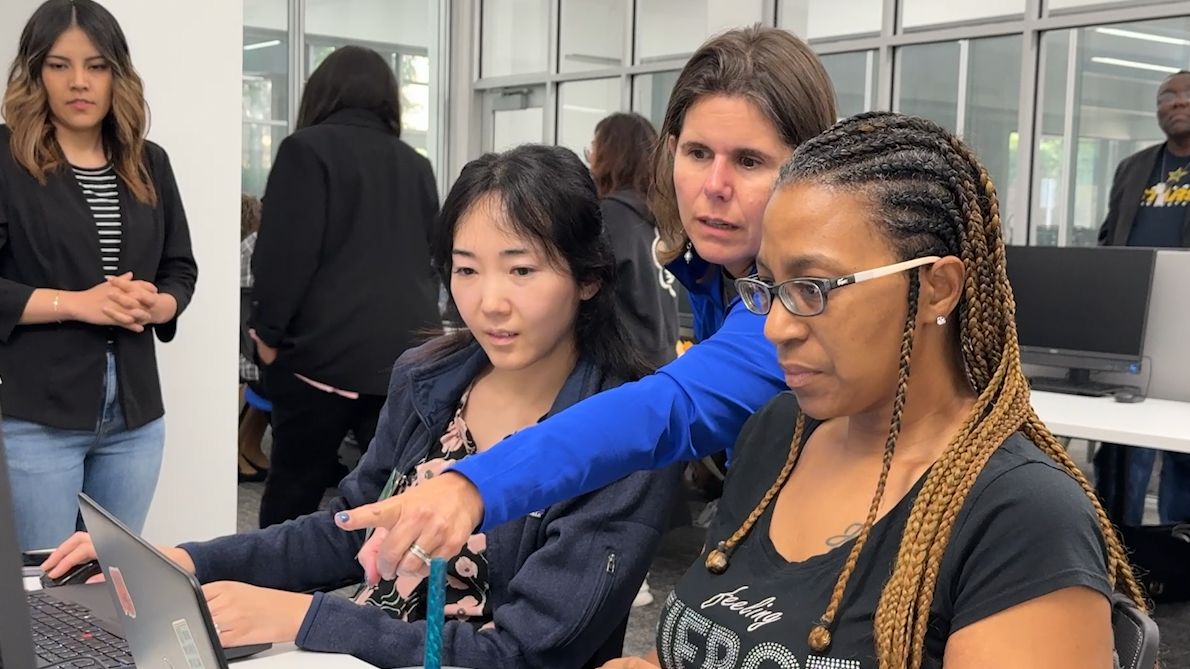
The one-week program brings together about 22 students to learn how artificial intelligence can be used in professional and everyday settings.
“AI is moving faster than we are, and it’d be a good idea to get ahead of the curve,” said Jenine Smith, a 46-year-old Dallas College student.
For Smith, who works in accounting and finance, using AI was something she never expected to do.
“I was definitely not an advocate for AI. I was very fearful of it,” Smith said.
Now, she is learning how to use AI as part of a team of virtual advisers, assigning each one a different role and putting them to work on real-world decisions.
“It’s better to kind of know how it works and understand it than get lost in the process itself,” Smith said.
The program is designed to make AI more accessible to people who may not have a technical background.
“Comfort with AI is no longer an option because AI is here,” said Wren Hoffman of the Mark Cuban Foundation.
A 2026 survey from the Federal Reserve Bank of Dallas found that 66% of Texas businesses are incorporating AI.
In partnership with the Mark Cuban Foundation, the Dallas College program covers a range of topics, including website and video creation, automation, career tools and AI ethics.
“AI is for everyone. It’s not just for tech bros. It’s not just for computer science learners. It’s for everyone,” Hoffman said.
For students such as Smith, the lessons also offer a look at how AI could affect their careers.
“It’s not utilized as much, but it’s we’re definitely going that way,” Smith said of AI’s use in accounting and finance.
She said learning more about the technology has made it feel less intimidating.
“I didn’t know AI could do so many things,” Smith said.
Dallas College is the first of six pilot programs the Mark Cuban Foundation plans to launch across the country.
For Smith, the goal is to understand the technology now and stay prepared for how it will shape the future of work.