
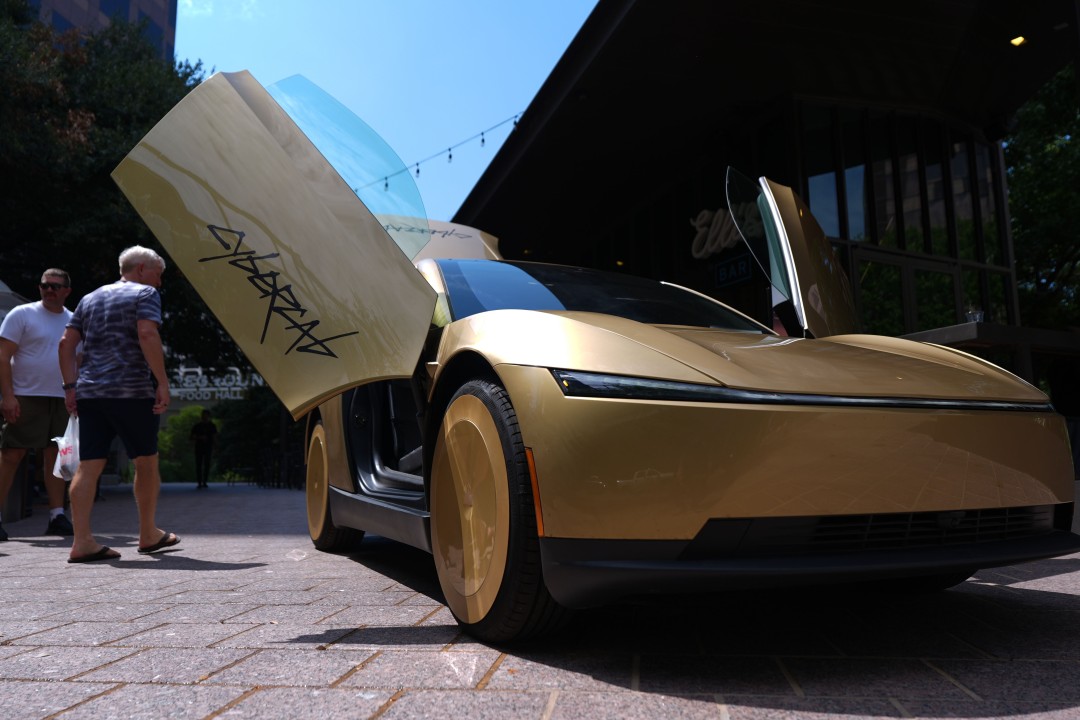
Elon Musk sent dozens of self-driving Cybercabs without steering wheels or brake pedals onto the streets of Austin, Texas, on Thursday, betting that Americans will overcome their fears of rides with “no control” and hop inside. The gold-colored Teslas give passengers no way to take control in an emergency, the AP reports. The company also is preparing to launch the service in other cities. Tesla shares have suffered during a slump in vehicle sales, but they rose more than 5% Thursday on hopes that the futuristic-looking taxis will catch on quickly.
“No steering wheel, no pedals,” Tesla teased on X before the launch. Musk followed with a post showing a giant Cybercab floating above the Austin skyline and later wrote, “A Storm of Cybercabs.” It is unclear how soon Musk intends to roll out the Cybercab service, but he might want to move quickly. Tesla trails self-driving taxi leader Waymo in the number of cabs deployed and trips completed. To catch up, it must demonstrate that its camera-only system can safely navigate streets and avoid pedestrians. By contrast, Waymo and another rival, Amazon’s Zoox, supplement cameras with radar and a laser-based technology called lidar.
Americans apparently aren’t sold yet on the technology. A Pew Research Center survey conducted in February found that seven in 10 US adults were “not too” or “not at all” comfortable riding in a driverless car. Austin has had a self-driving Tesla “robotaxi” service since June 2025, but those cars have steering wheels and brake pedals. The service, which has since expanded to five other cities in Texas and Florida, initially carried passengers with safety drivers aboard to take over in case of problems. Tesla has more than 200 “unsupervised” robotaxis in those cities, meaning they operate without safety drivers aboard, according to the monitoring site Robotaxi Tracker. Waymo has more than 4,000 such vehicles in 14 cities.