
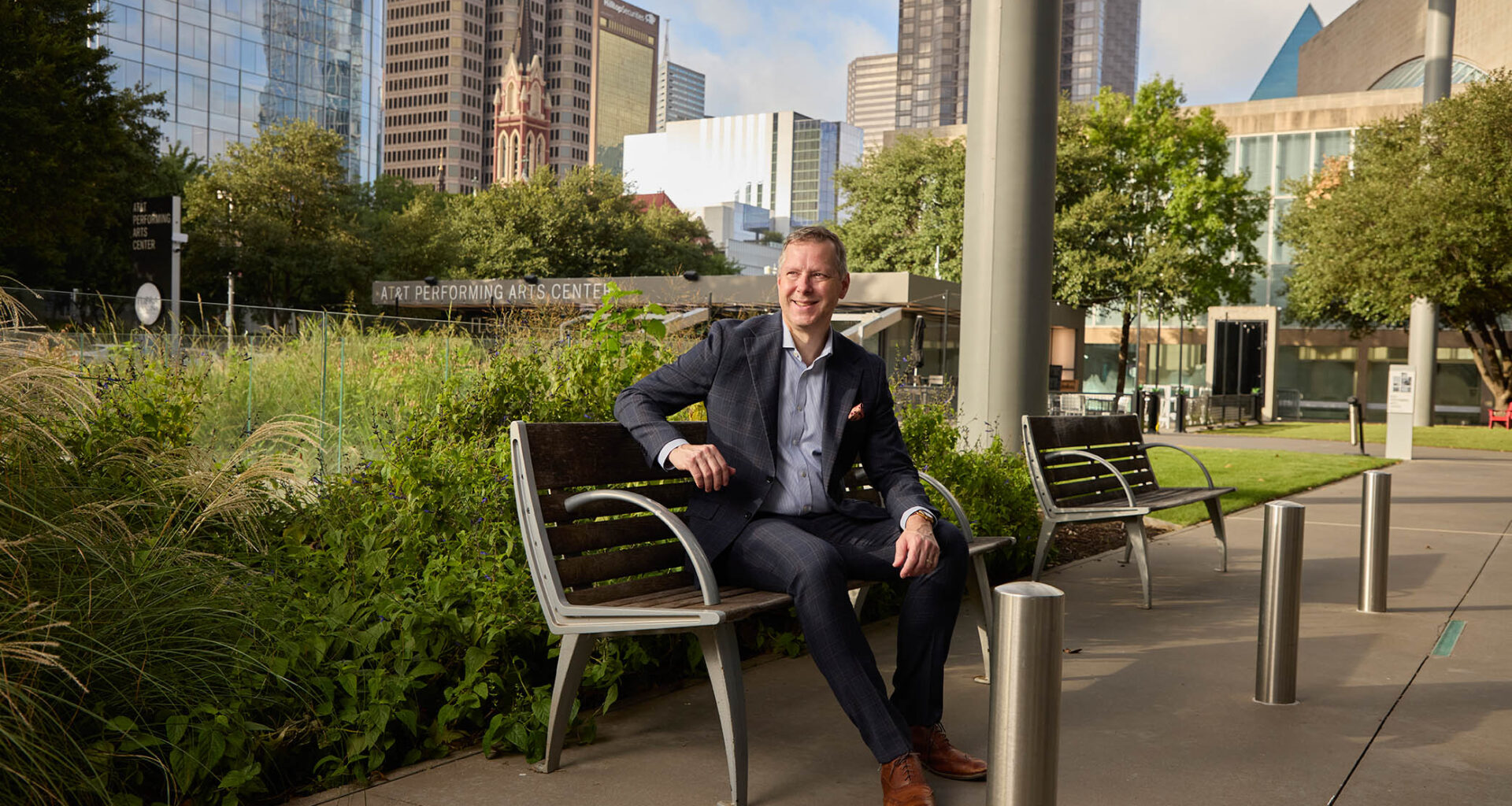
Nobody knows this better than Warren Tranquada. A longtime events industry veteran, he stepped into the role of president and CEO of Dallas’s epicenter for live performance in 2022 during the pivotal post-COVID pandemic period. As the years passed, the challenges and triumphs haven’t stopped coming. Fast-forward to the present, a pending merger between the AT&T Performing Arts Center and the Dallas Theater Center will result in these two historic organizations combining operations starting in 2027.
How are you, and how is the summer going at AT&T Performing Arts Center? Well, with the FIFA World Cup 2026 as the kick-off of the summer, it certainly was very busy in June and July. We experienced more activity than normal, and it was really exciting to see so many people on the streets of Downtown. It was inspiring as to what is possible in the future. Beyond the economic impact of the games themselves, my hope was that visitors would leave with an appreciation for what North Texas can offer in hospitality, in the arts, and in public infrastructure, and that we would earn a place on people’s list of destinations they want to see when they’re visiting the United States. I think we were able to achieve that.
what are a few changes that you’ve seen during your time in Dallas?
In the past few years, I think there has been increasing interest among the leadership of cultural institutions in finding ways to productively collaborate with each other. I think we’ve all recognized that attracting audiences is harder post-COVID, but I wouldn’t blame this entirely on the pandemic. I would actually point to broader changes in audience habits, including the rise of streaming services and on-demand content, and a general comfort with making decisions at the last minute.
Although people still very much value live experiences and going out, I think they are more selective about what they’re choosing. And so, the opportunity for us as a sector has been in recognizing that we’re not really competing with each other – we’re competing with other forms of entertainment. That has opened up the ability to be much more collaborative about marketing and about coordinating schedules. Whether they come to my organization or a different organization, it’s all positive for our sector, for the neighborhood, and for our missions, so let’s work together to drive that up.
Speaking of collaboration, can you talk us through what to expect from the upcoming merger with Dallas Theater Center?
Dallas Theater Center produces content, which means they are reading scripts, hiring actors, hiring directors, building sets and so forth. At AT&T Performing Arts Center, we are typically booking shows that are traveling on the road. From a customer standpoint, the merger will create a more integrated customer experience for the produced theater that comes out of Dallas Theater Center, and the presented theater that AT&T Performing Arts Center has historically brought to the city. This will enable easier coordination of scheduling and the ability to build packages that make sense for individual customers.
I don’t think that it always matters to the customer how something was created. I think what matters to the customer is whether it’s the type of show they want to see at the right place and at the right time. That’s really the power we can have from working together. For example, if it happens that you’ve got a conflict, it’ll be a little easier for you to swap your tickets for something else. It will also make it easier to put a package together that meets your specific needs.